
Finland
Sign in to saveAlso known as Republic of Finland, Finnia, Land of Thousand Lakes, fi, Suomi, Suomen tasavalta, Republiken Finland
Finland, or the Republic of Finland, is a Nordic country in Northern Europe. It borders Sweden to the northwest, Norway to the north, and Russia to the east, with the Gulf of Bothnia to the west and the Gulf of Finland to the south, opposite Estonia. Its capital and largest city is Helsinki. Finland has a population of 5.6 million. The official languages are Finnish and Swedish, the mother tongues of 84.1 percent and 5.1 percent of the population, respectively. Finland's climate varies from humid continental in the south to boreal in the north. Its land is predominantly covered by boreal fores
OverviewAI-generated
Finland, officially the Republic of Finland, is a country in Northern Europe. Its capital is Helsinki. The nation is located next to the Baltic Sea. It has a population of 5650325. The area covers 338455 square kilometers. The basic form of government is a parliamentary republic. The office held by the head of government is Prime Minister of Finland. The native labels for the country include Suomi and Finland.
The currency used is the euro and the Finnish markka. The timezones are UTC+02:00. The top-level domain is .fi. The flag is represented by the Unicode character 🇫🇮. The emergency phone number is 112. The electrical plug types are Europlug and Schuko. The licence plate code is FIN. The patron saint is Henry. The median income is 34615. Life expectancy is 82.3365853658537 years.
Finland is described as a free country. It has participated in the Eastern Front, Winter War, Finnish Civil War, and Continuation War. Diplomatic relations exist with Canada, Italy, Germany, and the Belarusian People's Republic. The forest area percentage is 73.7235162521384. The urban population percentage is 74.2637190463636. Internet users make up 93.72405196 percent of the population. The unemployment percentage is 9.461.
Synthesized by Vinony from 73 facts across 10 sources: Wikidata, Openweathermap, Open Meteo, REST Countries, World Bank, OpenStreetMap, Firecrawl, PubMed, Vinony graph, Geo. Generated from structured data (not the Wikipedia text) and checked against those facts — may still contain errors.
Weather now
cached 133h ago7-day forecast
via Open-Meteo
Country


- Capital
- Helsinki
- Population
- 5,650,325
- Region
- Europe · Northern Europe
- Demonym
- Finnish
- Currencies
- EUR (€)
- Languages
- Finnish, Swedish
- Calling code
- +358
- Drives on
- Right
- Gini
- 27.3 (2018)
- FIFA code
- FIN
- TLD
- .fi
- Timezones
- UTC+02:00
- Borders
- NOR, SWE, RUS
via REST Countries
Indicators · World Bank
- GDP
- $298.7B(2024)
- Population
- 5,619,911(2024)
- Life expectancy
- 82.3 yrs(2024)
- Unemployment
- 9.5 %(2025)
- Urban population
- 74.3 %(2024)
- Internet users
- 93.7 %(2024)
- Forest area
- 73.7 %(2023)
- Renewable energy
- 50.2 %(2021)
via World Bank Open Data · CC BY 4.0
Place details
- Locality
- Kärsämäki
- Region
- Pohjois-Pohjanmaa
- Country
- Suomi / Finland
via OpenStreetMap · GeoNames
Wikipedia views (30d)
174,318 totalvia Wikimedia Pageviews API
Key facts
- Country.conventional_long_name
- Republic of Finland
- Country.common_name
- Finland
- Country.image_flag
- Flag of Finland.svg
- Country.image_coat
- Coat of arms of Finland 2.svg
- Country.coa_size
- 75
- Country.national_anthem
- ()center
- Country.capital
- Helsinki
- Country.largest_city
- capital
- Country.ethnic_groups_year
- 2024
- Country.religion_year
- 2024
- Country.government_type
- Unitary parliamentary republic
- Country.leader_title1
- President
- Country.leader_name1
- Alexander Stubb
- Country.leader_title2
- Prime Minister
- Country.leader_name2
- Petteri Orpo
- Country.leader_title3
- Speaker of the Parliament
- Country.leader_name3
- Jussi Halla-aho
- Country.legislature
- Parliament
via Wikipedia infobox
Research
244,498 papers- Finland's North Karelia Project: Structural Barriers to Changing a Food Economy.American journal of public health · 2021Semler EDOI: 10.2105/AJPH.2021.306250
- Finland.Department of State publication. Background notes series · 1986United States. Department of State. Bureau of Public Affairs
- Finland.Medical woman's journal · 1948STEPPANEN A
- The increased prevalence of myopia in Finland.ReviewActa ophthalmologica · 2012Pärssinen ODOI: 10.1111/j.1755-3768.2011.02210.x
- Enterovirus D68 Outbreak in Children, Finland, August-September 2022.Emerging infectious diseases · 2023Peltola V, Österback R, Waris M et al.DOI: 10.3201/eid2906.221795
- Finland's failure to deliver key healthcare reforms provides valuable lessons for other countries.Acta paediatrica (Oslo, Norway : 1992) · 2019Whibley ADOI: 10.1111/apa.14817
- The Development of Palliative Care in Finland and Its Societal Impacts: A Scoping Review.Journal of social work in end-of-life & palliative care · 2025Kontro MDOI: 10.1080/15524256.2025.2468217
- Gambling in Finland: problem gambling in the context of a national monopoly in the European Union.ReviewAddiction (Abingdon, England) · 2015Tammi T, Castrén S, Lintonen TDOI: 10.1111/add.12877
via PubMed
Official website
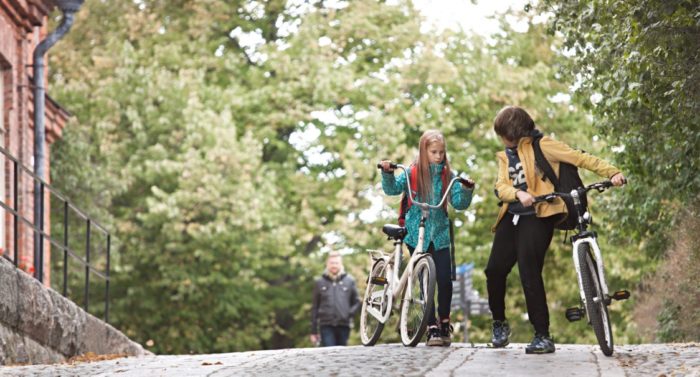
ThisisFINLAND forms an attractive window on Finland for everyone interested in our country, its culture and its people. We cover anything related to Finland and Finnish society. Produced by the Ministry for Foreign Affairs of Finland and published by the Finland Promotion Board, ThisisFINLAND was originally established in 1995 as Virtual Finland. We changed our name in the spring of 2009. You can read the magazine online in the Finland Toolbox . Should you wish to order paper copies, please send an email to: vie-50 (ät) gov.fi. We welcome your comments! See our contact page. If you have questions about Finland or our site, please check our FAQ before contacting us. The majority of pictures on ThisisFINLAND were purchased from professional photographers or organisations, and may not be reused. ThisisFINLAND.fi is produced within the communications department of Finland’s Ministry for Foreign Affairs. For more about the ministry’s data protection policies, see its data protection info page .
Read more on their site →Excerpt from the official site · 13,067 chars · not written by Vinony
Travel guide
Get in
thumb|upright|While most come to Finland from another Schengen country, the border to Russia is strictly controlled, with a no-entry border zone
You can read more about the topic on the Finnish Border Guard's website.
Visas cannot be applied for on the road, but must be applied for in advance, in person at the Finnish embassy in your country or in another designated place (see instructions); for some countries a commercial entity handles the applications. In some countries, the processing of Finnish visa applications may be delegated to the embassy of another Nordic country. Most of the requirements are common for all the Schengen area, but what funds are regarded sufficient varies between countries.
Visa processing times tend to be quite lengthy and the process might be one of the more stringent ones overall. It's not uncommon to wait for a month or more to get a Finnish visa, so plan and prepare well. In simple cases the processing time should be at most 15 days, but 45 days may be needed. The application can be made at most half a year in advance.
For Russians, tourism isn't a valid reason to enter Finland (because of the Russian war on Ukraine) and multi-entry visas may be retracted. Tourist visas are still granted and valid for certain other types of visits. See the Border Guard's information.
Finland is also a member of the European Union, which has common import regulations (with some specific exceptions). Import for own use (including ordinary gifts) from other E…
Get around
thumb|The Finnish rail network (passenger lines in green)
Finland is a large country and travelling is relatively expensive. Public transportation is well organised and the equipment is always comfortable and often new, and advance bookings are rarely necessary outside the biggest holiday periods, but buying tickets on the net in advance (preferably as soon as you know your plans) may give significantly lower prices. Trains are usually the most comfortable and fastest method of inter-city travel, while bus may be needed for smaller towns and the countryside.
There are several route planners available. VR and Matkahuolto provide timetable service nationwide for trains and coaches, respectively, and there are several regional and local planners. As of 2020, Google Maps and Apple Maps have coverage nationally. Opas.matka.fi includes train traffic, domestic flights, local transport of many cities and towns and public service obligation traffic (i.e. services offered on behalf of the government) in the countryside. Matkahuolto Reittiopas is focused on local, regional and long-distance buses and trains. There are deficiencies in most or all of the planners, so try different names (perhaps an intermediate town, or one which should be later on the same coach line) and main stops if you don't get a connection, and do a sanity check when you get one. You might also want to check more than one when services shown are sparse or complicated. Knowing the municipality and the name in both…
See
thumb|You'll definitely know you're in Helsinki when you find its most famous landmark, the Lutheran Cathedral. thumbnail|Kivijärvi in Central Finland, one of Finland's thousand lakes
Tourist commonly head for Helsinki, Lapland, the Lakeland or the Archipelago Sea. While it is more easy to find package tours and businesses used to foreigners at those locations, there are many interesting places elsewhere, and you can pick destinations off the beaten path also in those regions.
A selection of top sights in Finland: Central Helsinki, the Daughter of the Baltic, on a warm and sunny summer day The historical sites of Turku and the Archipelago Sea around it, best viewed from a yacht or from the deck of a giant car ferry. Puttering around the picturesque wooden houses of Porvoo, Finland's second-oldest city, near Helsinki Renting a car and exploring the Lakeland of Eastern Finland, an area dotted with around 60,000 lakes with a similar number of islands, which in turn have their own lakes... Olavinlinna Castle in Savonlinna, Finland's most atmospheric castle, especially during the yearly Opera Festival Hämeenlinna Castle in Hämeenlinna is Finland's oldest castle. Built in 13th century. Icebreaker cruising and the world's biggest snow castle in Kemi Seeing the Northern Lights and trying your hand sledding down a mile-long track at Saariselkä A ride on the historical wooden roller coaster of the Linnanmäki amusement park (Helsinki). Unlike modern designs, only gravity keeps it on t…
Eat
thumb|A typical Finnish meal. Clockwise from bottom: warm smoked salmon, boiled potatoes, cream sauce with chantarelles, lightly pickled cucumbers with dill
Finnish cuisine is heavily influenced by its neighbours (see Nordic cuisine and Russian cuisine), the main staples being potatoes and bread with various fish and meat dishes on the side. Dairy products are also important, with a wide variety of cheeses, and milk a common beverage even for adults. There was a culinary revolution in the 1990s, with a boom in classy restaurants experimenting with local ingredients, often with excellent results. Contemporary Finnish cuisine includes tastes and influences from all over the world, and the dining scene in larger cities has become quite cosmopolitan.
The agricultural products might suffer of the cold climate, but in summer many products benefit from the nearly eternal sunlight. The fish, while small in size, are tasty.
In working days locals typically eat a substantial breakfast, lunch (at a workplace cafeteria, a nearby restaurant, or packed), dinner after work, and a light evening meal before going to bed. If eating the dinner out, it is eaten later and the evening meal skipped. In weekends lunch and dinner are often combined. Full board lodging may include the evening meal, sometimes as a basket to eat at your room or in communal areas.
In proper hotels the included breakfast is extensive. In other lodgings, if breakfast is included, it is usually sufficient to keep you go…
Drink
Thanks to its thousands of lakes, Finland has plenty of water supplies and tap water is always potable – except on trains and the like, where this is clearly indicated (see Stay healthy below). In fact, never buy bottled water if you can get tap water!
The usual soft drinks and juices are widely available, but there is also a wide array of berry juices (marjamehu), especially in summer, as well as Pommac, an unusual soda made from (according to the label) "mixed fruits", which you'll either love or hate. Juice from many berries is to be mixed with water, also when not bought as concentrate; sugar is often already added. Note the difference between mehu (juice) and mehujuoma (saftdryck), where the latter may have only traces of the nominal ingredient.
It is quite common for people of all ages to drink milk (maito, mjölk) as an accompaniment to food. It is absolutely normal to see businessmen having a lunch and drinking milk. Another popular option is piimä (buttermilk, Swedish: surmjölk).
Sleep
thumb|Ski resort hotels in [[Ruka]]
Accommodation in Finland is expensive, with typical hotel rooms about €100/night or more. Many large hotels are cheaper during the weekends and in summer. Foreign hotel chains are rare outside the capital; most of the hotels are run either by locals or by some domestic brand. So do not expect to accumulate your points when staying anywhere but in major cities. More or less national hotel chains include Scandic, Finlandia and Sokos. The Omena chain offers self-service hotels, where you book online and get a keycode for your room, with no check-in of any kind needed (and little service available). If you insist on a five-star hotel, the rating is up to the individual hotelier.
When searching for budget options – and outside cities – check whether breakfast and linen are included; they are in regular hotels, but not in many budget options. Extras, such as sauna, are sometimes included also in cheap prices, and virtually all accommodations (except remote cottages) nowadays have free Wi-Fi.
Bed and breakfast is not well-known in Finland. In the countryside there are lodgings that are similar, or use the term, but neither does guarantee any specifics. They are often nice, and might be your only option, but check what to expect, such as whether breakfast is included or you are supposed to self-cater. Some B&Bs border to agritourism. Some offer dinner on advance request.
Short-time rentals are available in many mid-size to big cities, homestays…
Stay healthy
You're unlikely to have tummy troubles in Finland, since tap water is always drinkable (except on trains etc., and there will be warnings in those cases) and generally quite tasty as well, and hygiene standards in restaurants are strict. Dairy products are nearly always pasteurised. If you have any sort of allergies, many restaurants often display in the menu the most common ingredients that people typically are allergic to. Examples: (L) = Lactose free, (VL) = Low Lactose, (G) = Gluten free, if you are unsure just ask the waitress or other restaurant staff.
At cottages and in the wilderness different considerations apply; quality of water from local sources varies. In much of the country even water of lakes and rivers is potable and tasty, but this varies and there is no guarantee. Usually boiling it for a few minutes is recommended, although hikers often drink good-looking water untreated. If there is tap water from a local well, your host should be able to tell whether it is safe to drink (this information is included in wilderness hut information folders).
Respect
Finns generally have a relaxed attitude towards manners and dressing up, and a visitor is unlikely to offend them by accident. Common sense is quite enough in most situations, but there are a couple of things that one should keep in mind:
Finns are a famously taciturn people who have little time for small talk or social niceties, so don't expect to hear phrases like "thank you" or "you're welcome" too often. They usually go straight to business. The Finnish language lacks a specific word for "please" so Finns sometimes forget to use it when speaking English, with no intention to be rude. Also lacking in Finnish is the distinction between "he" and "she", which may lead to confusing errors. Loud speaking and loud laughing is not normal in Finland and may irritate some Finns. Occasional silence is considered a part of the conversation, not a sign of hostility or irritation. Indeed, you may need to keep quiet for a while now and then for your Finnish acquaintances to talk.
Notice that although the phrase mitä kuuluu translates to "how are you", it has a literal meaning in Finnish, i.e. a longer discussion is expected; it is not a part of the greeting as in English, and asking about health or relatives is not expected from strangers.
That said, Finns are generally helpful and polite, and glad to help confused tourists if asked. The lack of niceties has more to do with the fact that in Finnish culture, honesty is highly regarded; one should open one's mouth only to mean what one…
Go next
Karelia and Russia proper to the east, including Saint Petersburg. However, due to the Russian war on Ukraine, most transport options were suspended in 2022, and the border has mostly been closed since the autumn of 2023. Sweden, of which Finland was part for 650 years, is reachable by an overnight (or day) cruise, or overland from Lapland. Estonia, a couple of hours away from Helsinki across the Gulf of Finland. Norway's county of Finnmark and Troms can be accessed overland from Lapland. Åland, an autonomous region on the Archipelago Sea between Finland and Sweden.
Travel guide from Wikivoyage (CC BY-SA 4.0)
~40 min read
Encyclopedic overview
56 sectionsContents
- Etymology
- History
- Prehistory
- Swedish era
- Grand Duchy of Finland
- Civil war and early independence
- World War II
- After the war
- 21st century
- Geography
- Biodiversity
- Climate
- Government and politics
- Constitution
- President
- Parliament
- Cabinet
- Administrative divisions
- Law
- Foreign relations
- Military
- Human rights
- Economy
- Energy
- Transport
- Industry
- Public policy
- Tourism
- Demographics
- Languages
- Largest cities
- Religion
- Health
- Education and science
- Culture
- Literature
- Visual arts, design, and architecture
- Music
- Folk
- Classical
- Popular music
- Cinema and television
- Media and communications
- Sauna
- Cuisine
- Public holidays
- Sports
- See also
- Notes
- References
- Sources
- Further reading
- External links
- Government
- Maps
- Travel
Finland, or the Republic of Finland, is a Nordic country in Northern Europe. It borders Sweden to the northwest, Norway to the north, and Russia to the east, with the Gulf of Bothnia to the west and the Gulf of Finland to the south, opposite Estonia. Its capital and largest city is Helsinki. Finland has a population of 5.7 million. The official languages are Finnish and Swedish, the mother tongues of 83.5 percent and 5.0 percent of the population, respectively. Finland's climate varies from humid continental in the south to boreal in the north. Its land is predominantly covered by boreal forest, with over 180,000 recorded lakes.
Finland was first settled around 9000 BC after the last Ice Age. During the Stone Age, various cultures emerged, distinguished by different styles of ceramics. The Bronze Age and Iron Ages were marked by contacts with other cultures in Fennoscandia and the Baltic region. From the late 13th century, Finland became part of Sweden following the Northern Crusades. In 1809, as a result of the Finnish War, Finland was captured from Sweden and became an autonomous grand duchy within the Russian Empire. During this period, Finnish art flourished and an independence movement gradually developed.
Excerpted from Wikipedia’s “Finland” article, available under the CC BY-SA 4.0 licence.
Gallery (60)
On the map
6 mapped locations
Available in 323 languages
- Español
- Français
- Deutsch
- 中文
- 日本語
- Русский
- Português
- Italiano
- العربية
- हिन्दी
- Abkhazian
- abstract
- Acehnese
- Adyghe
- Afrikaans
- Akan
- Albanian
- Albanian
Show 304 more
- Amharic
- ami
- Angika
- Aragonese
- Aramaic
- Armenian
- Arpitan
- Assamese
- Asturian
- Atikamekw
- Avaric
- Awadhi
- Aymara
- azb
- Azerbaijani
- Bahasa Indonesia
- Balinese
- Bambara
- Bangla
- Banjar
- Bashkir
- Basque
- bat_smg
- Batak Toba
- Bavarian
- be_x_old
- Belarusian
- Betawi
- Bhojpuri
- Bikol
- Bishnupriya
- Bislama
- Bosnian
- Breton
- Buginese
- Bulgarian
- Buriat
- Burmese
- Catalan
- cbk_zam
- cdo
- Cebuano
- Central Dusun
- Central Kurdish
- Chamorro
- Chechen
- Cherokee
- Cheyenne
- Church Slavic
- Chuvash
- Colognian
- Cornish
- Corsican
- Crimean Tatar
- Croatian
- Czech
- dag
- Danish
- Dinka
- Divehi
- dty
- Dzongkha
- Egyptian Arabic
- eml
- Erzya
- Esperanto
- Estonian
- Ewe
- Extremaduran
- Faroese
- Fiji Hindi
- Fijian
- Filipino
- Finnish
- fiu_vro
- Friulian
- Fula
- Gagauz
- Galician
- Gan Chinese
- Ganda
- gcr
- Georgian
- Gilaki
- Gorontalo
- Gothic
- gpe
- Greek
- Guarani
- Gujarati
- guw
- Haitian Creole
- Hakka Chinese
- Hausa
- Hawaiian
- Hebrew
- Hungarian
- hyw
- Iban
- Icelandic
- Ido
- Igbo
- Iloko
- Inari Sami
- Ingush
- Interlingua
- Interlingue
- Inuktitut
- Inupiaq
- Irish
- Jamaican Creole English
- Javanese
- Kabardian
- Kabyle
- kai
- Kannada
- Kanuri
- Kara-Kalpak
- Karachay-Balkar
- Kashmiri
- Kashubian
- Kazakh
- kbp
- kge
- Khmer
- Kikuyu
- Kinyarwanda
- Komi
- Komi-Permyak
- Kongo
- Konkani
- Kotava
- Kurdish
- Kyrgyz
- Ladino
- Lao
- Latgalian
- Latin
- Latvian
- lbe
- Lezghian
- Ligurian
- Limburgish
- Lingala
- Lingua Franca Nova
- Lithuanian
- lld
- Lojban
- Lombard
- Low German
- Lower Sorbian
- Luxembourgish
- Macedonian
- Madurese
- Maithili
- Malagasy
- Malay
- Malayalam
- Maltese
- Manipuri
- Manx
- Māori
- map_bms
- Marathi
- Mari
- Mazanderani
- Minangkabau
- Mingrelian
- Mirandese
- mnw
- Moksha
- Mongolian
- Moroccan Arabic
- N’Ko
- Navajo
- nds_nl
- Neapolitan
- Nederlands
- Nepali
- Newari
- Nias
- Northern Frisian
- Northern Sami
- Northern Sotho
- Norwegian
- Norwegian Nynorsk
- Novial
- nrm
- nup
- Nyanja
- Obolo
- Occitan
- Odia
- Old English
- olo
- Oromo
- Ossetic
- Palatine German
- Pampanga
- Pangasinan
- Papiamento
- Pashto
- Pennsylvania German
- Picard
- Piedmontese
- Polski
- Pontic
- Punjabi
- pwn
- Quechua
- roa_rup
- roa_tara
- Romanian
- Romansh
- Romany
- Rundi
- Rusyn
- Samoan
- Sango
- Sanskrit
- Santali
- Sardinian
- Saterland Frisian
- Scots
- Scottish Gaelic
- Serbian
- Serbian (Latin)
- Shan
- Shona
- Sicilian
- Silesian
- simple
- Sindhi
- Sinhala
- skr
- Slovak
- Slovenian
- Somali
- South Ndebele
- Southern Altai
- Southern Sotho
- Sranan Tongo
- Standard Moroccan Tamazight
- Sundanese
- Svenska
- Swahili
- Swati
- szy
- Tachelhit
- Tahitian
- Tajik
- Talysh
- Tamil
- Taroko
- Tatar
- tay
- Telugu
- Tetum
- Tibetan
- Tiếng Việt
- Tigrinya
- Tok Pisin
- Toki Pona
- Tongan
- Tsonga
- Tswana
- Tulu
- Tumbuka
- Türkçe
- Turkmen
- Tuvinian
- Udmurt
- Ukrainian
- Upper Sorbian
- Urdu
- Uyghur
- Uzbek
- Venda
- Venetian
- Veps
- Volapük
- Walloon
- Waray
- Welsh
- West Flemish
- Western Frisian
- Western Mari
- Western Panjabi
- Wolof
- Wu Chinese
- Xhosa
- Yakut
- Yiddish
- Yoruba
- Zaza
- Zeelandic
- zh_classical
- zh_min_nan
- zh_yue
- Zhuang
- Zulu
- فارسی
- ไทย
- 한국어
via Wikidata sitelinks · CC0