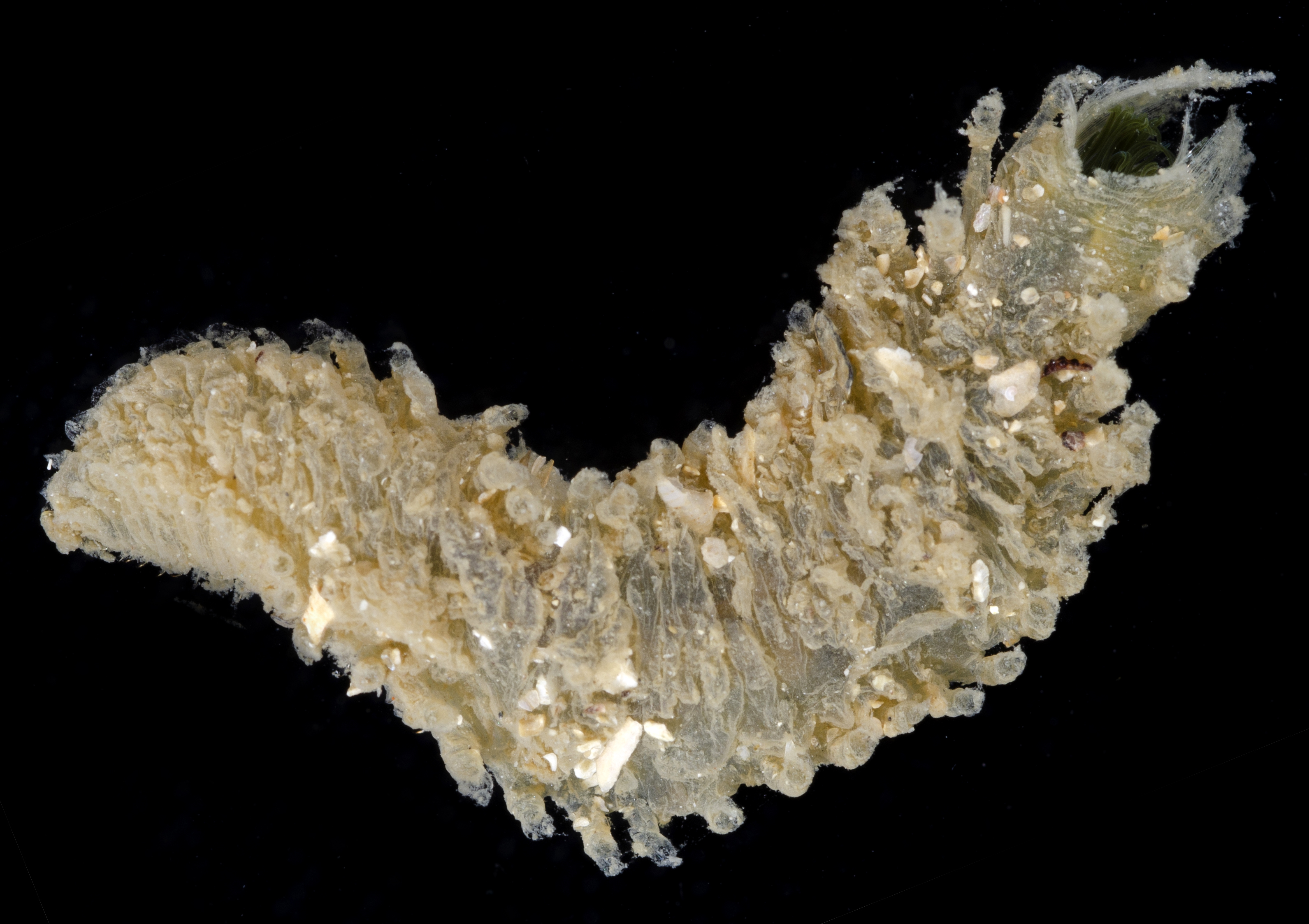
Specimen image via iDigBio · BY-NC
Flabelligera
Sign in to saveFlabelligera is a genus of polychaetes in the family Flabelligeridae. Species are common around the world, in both temperate and cold waters. Flabelligera species have long, club-like papillae, which are encased in a smooth mucus sheath. They also have a distinct cephalic cage (a fan-like arrangement of chaetae around the head), and hooked neurochaeatae (ventral chaetae) which they use to hold onto rocks.
In the Vinony graph
Within Vinony's link graph, Flabelligera is referenced by 3 other articles, and connects out to Animalia, Wikidata and digital object identifier.
It sits within the topics Cosmopolitan animals and Polychaete genera.
Its subject is documented across 4 Wikipedia language editions.
Species
GENUS
- KingdomAnimalia
- PhylumAnnelida
- ClassPolychaeta
- OrderTerebellida
- FamilyFlabelligeridae
via GBIF
Museum specimens
- Specimen records
- 75
- With media
- 17
- Family
- Flabelligeridae
- Collections
- USNM, SIO, CAS, GNM, AUM, NMV
- Recorded in
- United States, Venezuela, Antarctica, Argentina, Australia, Iceland, Norway, China
Wikidata facts
- Instance of
- taxon
- Parent taxon
- Flabelligeridae
- Image
- Flabby bristle-worm imported from iNaturalist photo 166035609 on 19 January 2023.jpg
Show 5 more facts
- taxon name
- Flabelligera
- taxon rank
- genus
- topic's main category
- Category:Flabelligera
- taxon author citation
- Sars, 1829
- Commons category
- Flabelligera
Sources (2)
via Wikidata · CC0
~2 min read
Encyclopedic overview
2 sectionsContents
- Species list
- References
Flabelligera is a genus of polychaetes in the family Flabelligeridae. Species are common around the world, in both temperate and cold waters. Flabelligera species have long, club-like papillae, which are encased in a smooth mucus sheath. They also have a distinct cephalic cage (a fan-like arrangement of chaetae around the head), and hooked neurochaeatae (ventral chaetae) which they use to hold onto rocks.
Flabelligera species are preyed on by a number of fish. They are most often found in waters with a temperature between 6.3 and 12.9 °C.
Excerpted from Wikipedia’s “Flabelligera” article, available under the CC BY-SA 4.0 licence.