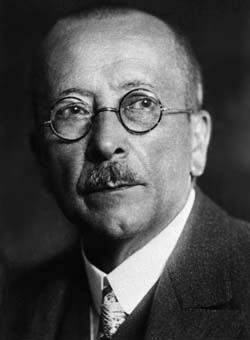
File:Fritz_Pregl.jpg · Wikimedia Commons · See Wikimedia Commons
Fritz Pregl
Sign in to saveAlso known as Friderik Pregl, Mihael Raimund
Slovene-Austrian Nobel prize laureate and scientist (1869-1930)
OverviewAI-generated
Fritz Pregl, born Friedrich Raimund Michael Pregl in 1869 in Ljubljana, was a chemist, physician, professor, and pharmacist. He held citizenship in Austria, Cisleithania, the Kingdom of Yugoslavia, and the Kingdom of Serbs, Croats and Slovenes. Pregl was educated at the University of Graz and studied under Wilhelm Ostwald and Emil Fischer. His professional career included positions at the University of Graz and the University of Innsbruck, and he was a member of the Austrian Academy of Sciences.
Pregl received the Nobel Prize in Chemistry and the Lieben Prize. He was also nominated for the Nobel Prize in Chemistry and the Nobel Prize in Physiology or Medicine. His notable works include *Quantitative organic microanalysis* and *Pregl-Roth Quantitative organische Mikroanalyse*. He spoke Slovene, English, and German. Pregl died in Graz in 1930.
Synthesized by Vinony from 30 facts across 4 sources: Wikidata, Open Library, Nobel Prize, Vinony collections. Generated from structured data (not the Wikipedia text) and checked against those facts — may still contain errors.
Person · Open Library
- Born
- 1869
- Died
- 1930
- Works
- 8
Top works
- Festschrift zum 60
- Pregl-Roth Quantitative organische Mikroanalyse
- Fritz Pregl an Karl Berthold Hofmann
- Quantitative organic microanalysis of Fritz Pregl
- Quantitative organic microanalysis based on the methods of Fritz Pregl
via Open Library + Wikidata
Nobel Prize
- The Nobel Prize in Chemistry1923
“for his invention of the method of micro-analysis of organic substances”
Wikidata facts
- Instance of
- human
- Given name
- Fritz
- Gender
- male
- Citizenship
- Kingdom of Serbs, Croats and Slovenes
- Place of birth
- Ljubljana
- Place of death
- Graz
- Occupation
- physicist
- Educated at
- University of Graz
- Employer
- University of Innsbruck
- Languages spoken
- German
- Award
- Lieben Prize
- Doctoral advisor
- Wilhelm Ostwald
- Student of
- Emil Fischer
- Field of work
- medicine
- Image
- Fritz Pregl.jpg
Show 9 more facts
- Commons category
- Fritz Pregl
- date of birth
- 1869-09-03
- date of death
- 1930-12-13
- nominated for
- Nobel Prize in Physiology or Medicine
- name in native language
- Fritz Pregl
- birth name
- Friedrich Raimund Michael Pregl
- Commons Creator page
- Fritz Pregl
- member of
- Austrian Academy of Sciences
- interested in
- chemistry
via Wikidata · CC0
~3 min read
Encyclopedic overview
Fritz Pregl (Slovene: Friderik Pregl; 3 September 1869 – 13 December 1930), was a Slovenian-Austrian chemist and physician from a mixed Slovene-German-speaking background. He won the Nobel Prize in Chemistry in 1923 for making important contributions to quantitative organic microanalysis, one of which was the improvement of the combustion train technique for elemental analysis.
Biography
Excerpted from Wikipedia’s “Fritz Pregl” article, available under the CC BY-SA 4.0 licence.
Gallery (2)
Available in 61 languages
- Español
- Français
- Deutsch
- 中文
- 日本語
- Русский
- Português
- Italiano
- العربية
- Armenian
- azb
- Azerbaijani
- Bahasa Indonesia
- Bangla
- Basque
- Belarusian
- Bulgarian
- Catalan
Show 42 more
- Czech
- Danish
- Egyptian Arabic
- Finnish
- Galician
- Georgian
- Greek
- Hakka Chinese
- Hebrew
- Hungarian
- Ido
- Latin
- Latvian
- Malay
- Marathi
- Mazanderani
- Nederlands
- Norwegian
- Occitan
- Polski
- Quechua
- Romanian
- Scottish Gaelic
- Serbian
- Serbian (Latin)
- Slovak
- Slovenian
- Svenska
- Swahili
- Tatar
- Tiếng Việt
- Türkçe
- Ukrainian
- Urdu
- Uzbek
- Welsh
- Western Panjabi
- Wu Chinese
- Yoruba
- zh_min_nan
- فارسی
- 한국어
via Wikidata sitelinks · CC0