
Gerard Hoffnung · Spotify · Courtesy of Spotify
Gerard Hoffnung
Sign in to saveAlso known as Gerhardt Hoffnung
German-born British musical humourist (1925-1959)
Person · Open Library
- Works
- 55
Top works
- Ho ho hoffnung
- The Maestro
- Hoffnung's Harlequinade
- Hoffnung's Musical Chairs,
- Birds, Bees and Storks
via Open Library + Wikidata
Music · MusicBrainz
- Type
- Person
- Gender
- Male
- Country
- United Kingdom
- Active from
- 1925
- Active to
- 1959
Discography
via MusicBrainz · CC0
Listeners · Last.fm
- Listeners
- 570
- Total plays
- 4,327
Tags
Gerard Hoffnung (1925-1959) was an artist and musician, best known for his humorous works. Born in Berlin on 22nd March 1925, and named Gerhard, he was the only child of a well-to-do Jewish couple, Hilde and Ludwig Hoffnung. In 1939 his parents left Germany for London, where he attended Highgate School, while his father went to what was then the British Mandate of Palestine to enter the family's banking business. (This temporary separation became permanent as a consequence of the Second World W
Described at
The Tales of Hoffnung: The Unscripted Genius of Gerard Hoffnung - Comedy Chronicles - British Comedy Guide
Graham McCann re-examines the legacy of forgotten genius, Gerard Hoffnung.
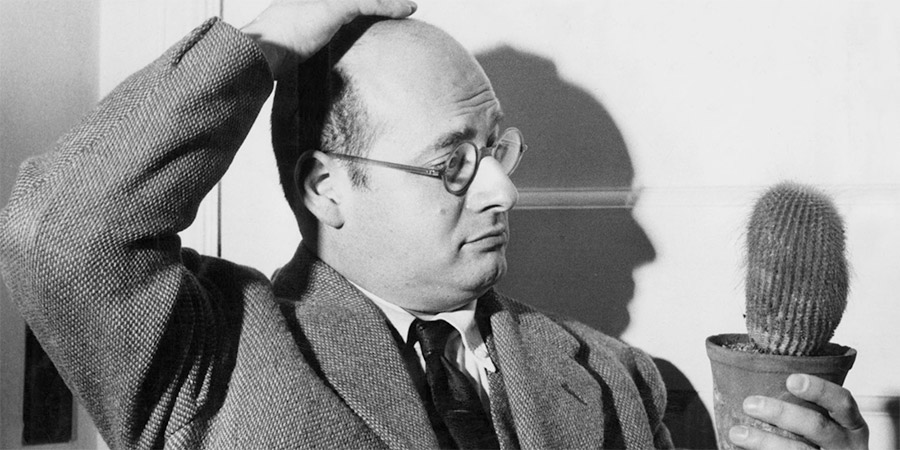
comedy.co.uk →Cases of pure comic genius are rare enough without us forgetting or overlooking any of them, so it is particularly important that more people discover, and enjoy, Gerard Hoffnung 's quite brilliant conversations with Charles Richardson . Recorded in the late 1950s, they sound today as fresh and as funny as ever, and represent some of the most inspired, audacious and influential head-to-heads in British comedy history. Hoffnung does not appear to be remembered by many these days, and of those who do still remember him, most of them do so more for either his unconventional musical activities, or for his laugh out loud 'Bricklayer's Lament' monologue, than for his collaborations with Richardson. The whole range of his work deserves reviving, however, because, at a time when true non-conformists seem so hard to find, the brief but bright career of Gerard Hoffnung is as refreshing as it is enlightening. Born in Grünewald, Berlin, in 1925 , as Gerhardt Hoffnung, the only child of German-Jewish parents, his father fled to Israel in 1938 in the wake of the Nazi persecutions, while he and his mother escaped to England, where they rented a house in Hampstead Garden Suburb, which was to be Gerard's home for the rest of his life. It was here that, in a remarkably short space of time, he not only learnt the English language but also reached deep into the English psyche, re-emerging as someone who was still very much an outsider, but who could act and sound like an insider, and expose, at will, the intrinsic silliness of a narrow but notable range of native figures like no one else in the country. Stocky and prematurely balding with an inextinguishably benign outlook on life, he was likened by one admirer to a 'Teutonic Pickwick'. As if possessed by some wizened comic sprite, he looked, sounded and behaved so much like a far older man that his wife, Annetta, was sometimes mistaken for his daughter. A newspaper journalist who visited him early one morning at his home found him dressed smartly in a suit and tie and feasting on a breakfast that comprised of 'orange juice, grapefruit, cornflakes with cream and two chopped bananas, a boiled egg, four rounds of toast and butter, a small piece of smoked ham, a portion of liver sausage, three rolls and butter, chopped chives, Dutch cheese with radishes, pumpernickel bread and grapes,' rounded off with a pint of milk. He then started playing the tuba. The rather dazed reporter later emerged from the house with the gift of a hand-crafted pipe that Hoffnung had picked out from his extensive collection. Hoffnung first made an impact as a cartoonist. Drawing mainly with a mapping pen and Indian ink, his clear and crisp comic images, which usually featured endearingly flawed-looking little human beings baffled in some or other way by mechanical objects, were published in the UK by the likes of Punch , The Strand Magazine and The Tatler , as well as numerous other newspapers and magazines in the US and countless other countries. After securing the Royal Festival Hall as a venue, Hoffnung commissioned six British composers to write new and suitably unconventional pieces for the event, promising that it would be 'a caricature symphony concert of immense proportions,' and 'an explosion of musical exuberance such as London has never heard before'. Tickets sold out in less than two hours (breaking all records for the Royal Festival Hall at that time), the BBC agreed to televise it, and the impact was impressive. Other highlights included the British virtuoso horn player Dennis Brain performing one movement of a concerto by Mozart's father on a mouthpiece, hosepipe and funnel, a Chopin mazurka re-arranged as a tuba quartet, and a fierce battle between an orchestra playing Tchaikowsky's Piano Concerto No 1 and a pianist persisting with Grieg's Piano Concerto . Not all of the reviewers enjoyed it ('I have heard less horrible grunting on a farm' moaned one classical critic), but most did. 'Its overwhelming
Excerpt from a page describing this subject · 37,482 chars · not written by Vinony
Wikidata facts
- Instance of
- human
- Given name
- Gerard
- Gender
- male
- Citizenship
- Germany
- Place of birth
- Berlin
- Place of death
- London
- Occupation
- musician
- Languages spoken
- German
- Instrument
- tuba
Show 8 more facts
- date of birth
- 1925-03-22
- date of death
- 1959-09-28
- manner of death
- natural causes
- name in native language
- Gerard Hoffnung
- cause of death
- cerebral hemorrhage
- P8168
- Universal
- place of burial
- Golders Green Crematorium
Sources (3)
via Wikidata · CC0