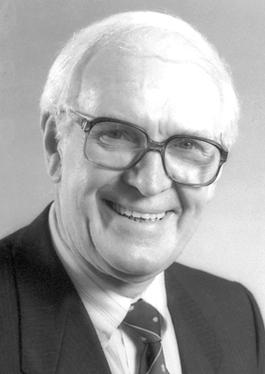
File:James_Black.jpeg · Wikimedia Commons · See Wikimedia Commons
James Black
Sign in to saveAlso known as Sir James Whyte Black, James Whyte Black, Sir James Black, J. Black, J.W. Black
Scottish doctor and pharmacologist (1924–2010)
OverviewAI-generated
James Whyte Black (1924–2010) was a British physician, pharmacologist, and inventor. Born in Uddingston, he was educated at the University of St Andrews and the University of Dundee. His career included positions at the University of Glasgow, Imperial Chemical Industries, University College London, and King's College London. He died in London of prostate cancer.
Black was a member of the Royal Society, the National Academy of Sciences, the Royal Society of Edinburgh, and the Royal College of Physicians, London. He received the Lasker-DeBakey Clinical Medical Research Award, the Canada Gairdner International Award, the Wolf Prize in Medicine, and the Nobel Prize in Physiology or Medicine. He was appointed a Knight Bachelor.
Synthesized by Vinony from 40 facts across 8 sources: Wikidata, Crossref, Open Library, MusicBrainz, Last.fm, Nobel Prize, Vinony collections, Vinony graph. Generated from structured data (not the Wikipedia text) and checked against those facts — may still contain errors.
Person · Open Library
- Works
- 52
Top works
- The Christian life
- The Infant school grammar
- Little grammarian, or, An Easy guide to the parts of speech
- Black, White and the in Between
- Poems
via Open Library + Wikidata
Nobel Prize
- The Nobel Prize in Physiology or Medicine1988
“for their discoveries of important principles for drug treatment”
Shared · 1/3 portion
Wikidata facts
- Instance of
- human
- Given name
- James
- Family name
- Black
- Gender
- male
- Citizenship
- United Kingdom
- Place of birth
- Uddingston
- Place of death
- London
- Occupation
- chemist
- Position held
- chancellor
- Employer
- University of St Andrews
- Languages spoken
- English language
- Noble title
- Knight Bachelor
- Field of work
- pharmacology
- Image
- James Black (pharmacologist).jpg
Show 10 more facts
- member of
- Academia Europaea
- date of birth
- 1924-06-14
- date of death
- 2010-03-21
- Commons category
- James Black (pharmacologist)
- cause of death
- prostate cancer
- manner of death
- natural causes
- name in native language
- James Whyte Black
- birth name
- James Whyte Black
- different from
- James Black
- interested in
- pharmacology
via Wikidata · CC0
~11 min read
Encyclopedic overview
Sir James Whyte Black (14 June 1924 – 22 March 2010) was a Scottish physician and pharmacologist. Together with Gertrude B. Elion and George H. Hitchings, he shared the Nobel Prize for Medicine in 1988 for pioneering strategies for rational drug-design, which, in his case, led to the development of propranolol and cimetidine. Black established a Veterinary Physiology department at the University of Glasgow, where he became interested in the effects of adrenaline on the human heart. He went to work for ICI Pharmaceuticals in 1958 and, while there, developed propranolol, a beta blocker used for the treatment of heart disease. Black was also responsible for the development of cimetidine, an H2 receptor antagonist, a drug used to treat stomach ulcers.
Early life and education
Excerpted from Wikipedia’s “James Black” article, available under the CC BY-SA 4.0 licence.
Gallery (2)
Available in 59 languages
- Español
- Français
- Deutsch
- 中文
- 日本語
- Русский
- Português
- Italiano
- العربية
- Armenian
- azb
- Azerbaijani
- Bahasa Indonesia
- Bangla
- Basque
- Belarusian
- Bulgarian
- Catalan
Show 40 more
- Central Kurdish
- Croatian
- Czech
- Danish
- Egyptian Arabic
- Estonian
- Finnish
- Galician
- Hebrew
- Hungarian
- Ido
- Irish
- Kazakh
- Latin
- Low German
- Malagasy
- Malay
- Mazanderani
- Mingrelian
- Nederlands
- Norwegian
- Occitan
- Polski
- Romanian
- Scottish Gaelic
- simple
- Slovenian
- Svenska
- Swahili
- Tatar
- Tiếng Việt
- Türkçe
- Ukrainian
- Urdu
- Volapük
- Welsh
- Western Panjabi
- Yoruba
- فارسی
- 한국어
via Wikidata sitelinks · CC0