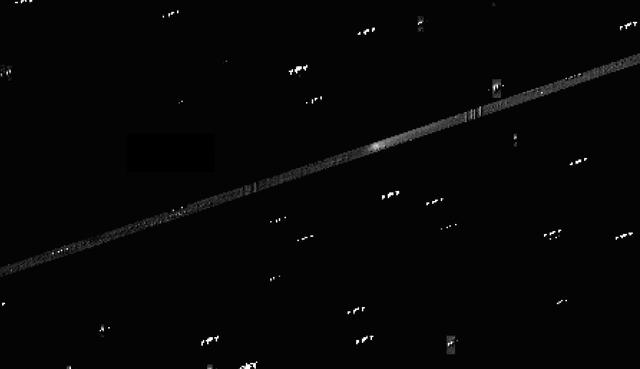
Comet 67P Seen by Kepler · NASA · NASA — public domain
Kepler-30
Sign in to saveKepler-30 is a star in the northern constellation of Lyra. It is located at the celestial coordinates: Right Ascension Declination . With an apparent visual magnitude of 15.5, this star is too faint to be seen with the naked eye. Kepler-30 is exhibiting a strong starspot activity.
In the Vinony graph
Vinony's link graph records 194 inbound references to Kepler-30, and connects out to list of multiplanetary systems, Kepler-42 and Gliese 676.
Vinony files it under Kepler objects of interest, K-type main-sequence stars and Lyra.
Vinony links it to 9 Wikipedia language editions.
Astronomical data · SIMBAD
- Object type
- Er*
- Distance
- 2,935 light-years
- Redshift
- z = -0.000021835867961339517
- Coordinates
- RA 285.2836° · Dec 38.9473°
via SIMBAD · CDS Strasbourg
Wikidata facts
- Instance of
- eruptive variable star
- Constellation
- Lyra
- Distance from Earth
- 938.33
- Diameter
- 1360000
- Radius
- 0.95
- Mass
- 0.99
- Variable-star type
- rotating variable star
- Image
- Kepler-30.jpg
Show 15 more facts
- Commons category
- Kepler-30
- catalog code
- TIC 399794329
- effective temperature
- 5498
- parallax
- 1.1113
- apparent magnitude
- 15.767
- metallicity
- 0.08
- declination component of proper motion
- -4.737
- epoch
- J2000.0
- stellar rotational velocity
- 2.3
- surface gravity
- 45900
- luminosity
- 0.50396824
- right ascension component of proper motion
- 0.743
- right ascension
- 285.28364421022
- declination
- 38.94728285246
- age estimated by a dating method
- 2
via Wikidata · CC0
~1 min read
Encyclopedic overview
2 sectionsContents
- Planetary system
- References
Kepler-30 is a star in the northern constellation of Lyra. It is located at the celestial coordinates: Right Ascension Declination . With an apparent visual magnitude of 15.5, this star is too faint to be seen with the naked eye. Kepler-30 is exhibiting a strong starspot activity.
==Planetary system== Three planets of Kepler-30 were detected by the transit method in 2011. The planets are strongly interacting each other, with transit times variability exceeding one hour for each consecutive orbit. Due to the irregularity of orbits, confirmation of the planetary system was delayed until 2012. The planetary periods are close to 1:2:5 orbital resonance but are not resonant, producing an extremely complex orbital dynamics.
Excerpted from Wikipedia’s “Kepler-30” article, available under the CC BY-SA 4.0 licence.
Gallery (4)
Available in 9 languages
via Wikidata sitelinks · CC0