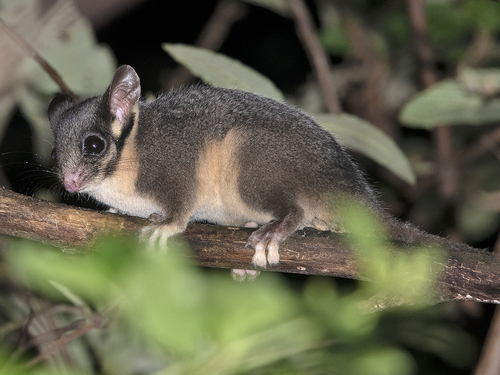
(c) Tim Bawden, some rights reserved (CC BY-NC), uploaded by Tim Bawden · cc-by-nc
Leadbeater's possum
Sign in to saveAlso known as fairy possum, Gymnobelideus leadbeateri, Leadbeater’s possum
species of mammal
Species
Critically EndangeredLeadbeater's Possum
species
Maximum longevity: 14.1 years (captivity) Observations: One captive animal was at least 14.1 years when it died (Richard Weigl 2005).
via IUCN
Wikidata facts
- Instance of
- Lazarus taxon
- Parent taxon
- Gymnobelideus
- Image
- Leadbeater's Possum 02 Pengo.jpg
Show 11 more facts
- taxon rank
- species
- IUCN conservation status
- Critically Endangered
- taxon name
- Gymnobelideus leadbeateri
- Commons category
- Gymnobelideus leadbeateri
- Commons gallery
- Gymnobelideus leadbeateri
- taxon common name
- Hörnchenbeutler
- gestation period
- 20
- endemic to
- Australian continent
- sequenced genome URL
- www.dnazoo.org/assemblies/Gymnobelideus_leadbeateri
- taxon author citation
- McCoy, 1867
- short name
- G. leadbeateri
Sources (2)
via Wikidata · CC0
~16 min read
Encyclopedic overview
Leadbeater's possum (Gymnobelideus leadbeateri) is a critically endangered possum largely restricted to small pockets of alpine ash, mountain ash, and snow gum forests in the Central Highlands of Victoria, Australia, north-east of Melbourne. In June 2025 it was reported that an image of a sole possum was recorded on a camera trap in October 2024 near Yarrangobilly Caves, Southern NSW, within the Kosciuszko National Park. It is primitive, relict, and non-gliding, and, as the only species in the petaurid genus Gymnobelideus, represents an ancestral form. Formerly, Leadbeater's possums were moderately common within the very small areas they inhabited; their requirement for year-round food supplies and tree-holes to take refuge in during the day restricts them to mixed-age wet sclerophyll forest with a dense mid-story of Acacia. The species was named in 1867 after John Leadbeater, the then taxidermist at the Museum Victoria. They also go by the common name of fairy possum. On 2 March 1971, the State of Victoria made the Leadbeater's possum its faunal emblem.
History
Excerpted from Wikipedia’s “Leadbeater's possum” article, available under the CC BY-SA 4.0 licence.