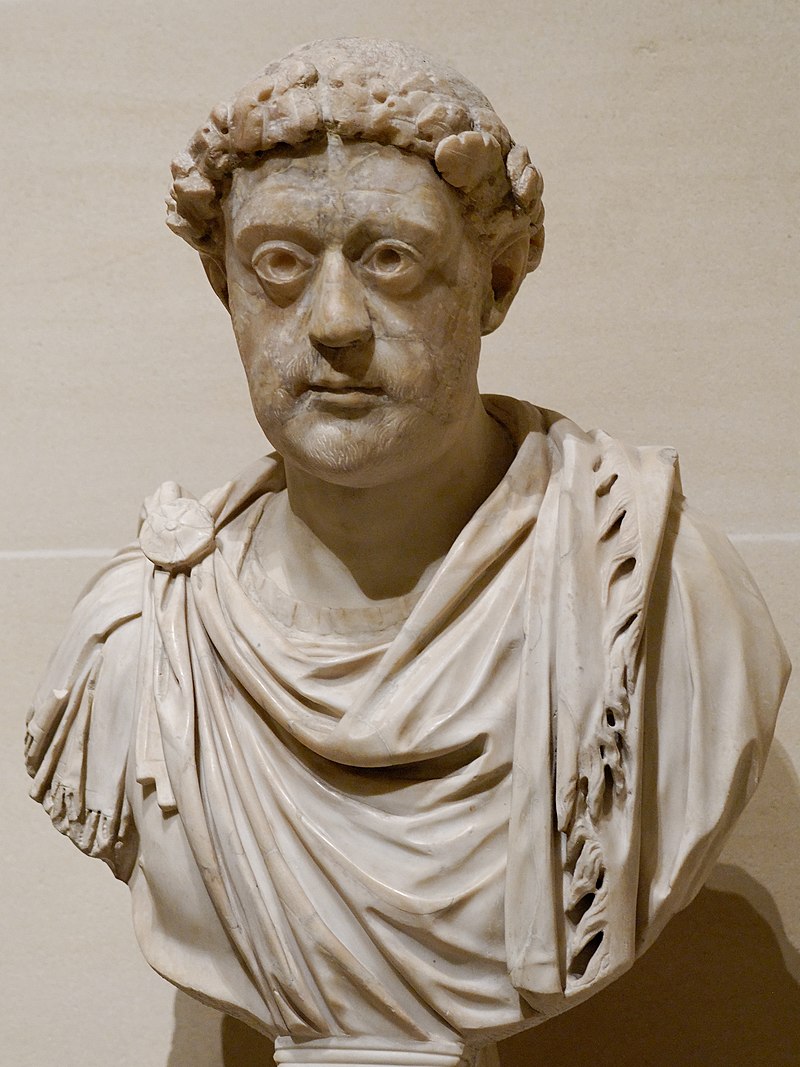
File:Leo_I_Louvre_Ma1012_n2.jpg · Wikimedia Commons · See Wikimedia Commons
Leo I
Sign in to saveAlso known as Leo the Great, Leo the Butcher, Leo the Thracian
Eastern Roman emperor from 457 to 474
Leo I was an Eastern Roman emperor who ruled from 457 to 474 and is remembered as an important leader during a turbulent period in the Byzantine Empire's history. His reign mattered because he worked to stabilize the empire's government and military during a time when the Western Roman Empire was collapsing and the Eastern Roman Empire faced threats from various invaders.
AI-generated from the Wikipedia summary — may contain errors.
Wikidata facts
- Instance of
- human
- Gender
- male
- Citizenship
- Byzantine Empire
- Place of birth
- Thrace
- Place of death
- Constantinople
- Spouse
- Verina
- Occupation
- military personnel
- Position held
- Byzantine emperor
- Languages spoken
- medieval Greek
- Religion
- Christianity
- Family
- House of Leo
- Image
- Leo I Louvre Ma1012.jpg
Show 9 more facts
- Commons category
- Leo I (imperator)
- date of birth
- 0401-01-01
- cause of death
- dysentery
- manner of death
- natural causes
- time period
- Byzantine Egypt
- different from
- Leo I
- name in native language
- Flavius Valerius Leo
- described by source
- Wikitólica
- date of death
- 0474-01-19
via Wikidata · CC0
~10 min read
Encyclopedic overview
DynastyLeonid ReligionChalcedonian Christianity
Leo I (Ancient Greek: Λέων, romanized: Leōn; c. 401 – 18 January 474), also known as the Thracian (Latin: Thrax; Ancient Greek: ὁ Θρᾷξ), was Eastern Roman emperor from 457 to 474. He was a native of Dacia Aureliana near historic Thrace. He is sometimes surnamed with the epithet the Great (Latin: Magnus; Ancient Greek: ὁ Μέγας), probably to distinguish him from his young grandson and co-augustus Leo II (Ancient Greek: ὁ Μικρός, romanized: ho Mikrós, lit. 'the Small').
Excerpted from Wikipedia’s “Leo I” article, available under the CC BY-SA 4.0 licence.
Gallery (8)
Available in 59 languages
- Español
- Français
- Deutsch
- 中文
- 日本語
- Русский
- Português
- Italiano
- العربية
- Afrikaans
- Albanian
- Aragonese
- Armenian
- azb
- Bahasa Indonesia
- Basque
- Belarusian
- Breton
Show 40 more
- Bulgarian
- Catalan
- Croatian
- Czech
- Egyptian Arabic
- Esperanto
- Estonian
- Filipino
- Finnish
- Galician
- Georgian
- Greek
- Hakka Chinese
- Hebrew
- Hungarian
- Latin
- Latvian
- Lithuanian
- Macedonian
- Malagasy
- Nederlands
- Norwegian
- Polski
- Romanian
- Serbian
- Serbian (Latin)
- simple
- Slovak
- Slovenian
- Svenska
- Tiếng Việt
- Türkçe
- Ukrainian
- Urdu
- Waray
- Welsh
- Wu Chinese
- Zaza
- فارسی
- 한국어
via Wikidata sitelinks · CC0