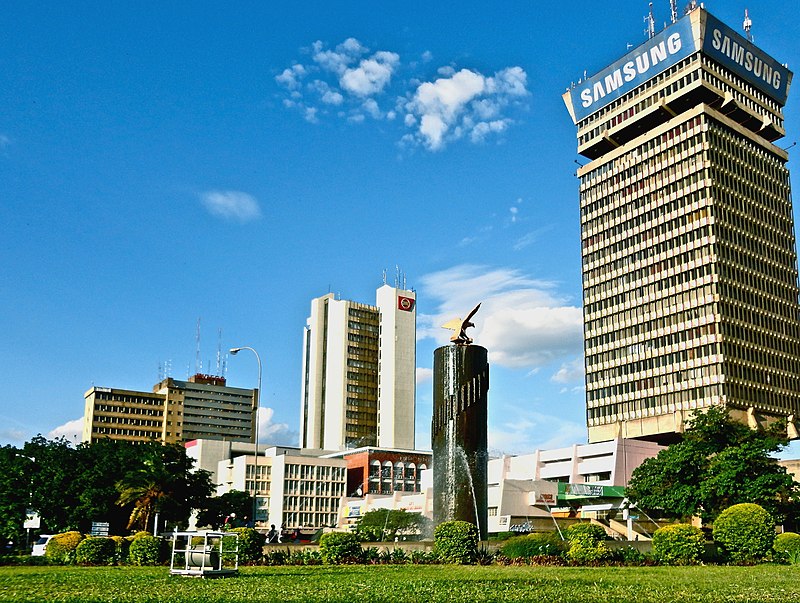
File:Downtown_Lusaka.JPG · Wikimedia Commons · See Wikimedia Commons
Lusaka
Sign in to saveLusaka ( ) is the capital and largest city of Zambia. It is one of the fastest-developing cities in southern Africa. Lusaka is in the southern part of the central plateau at an elevation of about . , the city's population was about 3.3 million, while the urban population is estimated at 2.5 million in 2018. Lusaka is the centre of both commerce and government in Zambia and connects to the country's four main highways heading north, south, east, and west. English is the official language of the city administration, while Bemba, Tonga and Nyanja are the commonly spoken street languages. alt=Indo
Lusaka is the capital and largest city of Zambia, serving as the country's center for both government and commerce. It is one of the fastest-developing cities in southern Africa and connects major highways throughout the country, with a population of around 3.3 million people.
AI-generated from the Wikipedia summary — may contain errors.
Weather now
cached 4h ago7-day forecast
via Open-Meteo
Place details
- Locality
- Lusaka
- Region
- Lusaka Province
- Country
- Zambia
- Population
- 2,212,301
- Timezone
- Africa/Lusaka
via OpenStreetMap · GeoNames
Key facts
- Settlement.official_name
- Lusaka
- Settlement.native_name
- Mwalusaka
- Settlement.nickname
- LSK
- Settlement.settlement_type
- Capital city
- Settlement.total_type
- District
- Settlement.image_caption
- From top and left to right: Central business district of Lusaka with FINDECO House visible; Kafue Roundabout and surroundings, University of Zambia Main Campus, Cathedral of the Holy Cross, ZANACO head office, Society Business Park, Cairo Mall, Lusaka National Museum exhibition
- Settlement.image_seal
- LusakaCityCouncilLogo.png
- Settlement.pushpin_map
- Zambia#Africa
- Settlement.pushpin_relief
- 1
- Settlement.pushpin_label_position
- left
- Settlement.pushpin_map_caption
- Location of Lusaka in Zambia
- Settlement.subdivision_type1
- Country
- Settlement.subdivision_name
- Zambian Kwacha
- Settlement.subdivision_type2
- Province
- Settlement.subdivision_name2
- Lusaka Province
- Settlement.subdivision_type3
- District
- Settlement.subdivision_name3
- Lusaka District
- Settlement.government_type
- Mayor-council government
via Wikipedia infobox
Wikidata facts
- Official name
- Lusaka
- Demonym
- Lusakan
- Country
- Zambia
- Located in
- Lusaka Province
- Population
- 2204059
- Area
- 360
- Elevation
- 1279
- Time zone
- UTC+02:30
- Capital of
- Northern Rhodesia
- Official website
- www.lcc.gov.zm
- Image
- Downtown Lusaka.JPG
- Dialing code
- 02
Show 12 more facts
- twinned administrative body
- Kigali
- Commons category
- Lusaka
- topic's main category
- Category:Lusaka
- category for people who died here
- Category:Deaths in Lusaka
- category for people born here
- Category:Births in Lusaka
- category of associated people
- Category:People from Lusaka
- inception
- 1905-00-00
- native label
- Lusaka
- P8168
- Otto Ampferer
- different from
- Lusaka Province
- on focus list of Wikimedia project
- Wikipedia:Vital articles/Level/4
- P12749
- Wanfried
Sources (8)
via Wikidata · CC0
Travel guide
Get around
Minibuses are ubiquitous, cheap, and, if already full, fast. Single rides generally cost (about US$0.50). Most routes head to/from the 4 major bus stations in the city centre (referred to collectively as "town"), although there are a small number of alternative routes or short-cut routes, especially during the rush hours. A rider can get just about anywhere in the city with one connection in town. Going in to town is quite straightforward. Going away from town it's best to ask the driver where he's going. Routes and destinations are not posted on the vehicles themselves, but if a bus is taking on passengers the conductor will likely be shouting the destination through the window. Minibuses do run into the evenings, but become decreasingly frequent at the evening wears on.
For the uninitiated, then, a taxi might be a better option, at least initially. Taxis come in two colours - sky blue, and a light grey, and are usually Toyota Corollas. There are no meters in Zambia's taxis, so prices are somewhat negotiable but always on the high side for Africa. Be sure to set a price before getting in the cab, US$2 for a short ride is a fair tourist price. (Ask at a hotel lobby how much your trip should cost. If the cab driver states a higher price, mention that you're happy to ride a mini-bus. Watch the price drop. )
Take down a taxi driver's mobile number, most will be happy to do an all day deal, wait for you while you explore, pick you up early or late and take you to and from the a…
Do
Explore the city with its diverse suburbs and informal settlements. Take a map and explore the city's markets, its second class shopping area and many other nooks. The only precautions recommended would be to leave your valuables at your hotel and take only the cash needed for the day as would apply in any major city. Parray's Game Ranch is 21 km from the town centre. Available are game drives, swimming and a playground. There you can see Zebra, Kudu and other herbivores Chaminuka Lodge Located near the airport, amazing lodge and facilities. The privately owned park is home to a range of antelopes, a family of elephants, giraffes, zebras, lions and hyenas.
Buy
FNB, Ecobank, Stanbic Bank, and Access Bank-Atlasmara Bank have 24-hour Visa and Mastercard ATMs around Lusaka.
Dutch Reformed Church Market. Held on the last Saturday of each month and has been going for several years. There you can buy an assortment of curios, books, food and art. A special feature is the large number of goods available from other countries such as Congo and Zimbabwe. You can have a light Indian or Chinese meal while children have their faces painted. Look for stand selling products made from recycled glass bottles and handicrafts made by people with disabilities. Lusaka City Market is probably the nicest market in town if you are looking for an 'African' market experience - its just east of the main downtown area. The 'Town Centre' market is pretty grim and has lots of traffic clogging up the streets. MP3 CDs. Lusaka, strategically located next to several countries with a strong musical heritage (Congo, Zimbabwe) is a great place for adding to your African music collection. In the indoor bit of Lusaka City Market there are several places that will burn MP3s or transfer gigabytes of music to your flashdisk or phone for about K10,000.
EastPark Mall. One of the best malls in Lusaka. It has many top names for fashion and grocery shopping. Great bars and restaurants along with banks, ATMs and money changing outlet. Plenty of secure parking. It's an all weather friendly place with lots going on - a real one stop shop mall.
Eat
Whilst not a gourmet destination there is some good eating to be had in Lusaka. The gradual shopping mall-isation of the city sadly means that uninspiring South African chain restaurants are multiplying - but there is still a good selection of independent places scattered around. Lusaka seems to specialise in Indian cuisine. Chindo Road is the closest thing that Lusaka has to a restaurant strip.
Drink
Lusaka has many Western-styled bars (e.g., Brown's, mainly used by tourists, and ex-pats). Zambians love to drink; there are, therefore, a number of bars frequented by locals, as well. Unfortunately, these change often. Rhapsody's open late Chez Ntemba* has several branches, plays Rumba and African rhythms until the last person leaves Majestic Casino has an excellent bar, casino complete with blackjack and roulette tables and slot machines Johnny's Chinese is centrally located The Polo Grill has outdoor seating overlooking the Lusaka Polo Club also has a small casino Northmead Shopping Centre has an array of clubs and bars including some open 24 hours a day the infamous alpha bar should be tested by all travellers.
Stay safe
thumb|400px|Lusaka at night Lusaka seems to have obtained a bad reputation for being a city plagued by crime, but in reality, this is exaggerated — other African cities such as Nairobi, Johannesburg and Lagos are much more risky. However, travellers should appreciate that walking around the city at night is foolish and that you will become a target for pickpockets if you make your valuables visible. HIV/AIDS is endemic here, so if you have sex while visiting Lusaka, make sure to use a condom and take other appropriate precautions.
Go next
Of course, there are game parks (like South Luangwa National Park), scattered throughout Zambia, and many Lusakans visit them on the weekends. Heading to Livingstone for a few days is also a popular choice.
Siavonga is on Lake Kariba about 2½ hours away from Lusaka Protea Lodge Just outside Lusaka, it provides a great place to stay, game drives, a swimming pool, and lions.
Travel guide from Wikivoyage (CC BY-SA 4.0)
~39 min read
Encyclopedic overview
26 sectionsContents
- History
- Early history
- Designation as Northern Rhodesia's capital
- Later colonial years
- Capital of the Republic of Zambia
- Geography
- Cityscape
- Climate
- Demographics
- Languages
- Government
- Education
- Places of worship
- Culture
- Economy
- Retail
- Transport
- Healthcare
- Sport
- Twin towns and sister cities
- Notable people
- See also
- Notes
- References
- Bibliography
- External links
Lusaka ( ) is the capital and largest city of Zambia. It is one of the fastest-developing cities in southern Africa. Lusaka is in the southern part of the central plateau at an elevation of about . , the city's population was about 3.3 million, while the urban population is estimated at 2.5 million in 2018. Lusaka is the centre of both commerce and government in Zambia and connects to the country's four main highways heading north, south, east, and west. English is the official language of the city administration, while Bemba, Tonga and Nyanja are the commonly spoken street languages. alt=Indo Bank Zambia building, Lusaka|thumb|Indo-Zambia Bank Limited Headquarters, Lusaka The earliest evidence of settlement in the area dates to the 6th century AD, with the first known settlement in the 11th century. It was then home to the Lenje and Soli peoples from the 17th or 18th century. The founding of the modern city occurred in 1905 when it lay in the British protectorate of Northern Rhodesia, which was controlled by the British South African Company (BSAC). The BSAC built a railway linking their mines in the Copperbelt to Cape Town and Lusaka was designated as a water stop on that line, named after a local Lenje chief called Lusaaka. White Afrikaner farmers then settled in the area and expanded Lusaka into a regional trading centre, taking over its administration. In 1929, five years after taking over control of Northern Rhodesia from the BSAC, the British colonial administration decided to move its capital from Livingstone to a more central location, and Lusaka was chosen. Town planners including Stanley Adshead worked on the project, and the city was built out over the subsequent decades.
Lusaka lost some of its status to Salisbury (now Harare in Zimbabwe) when the latter became the capital of the merged Federation of Rhodesia and Nyasaland in 1953, but regained it when it was named the capital of newly independent Zambia in 1964. A large-scale building programme in the city followed, including government buildings, the University of Zambia and a new airport. Wealthy suburbs in Lusaka include Woodlands, Ibex Hill and Rhodes Park. Large-scale migration of people from other areas of Zambia occurred both before and after independence, and a lack of sufficient formal housing led to the emergence of numerous unplanned shanty towns on the city's western and southern fringes.
Excerpted from Wikipedia’s “Lusaka” article, available under the CC BY-SA 4.0 licence.
Gallery (25)
On the map
2 mapped locations
Available in 148 languages
- Español
- Français
- Deutsch
- 中文
- 日本語
- Русский
- Português
- Italiano
- العربية
- हिन्दी
- Afrikaans
- Albanian
- Amharic
- Aragonese
- Armenian
- Arpitan
- Asturian
- azb
Show 129 more
- Azerbaijani
- Bahasa Indonesia
- Balinese
- Bangla
- Bashkir
- Basque
- be_x_old
- Belarusian
- Bosnian
- Breton
- Bulgarian
- Catalan
- cdo
- Cebuano
- Central Kurdish
- Chechen
- Cornish
- Croatian
- Czech
- Danish
- Egyptian Arabic
- Esperanto
- Estonian
- Extremaduran
- Fiji Hindi
- Filipino
- Finnish
- Galician
- Georgian
- Greek
- Haitian Creole
- Hakka Chinese
- Hausa
- Hebrew
- Hungarian
- Icelandic
- Ido
- Inari Sami
- Interlingua
- Interlingue
- Irish
- Javanese
- Kabyle
- Kanuri
- Kazakh
- kbp
- Kinyarwanda
- Kongo
- Kotava
- Kyrgyz
- Latin
- Latvian
- Ligurian
- Lingala
- Lingua Franca Nova
- Lithuanian
- Lombard
- Luxembourgish
- Macedonian
- Malagasy
- Malay
- Malayalam
- Manx
- Marathi
- Mazanderani
- Minangkabau
- Mingrelian
- Moksha
- Mongolian
- Nederlands
- Northern Frisian
- Norwegian
- Norwegian Nynorsk
- Nyanja
- Occitan
- Odia
- Ossetic
- Papiamento
- Pashto
- Piedmontese
- Polski
- Punjabi
- Quechua
- Romanian
- Santali
- Sardinian
- Scots
- Scottish Gaelic
- Serbian
- Serbian (Latin)
- Shona
- Silesian
- simple
- Sindhi
- Slovak
- Slovenian
- Somali
- Svenska
- Swahili
- Swati
- Tajik
- Tamil
- Tibetan
- Tiếng Việt
- Tumbuka
- Türkçe
- Udmurt
- Ukrainian
- Upper Sorbian
- Urdu
- Uyghur
- Uzbek
- Venetian
- Veps
- Waray
- Welsh
- Western Frisian
- Western Mari
- Western Panjabi
- Wolof
- Wu Chinese
- Yiddish
- Yoruba
- zh_min_nan
- zh_yue
- Zulu
- فارسی
- ไทย
- 한국어
via Wikidata sitelinks · CC0