
File:A_Michael_Spence.jpg · Wikimedia Commons · See Wikimedia Commons
Michael Spence
Sign in to saveAlso known as Andrew Michael Spence, A. Michael Spence
American economist (born 1943)
Person · Open Library
- Born
- 1952 Feb. 21
- Works
- 23
Top works
- Story Of Emerson College Its Founding Impulse Work And Form
- Adam chooses
- Crush depth
- Entry, conduct, and regulation in professional markets
- Entry, investment and oligopolistic pricing
via Open Library + Wikidata
Listeners · Last.fm
- Listeners
- 757
- Total plays
- 2,081
Tags
<a href="https://www.last.fm/music/Michael+Spence">Read more on Last.fm</a>
Recent publications · Crossref
5 total works indexed
- Moderated estimation of fold change and dispersion for RNA-seq data with DESeq2
· 2014 · cited 85,307x
- Gene set enrichment analysis: A knowledge-based approach for interpreting genome-wide expression profiles
· 2005 · cited 47,759x
- Theory of the firm: Managerial behavior, agency costs and ownership structure
· 1976 · cited 43,866x
- Highly accurate protein structure prediction with AlphaFold
· 2021 · cited 41,528x
- Comparison of simple potential functions for simulating liquid water
· 1983 · cited 38,975x
via Crossref · CC0
Key facts
- Born
- ( 1943-11-07 ) November 7, 1943 (age 82) , Montclair , New Jersey , US
- Alma mater
- Harvard University , (Ph.D.) , University of Oxford , (B.A.) , Princeton University , (B.A.)
- Thesis
- Market Signalling (1972)
- Doctoral advisor
- Kenneth Arrow , Thomas Schelling
- Influences
- Richard Zeckhauser
- Discipline
- Microeconomics , labor economics
- Institutions
- Harvard University , Stanford University , SDA Bocconi School of Management , New York University
- Notable ideas
- Signaling theory
- Awards
- John Bates Clark Medal (1981), Nobel Memorial Prize in Economics (2001)
- Website
- Information at IDEAS / RePEc
via Wikipedia infobox
Described at
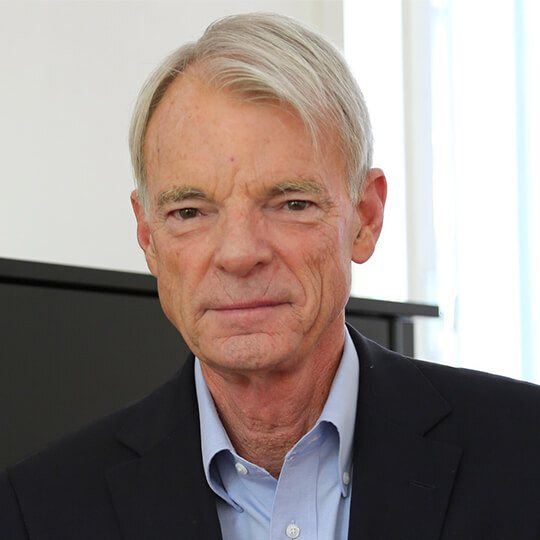
A. Michael Spence | Stanford Graduate School of Business
Spence is a senior fellow at the Hoover Institution and Philip H. Knight Professor and dean, emeritus, at Stanford Graduate School of Business. He is the chairman of an independent Commission on Growth and Development, created in 2006 and focused on growth and poverty reduction in developing countries. In 2001, he was awarded the Nobel Memorial Prize in Economic Sciences for his contributions to the analysis of markets with asymmetric information. He received the John Bates Clark Medal of the American Economic Association awarded to economists under 40. He served as Philip H. Knight Professor and dean of Stanford Business School from 1990 to 1999. As dean, he oversaw the finances, organization, and educational policies of the school. He taught at Stanford GSB as an associate professor of economics from 1973 to 1975. From 1975 to 1990, he served as professor of economics and business administration at Harvard University, holding a joint appointment in its business school and the Faculty of Arts and Sciences. In l983, he was named chairman of the economics department and George Gund Professor of Economics and Business Administration. Spence was awarded the John Kenneth Galbraith Prize for excellence in teaching in 1978 and the John Bates Clark Medal in 1981 for a “significant contribution to economic thought and knowledge.” From 1984 to 1990, Spence served as the dean of the Faculty of Arts and Sciences at Harvard, overseeing Harvard College, the Graduate School of Arts and Sciences, and the Division of Continuing Education. From 1977 to 1979, he was a member of the Economics Advisory Panel of the National Science Foundation and in 1979 served as a member of the Sloan Foundation Economics Advisory Committee. At various times, he has served as a member of the editorial boards of American Economics Review, Bell Journal of Economics, Journal of Economic Theory, and Public Policy. Among his many honors, Spence was elected a fellow of the American Academy of Arts and Sciences in 1983 and was awarded the David A. Wells Prize for outstanding doctoral dissertation at Harvard University in 1972. He has served as member of the boards of directors of General Mills, Siebel Systems, Nike, and Exult, and a number of private companies. From 1991 to 1997, he was chairman of the National Research Council Board on Science, Technology, and Economic Policy. He is a member of the American Economic Association and a fellow of the American Academy of Arts and Sciences and the Econometric Society.
gsb.stanford.edu →In 2001, he was awarded the Nobel Memorial Prize in Economic Sciences for his contributions to the analysis of markets with asymmetric information. He received the John Bates Clark Medal of the American Economic Association awarded to economists under 40. From 1975 to 1990, he served as professor of economics and business administration at Harvard University, holding a joint appointment in its business school and the Faculty of Arts and Sciences. In l983, he was named chairman of the economics department and George Gund Professor of Economics and Business Administration. Spence was awarded the John Kenneth Galbraith Prize for excellence in teaching in 1978 and the John Bates Clark Medal in 1981 for a “significant contribution to economic thought and knowledge.” From 1984 to 1990, Spence served as the dean of the Faculty of Arts and Sciences at Harvard, overseeing Harvard College, the Graduate School of Arts and Sciences, and the Division of Continuing Education. Among his many honors, Spence was elected a fellow of the American Academy of Arts and Sciences in 1983 and was awarded the David A. Wells Prize for outstanding doctoral dissertation at Harvard University in 1972. At Stanford University since 1990. Emeritus since 2000 Philip H. Knight Professor and Dean of Stanford GSB, 1990–99 Professor of Economics and Business Administration, Harvard University, 1975–90 Associate Professor of Economics, Stanford University, 1973–75 Dean of the Faculty of Arts and Sciences, Harvard University, 1984–90 A human-centered approach to artificial intelligence envisions a future where people and machines are collaborators, not competitors. The economist says the resilience of developing nations during the world economic crisis is encouraging, but long-term growth needs a global strategy. In an excerpt from their book, Garth Saloner and Michael Spence explore the ways managers can use technological innovations to add value. In May, the Center for Entrepreneurial Studies was renamed in honor of its founders, Charles Holloway and Irv Grousbeck. Since 1996, the Center for Entrepreneurial Studies has offered valuable learning experiences, serving as an important source of talent for the startup ecosystem. The fourth and final episode of GSB at 100 captures the sounds of Stanford GSB’s Centennial Day, considers how far we’ve come, and looks to the bright future ahead. Over the past century, six Stanford GSB professors have been awarded the Nobel Prize. Here’s a look at who they are — and why they won. As the school gets ready for its 100th birthday, a look back at the leaders who shaped it.
Excerpt from a page describing this subject · 21,355 chars · not written by Vinony
Wikidata facts
- Image
- A Michael Spence.jpg
Show 6 more facts
- Commons category
- Michael Spence
- date of birth
- 1943-11-07
- name in native language
- Michael Spence
- social media followers
- 11962
- affiliation string
- Stanford Graduate School of Business
- described at URL
- www.gsb.stanford.edu/faculty-research/faculty/michael-spence
Sources (14)
via Wikidata · CC0
~5 min read
Article
Andrew Michael Spence (born November 7, 1943) is a Canadian-American economist and Nobel laureate.
Spence is the William R. Berkley Professor in Economics and Business at the Stern School of Business at New York University, and the Philip H. Knight Professor of Management, Emeritus, and Dean, Emeritus, at the Stanford Graduate School of Business.