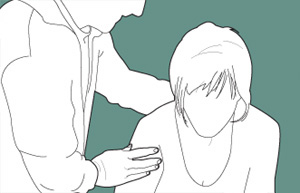
File:Panic_attack.jpg · Wikimedia Commons · See Wikimedia Commons
panic disorder
Sign in to saveAlso known as panic anxiety syndrome, PD
anxiety disorder characterized by reoccurring unexpected panic attacks
Key facts
- Specialty
- Psychiatry , clinical psychology
- Symptoms
- Sudden periods of intense fear , palpitations , sweating, shaking, shortness of breath , numbness
- Usual onset
- Sudden and recurrent
- Causes
- Unknown
- Risk factors
- Family history, smoking , psychological stress , history of child abuse
- Diagnostic method
- Based on symptoms after ruling out other potential causes
- Differential diagnosis
- Heart disease , hyperthyroidism , drug use
- Treatment
- Counselling , medications
- Medication
- Antidepressants , benzodiazepines , beta blockers
- Frequency
- 2.5% of people at some point
via Wikipedia infobox
Research
14,479 papers- Brain Mechanisms Underlying Panic Attack and Panic Disorder.Neuroscience bulletin · 2024
- Panic disorder.Lancet (London, England) · 2006
- Panic disorder.Current psychiatry reports · 2001
- Panic disorder.American family physician · 1995
- [Panic disorder and agoraphobia: understanding and therapy].Fortschritte der Neurologie-Psychiatrie · 2025
via PubMed
Wikidata facts
- Image
- Panic attack.jpg
Show 5 more facts
- NCI Thesaurus ID
- C34890
- ICPC 2 ID
- P74
- exact match
- purl.obolibrary.org/obo/DOID_594
- Commons category
- Panic disorder
- short name
- PD
Sources (11)
via Wikidata · CC0
~35 min read
Article
Panic disorder is an anxiety disorder characterized by reoccurring unexpected panic attacks. Panic attacks are sudden periods of intense fear that may include palpitations, sweating, shaking, shortness of breath, numbness, or a sense of impending doom. The maximum degree of symptoms occurs within minutes. There may be ongoing worries about having further attacks and avoidance of places where attacks have occurred in the past.
The exact cause of panic disorder is not fully understood; however, there are several factors linked to the disorder, such as a stressful or traumatic life event, having close family members with the disorder, and an imbalance of neurotransmitters. Diagnosis involves ruling out other potential causes of anxiety including other mental disorders, medical conditions such as heart disease or hyperthyroidism, and drug use. Screening for the condition may be done using a questionnaire.