File:PericarditisECG.JPG · Wikimedia Commons · See Wikimedia Commons
pericarditis
Sign in to savePericarditis () is inflammation of the pericardium, the fibrous sac surrounding the heart. Symptoms typically include sudden onset of sharp chest pain, which may also be felt in the shoulders, neck, or back. The pain is typically less severe when sitting up and more severe when lying down or breathing deeply. Other symptoms of pericarditis can include fever, weakness, palpitations, and shortness of breath. The onset of symptoms can occasionally be gradual rather than sudden.
Key facts
- Medical condition.name
- Pericarditis
- Medical condition.image
- Pericarditis10.JPG
- Medical condition.caption
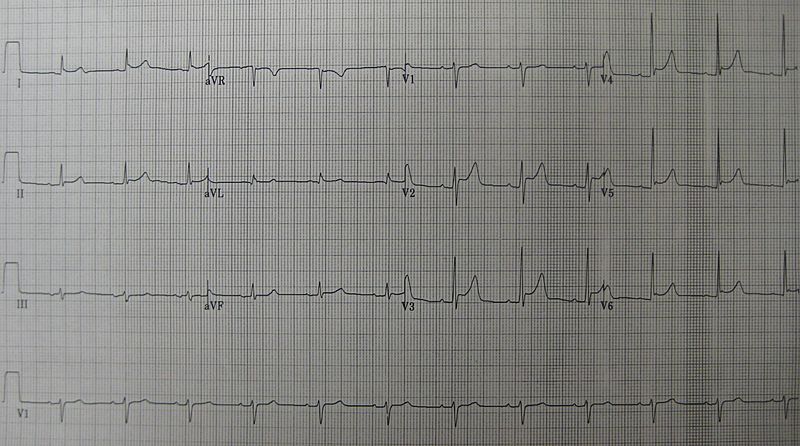
- An ECG showing pericarditis, with ST elevation in multiple leads and slight reciprocal ST depression in aVR.
- Medical condition.width
- 350px
- Medical condition.field
- Cardiology
- Medical condition.symptoms
- Sharp chest pain, better sitting up and worse with lying down, fever
- Medical condition.complications
- Cardiac tamponade, myocarditis, constrictive pericarditis
- Medical condition.onset
- Typically sudden
- Medical condition.duration
- Few days to weeks
- Medical condition.causes
- Viral infection, tuberculosis, uremic pericarditis, following a heart attack, cancer, autoimmune disorders, chest trauma
- Medical condition.diagnosis
- Based on symptoms, electrocardiogram, fluid around the heart
- Medical condition.differential
- Heart attack
- Medical condition.treatment
- NSAIDs, colchicine, corticosteroids
- Medical condition.prognosis
- Usually good
- Medical condition.frequency
- 3 per 10,000 per year
via Wikipedia infobox
Research
19,309 papers- Acute Pericarditis.Progress in cardiovascular diseases · 2017
- Autoimmune Pericarditis: Diagnosis and New Therapeutics.Current cardiology reports · 2025
- Pericarditis in Systemic Rheumatologic Diseases.Current cardiology reports · 2020
- Recurrent Pericarditis.Progress in cardiovascular diseases · 2017
- Idiopathic Pericarditis-an Autoinflammatory Disease?Current rheumatology reports · 2019
via PubMed
Wikidata facts
- Subclass of
- disease
- Image
- Pericarditis10.JPG
Show 10 more facts
- Commons category
- Pericarditis
- health specialty
- cardiology
- afflicts
- pericardium
- NCI Thesaurus ID
- C34915
- described by source
- Armenian Soviet Encyclopedia
- exact match
- purl.obolibrary.org/obo/HP_0001701
- drug or therapy used for treatment
- (S)-(−)-colchicine
- on focus list of Wikimedia project
- WikiProject Medicine
- symptoms and signs
- inflammation
Sources (7)
via Wikidata · CC0
~13 min read
Encyclopedic overview
16 sectionsContents
- Signs and symptoms
- Physical examinations
- Complications
- Causes
- Infectious
- Other
- Diagnosis
- Imaging
- Laboratory test
- Classification
- Acute vs. chronic
- Treatment
- Epidemiology
- See also
- References
- External links
Pericarditis () is inflammation of the pericardium, the fibrous sac surrounding the heart. Symptoms typically include sudden onset of sharp chest pain, which may also be felt in the shoulders, neck, or back. The pain is typically less severe when sitting up and more severe when lying down or breathing deeply. Other symptoms of pericarditis can include fever, weakness, palpitations, and shortness of breath. The onset of symptoms can occasionally be gradual rather than sudden.
The cause of pericarditis often remains unknown but is believed to be most often due to a viral infection. Other causes include bacterial infections such as tuberculosis, uremic pericarditis, heart attack, cancer, autoimmune disorders, and chest trauma. Diagnosis is based on the presence of chest pain, a pericardial rub, specific electrocardiogram (ECG) changes, and fluid around the heart. A heart attack may produce similar symptoms to pericarditis.
Excerpted from Wikipedia’s “pericarditis” article, available under the CC BY-SA 4.0 licence.