Pseudolarix · Kew POWO · Kew Plants of the World Online
Pseudolarix
Sign in to savePseudolarix is a genus of coniferous trees in the pine family Pinaceae containing three species, the extant Pseudolarix amabilis and the extinct species Pseudolarix japonica and Pseudolarix wehrii. Pseudolarix species are commonly known as golden larch, but are not true larches (Larix) being more closely related to Keteleeria, Abies and Cedrus. P. amabilis is native to eastern China, occurring in small areas in the mountains of southern Anhui, Zhejiang, Fujian, Jiangxi, Hunan, Hubei and eastern Sichuan, at altitudes of . P. wehrii is described from fossils dating to the Early Eocene (Ypresian)
Species
GENUS
- KingdomPlantae
- PhylumTracheophyta
- ClassPinopsida
- OrderPinales
- FamilyPinaceae
via GBIF · Kew POWO
Wikidata facts
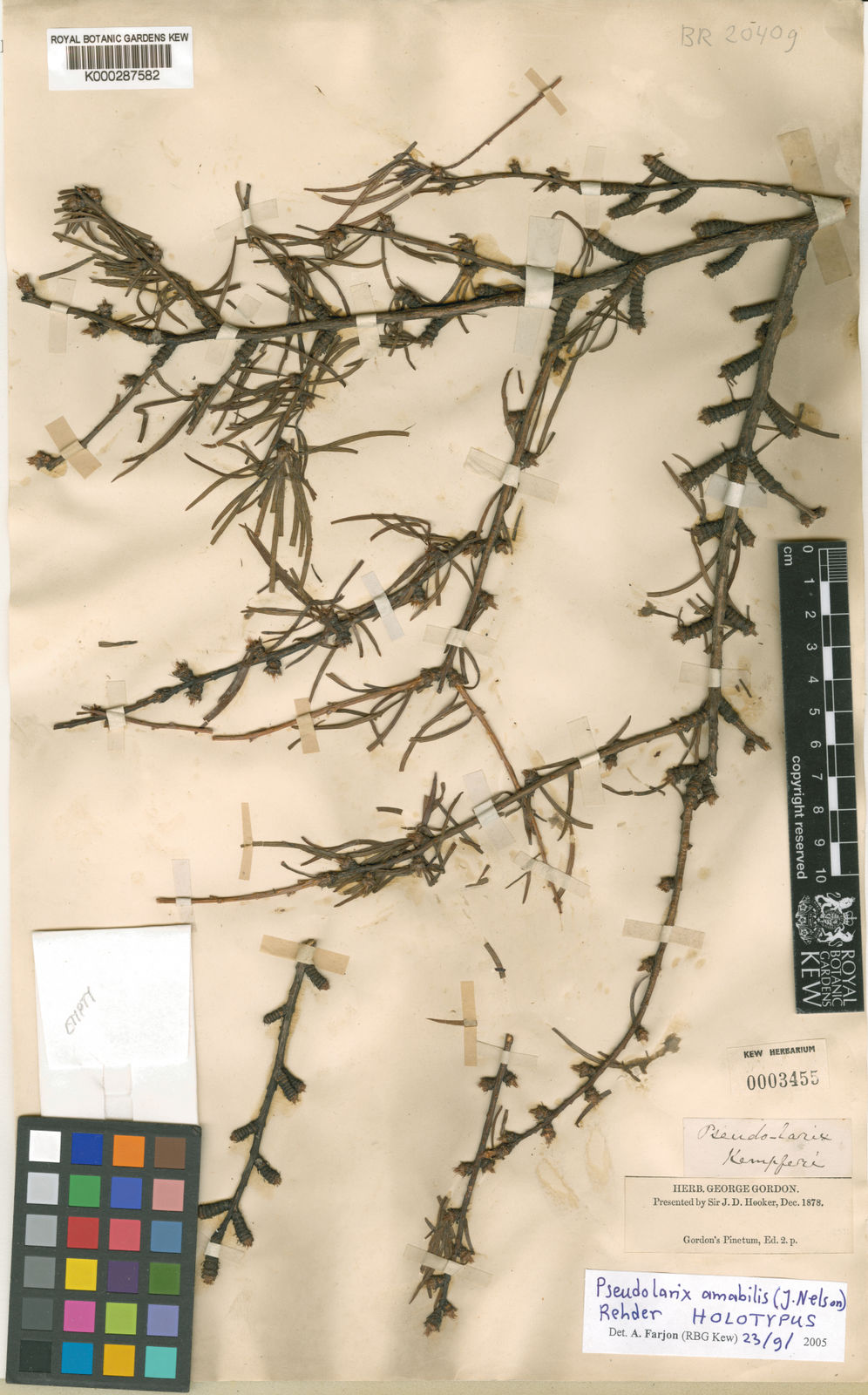
- Image
- Pseudolarix kaempferi.jpg
Show 5 more facts
- taxon common name
- 金钱松属
- taxon name
- Pseudolarix
- Commons category
- Pseudolarix
- start time
- 49000000-0
Sources (2)
via Wikidata · CC0
~3 min read
Article
3 sectionsContents
- Description
- References
- External links
Pseudolarix is a genus of coniferous trees in the pine family Pinaceae containing three species, the extant Pseudolarix amabilis and the extinct species Pseudolarix japonica and Pseudolarix wehrii. Pseudolarix species are commonly known as golden larch, but are not true larches (Larix) being more closely related to Keteleeria, Abies and Cedrus. P. amabilis is native to eastern China, occurring in small areas in the mountains of southern Anhui, Zhejiang, Fujian, Jiangxi, Hunan, Hubei and eastern Sichuan, at altitudes of . P. wehrii is described from fossils dating to the Early Eocene (Ypresian), of Western North America where it is found in the Eocene Okanagan Highlands Allenby and Klondike Mountain Formations. The youngest known occurrence is of mummified fossils found in the Late Eocene Buchanan Lake Formation on Axel Heiberg Island. P. japonica is known from Middle Miocene to Pliocene sediments in Japan and Miocene deposits of Korea. Fossils assigned to Pseudolarix as a genus date possibly as old as the Early Cretaceous Hauterivian stage in Mongolia.
== Description ==