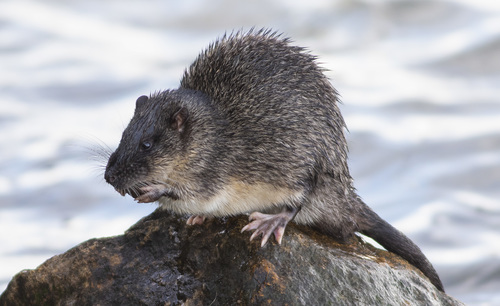
(c) Ron Greer, some rights reserved (CC BY-NC), uploaded by Ron Greer · cc-by-nc
Rakali
Sign in to saveAlso known as Hydromys chrysogaster, Common water rat
The rakali (Hydromys chrysogaster), also known as the rabe, the "Australian otter" or water-rat, is an Australian native rodent first scientifically described in 1804. Adoption of the Ngarrindjeri name rakali is intended to foster a positive public attitude by Environment Australia.
In the Vinony graph
Within Vinony's link graph, Rakali is referenced by 138 other articles, and connects out to New Guinean jumping mouse, Earless water rat and Target rat.
It sits within the topics Hydromys, IUCN Red List least concern species and Mammals described in 1804.
Its subject is documented across 30 Wikipedia language editions.
Species
Least ConcernRakali
Species
- PhylumChordata
- ClassMammalia
- OrderRodentia
- FamilyMuridae
via IUCN
Wikidata facts
Show 10 more facts
- taxon rank
- species
- IUCN conservation status
- Least Concern
- Commons category
- Hydromys chrysogaster
- taxon name
- Hydromys chrysogaster
- Commons gallery
- Hydromys chrysogaster
- taxon common name
- Austalian Water Rat
- longest observed lifespan
- 7.3
- endemic to
- Tasmania
- taxon author citation
- Geoffroy, 1804
- short name
- H. chrysogaster
Sources (3)
via Wikidata · CC0
~15 min read
Encyclopedic overview
13 sectionsContents
- Common names
- Taxonomy and description
- Ecology
- Distribution, range and habitat
- Diet and foraging
- Metabolism
- Predators and predation
- Behaviour and life history
- Nesting
- Breeding and growth
- Status
- References
- External links
The rakali (Hydromys chrysogaster), also known as the rabe, the "Australian otter" or water-rat, is an Australian native rodent first scientifically described in 1804. Adoption of the Ngarrindjeri name rakali is intended to foster a positive public attitude by Environment Australia.
One of four described species in the genus Hydromys, it is the only one with a range extending beyond New Guinea. Having adapted to and colonised a unique niche of a semiaquatic and nocturnal lifestyle, this species lives in burrows on the banks of rivers, lakes and estuaries and feeds on aquatic insects, fish, crustaceans, mussels, snails, frogs, bird's eggs and small water birds.
Excerpted from Wikipedia’s “Rakali” article, available under the CC BY-SA 4.0 licence.