File:Varangian_routes.png · Wikimedia Commons · See Wikimedia Commons
Wikidata facts
- Instance of
- ethnic group
- Named after
- Rus
- Languages spoken
- Church Slavonic
- Native language
- Old East Slavic
- Religion
- Christianity
- Image
- Присяга воинов Олега оружием и богом Перуном; утверждение мирною договора Олега с греками.jpg
Show 7 more facts
- Commons category
- Rus' people
- topic's main category
- Category:Rus' people
- different from
- Russians
- on focus list of Wikimedia project
- Wikipedia:Vital articles/Level/4
- ancestral home
- Rus
- described by source
- Chronica Slavorum
- native label
- РУСЪ
Sources (2)
via Wikidata · CC0
~40 min read
Encyclopedic overview
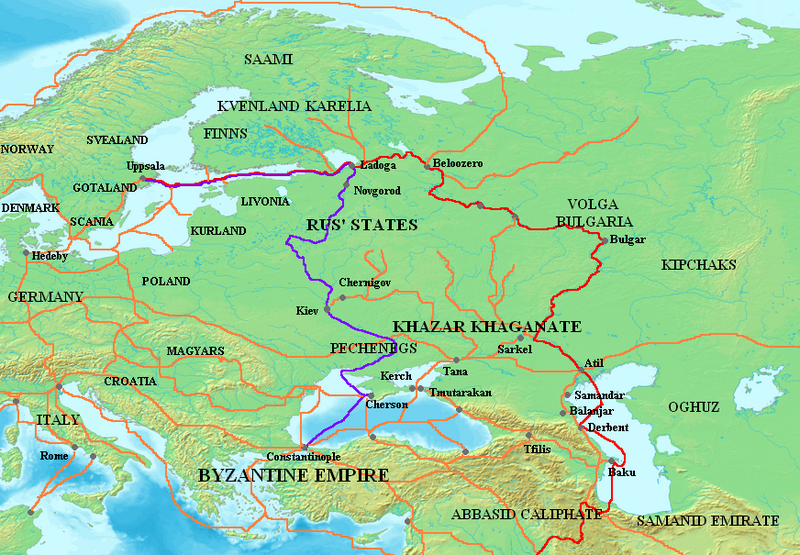
Map showing the major Varangian trade routes: the Volga trade route (in red) and the trade route from the Varangians to the Greeks (in purple). Sufficiently controlling strongholds, market places and portages along the routes was necessary for the Scandinavian raiders and traders.
The Rus', also known as Russes, were a people in early medieval Eastern Europe. The scholarly consensus holds that they were originally Norsemen, mainly originating from present-day Sweden, who settled and ruled along the river-routes between the Baltic and the Black Sea from around the 8th to 11th centuries AD.
Excerpted from Wikipedia’s “Rus' people” article, available under the CC BY-SA 4.0 licence.