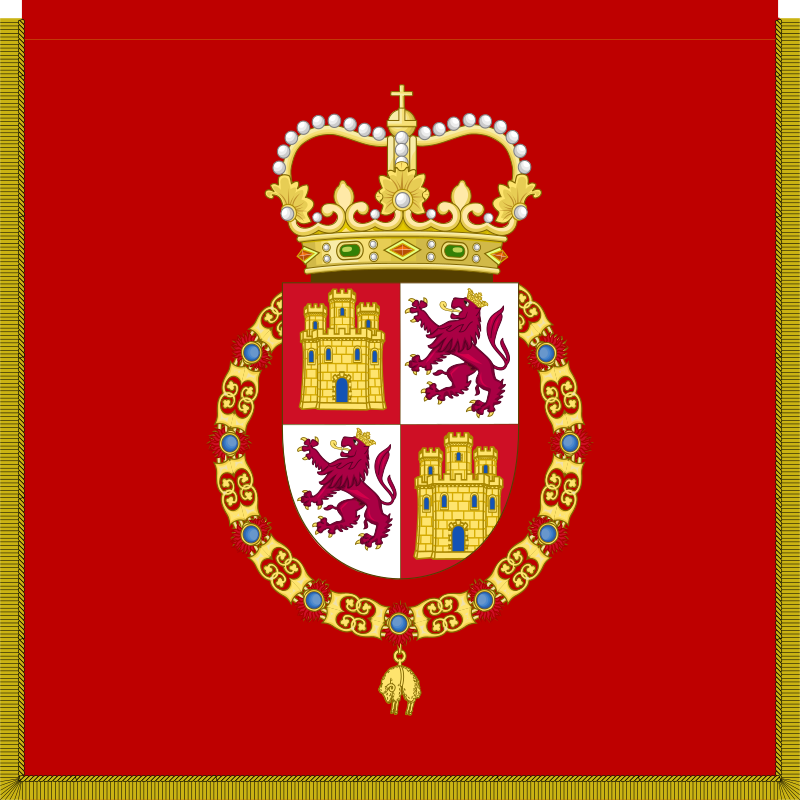
File:Pendón_real_de_Medina_del_Campo.svg · Wikimedia Commons · See Wikimedia Commons
Spanish colonization of the Americas
Also known as Spanish Empire
overseas expansion under the Crown of Castile
AI overview
Spanish colonization of the Americas refers to the overseas expansion of the Crown of Castile into the Americas beginning in 1492. This colonial process matters because it fundamentally shaped the political, cultural, and demographic landscape of the Western Hemisphere and had lasting global consequences that continue to influence the Americas today.
AI-generated from the Wikipedia summary — may contain errors.
Wikidata facts
- Image
- Fray Bartolomé de Olmedo bautizando a las mujeres ofrecidas por Xicomecóatl, Miguel González (~1696).png
Show 3 more facts
- Commons category
- Spanish colonization of the Americas
- start time
- 1493-09-24
- end time
- 1898-07-13
Sources (1)
via Wikidata · CC0
~40 min read
Article
Flag of Spanish conquistadors with the crown of Castile on a red flag, used by Hernán Cortés, Francisco Pizarro and others Spanish (blue) and Portuguese (green) empires in 1790
The Spanish colonization of the Americas began in 1493 on the Caribbean island of Hispaniola (now Haiti and the Dominican Republic) after the initial 1492 voyage of Genoese mariner Christopher Columbus under license from Queen Isabella I of Castile. These overseas territories of the Spanish Empire were under the jurisdiction of Crown of Castile until the last territory was lost in 1898. Spaniards saw the dense populations of Indigenous peoples as an important economic resource and the territory claimed as potentially producing great wealth for individual Spaniards and the crown. Religion played an important role in the Spanish conquest and incorporation of indigenous peoples, bringing them into the Catholic Church peacefully or by force. The crown created civil and religious structures to administer the vast territory. Spanish men and women settled in greatest numbers where there were dense indigenous populations and the existence of valuable resources for extraction.
Gallery (12)
Connections
Categories
16th century in Central America16th century in North America16th century in South America16th century in the Spanish EmpireColonial MexicoColonial PeruColonial United States (Spanish)Former empiresFormer Spanish coloniesHistory of Indigenous peoples of the AmericasHistory of New SpainHistory of the Americas