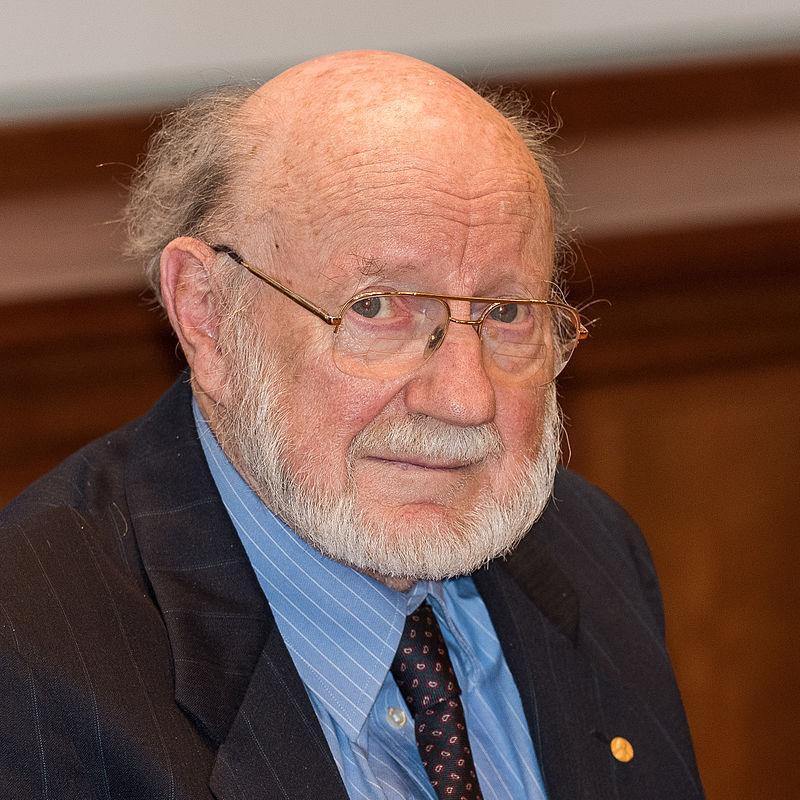
File:William_C._Campbell_4983-1-2015.jpg · Wikimedia Commons · See Wikimedia Commons
William C. Campbell
Sign in to saveAlso known as William Campbell, W. C. Campbell, W.C. Campbell
Irish biochemist
William C. Campbell is an Irish biochemist who made significant contributions to science and medicine. (Note: Without additional context provided, I cannot accurately explain why his work specifically matters to general readers.)
AI-generated from the Wikipedia summary — may contain errors.
Nobel Prize
- The Nobel Prize in Physiology or Medicine2015
“for their discoveries concerning a novel therapy against infections caused by roundworm parasites”
Shared · 1/4 portion
Wikidata facts
- Instance of
- human
- Given name
- William
- Family name
- Campbell
- Gender
- male
- Citizenship
- United States
- Place of birth
- Ramelton
- Occupation
- physiologist
- Educated at
- University of Dublin
- Employer
- Drew University
- Languages spoken
- English language
- Academic degree
- Doctor of Sciences
- Field of work
- pharmaceutics
- Image
- William C. Campbell 4983-1-2015.jpg
- Residence
- North Andover
Show 7 more facts
- date of birth
- 1930-06-28
- member of
- Royal Irish Academy
- Commons category
- William C. Campbell
- birth name
- William Cecil Campbell
- name in native language
- William Cecil Campbell
- different from
- William Campbell
- interested in
- biochemistry
Sources (8)
via Wikidata · CC0
~5 min read
Encyclopedic overview
William Cecil Campbell FRS (born 28 June 1930) is an Irish and American microbiologist known for his work in discovering a novel therapy against infections caused by roundworms, for which he was jointly awarded the 2015 Nobel Prize in Physiology or Medicine. He helped to discover a class of drugs called avermectins, whose derivatives have been shown to have "extraordinary efficacy" in treating River blindness and Lymphatic filariasis, among other parasitic diseases affecting animals and humans. Campbell worked at the Merck Institute for Therapeutic Research 1957–1990, and has become a research fellow emeritus at Drew University.
Biography
Excerpted from Wikipedia’s “William C. Campbell” article, available under the CC BY-SA 4.0 licence.