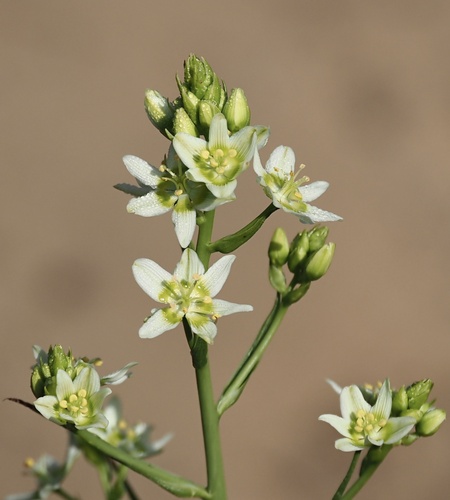
(c) nathantay, some rights reserved (CC BY-NC) · cc-by-nc
Zigadenus
Sign in to saveZigadenus is a genus of flowering plants now containing only one species, Zigadenus glaberrimus, the sandbog death camas, found in the southeastern United States from Mississippi to Virginia. Around 20 species were formerly included in the genus, but have now been moved to other genera.
Species
Fremont's Death Camas
GENUS
- KingdomPlantae
- PhylumTracheophyta
- ClassLiliopsida
- OrderLiliales
- FamilyMelanthiaceae
via GBIF · Kew POWO
Museum specimens
- Specimen records
- 334
- With media
- 250
- Family
- Melanthiaceae
- Collections
- INECOL, FC-UNAM, DERN-IMECBIO-CUCSUR-UDG, CMN, CAS, US
- Recorded in
- Mexico, United States
Research
20 papers- Zigadenus poisoning.Annals of emergency medicine · 1995
- Human poisoning by zigadenus.Journal of toxicology. Clinical toxicology · 1987
- Intoxication with foothill camas (Zigadenus paniculatus).Journal of toxicology. Clinical toxicology · 2003
- Zigadenus poisoning treated with atropine and dopamine.Journal of medical toxicology : official journal of the American College of Medical Toxicology · 2009
- Analysis of rumen contents and ocular fluid for toxic alkaloids from goats and cows dosed larkspur (Delphinium barbeyi), lupine (Lupinus leucophyllus), and death camas (Zigadenus paniculatus).Toxicon : official journal of the International Society on Toxinology · 2020
via PubMed
Wikidata facts
- Instance of
- taxon
- Parent taxon
- Melanthiaceae
- Image
- ZigadenusGlaberrimus.jpg
Show 7 more facts
- Commons category
- Zigadenus
- taxon name
- Zigadenus
- taxon rank
- genus
- topic's main category
- Category:Zigadenus
- taxon common name
- 棋盘花属
- Montana Plant Life URL
- montana.plant-life.org/cgi-bin/genus03.cgi?Liliaceae_Zigadenus
Sources (2)
via Wikidata · CC0
~3 min read
Encyclopedic overview
5 sectionsContents
- Description
- Systematics
- Species formerly placed in ''Zigadenus''
- Toxicity
- References
Zigadenus is a genus of flowering plants now containing only one species, Zigadenus glaberrimus, the sandbog death camas, found in the southeastern United States from Mississippi to Virginia. Around 20 species were formerly included in the genus, but have now been moved to other genera.
== Description == Zigadenus glaberrimus generally grows to a height of . A total of 30–70 flowers are borne in panicles. Each white to cream colored flower is bell-shaped, across. The tepals of the flower remain attached to the fruit capsule when it forms. The cone shaped seed capsules are long by across.
Excerpted from Wikipedia’s “Zigadenus” article, available under the CC BY-SA 4.0 licence.