Category
page 1Characters in Book VI of the Aeneid

Julius Caesar
Gaius Julius Caesar was a Roman general, statesman, and author who was the dictator of the Roman Republic almost continuously from 49 BC until his assassination in 44 BC. A member of the First Triumvirate, he led the Roman armies through the Gallic Wars and defeated his political rival Pompey in Caesar's civil war. He consolidated power and proclaimed himself dictator for life in 44 BC, which contributed to the political conditions that led to the collapse of the Roman Republic and the emergence of the Roman Empire. For his role in these events, he is regarded as one of the most influential historical figures.

Augustus
Augustus (born Gaius Octavius; 23 September 63 BC – 19 August AD 14), also known as Octavian (), was the founder of the Roman Empire and the first Roman emperor from 27 BC until his death in AD 14. The reign of Augustus initiated an imperial cult and an era of imperial peace (the or ) in which the Roman world was largely free of armed conflict. The principate, a style of government where the emperor showed nominal deference to the Senate, was established during his reign and lasted until the Crisis of the Third Century.

Cato the Elder
Roman politician, soldier and writer (234–149 BC)

titan
thumb|upright=1.3|The Fall of the Titans (1596-98), a mythological painting by Dutch painter [[Cornelis van Haarlem.]]

Cerberus
thumb|right|Heracles, wearing his characteristic lion-skin, club in right hand, leash in left, presenting a three-headed Cerberus, snakes coiling from his snouts, necks and front paws, to a frightened [[Eurystheus hiding in a giant pot. Caeretan hydria (c. 530 BC) from Caere (Louvre E701)]]
%20-%20Napoli%20MAN%209043%20-%2001.jpg)
Theseus
thumb|Theseus after having slain the Minotaur, freeing captive Athenian boys; Cretans approaching to marvel the scene, Antique fresco from [[Pompeii]]
Theseus (, ; ) was a divine hero in Greek mythology, famous for slaying the Minotaur. The myths surrounding Theseus, his journeys, exploits, and friends, have provided material for storytelling throughout the ages.

Minos
250 px|thumb|Gustave Doré's illustration of King Minos for [[Dante Alighieri's Inferno]]
thumb|Mural of Minos at the National and Kapodistrain University of Athens

Scipio Africanus
Roman general and politician (236/235–183 BC)

Orpheus
In Greek mythology, Orpheus (; , classical pronunciation: ) was a Thracian bard, legendary musician and prophet. He was also a renowned poet and, according to legend, travelled with Jason and the Argonauts in search of the Golden Fleece, and descended into the underworld to recover his lost wife, Eurydice.

Hydra
ancient serpent-like chthonic water monster, with reptilian traits, that possessed many heads, in Greek mythology
%20Lekythos%20with%20Charon%2C%20attributed%20to%20the%20Tymbos%20painter%2C%20ca%20500%20-%20450%20BC%2C%20Ashmolean%20Museum%2C%20Oxford%2C%20UK%20(22681344331).jpg)
Charon
thumb|right|Attic red-figure [[lekythos attributed to the Tymbos painter showing Charon welcoming a soul into his boat, c. 500–450 BC]]

Numa Pompilius
legendary second king of Rome, succeeding Romulus
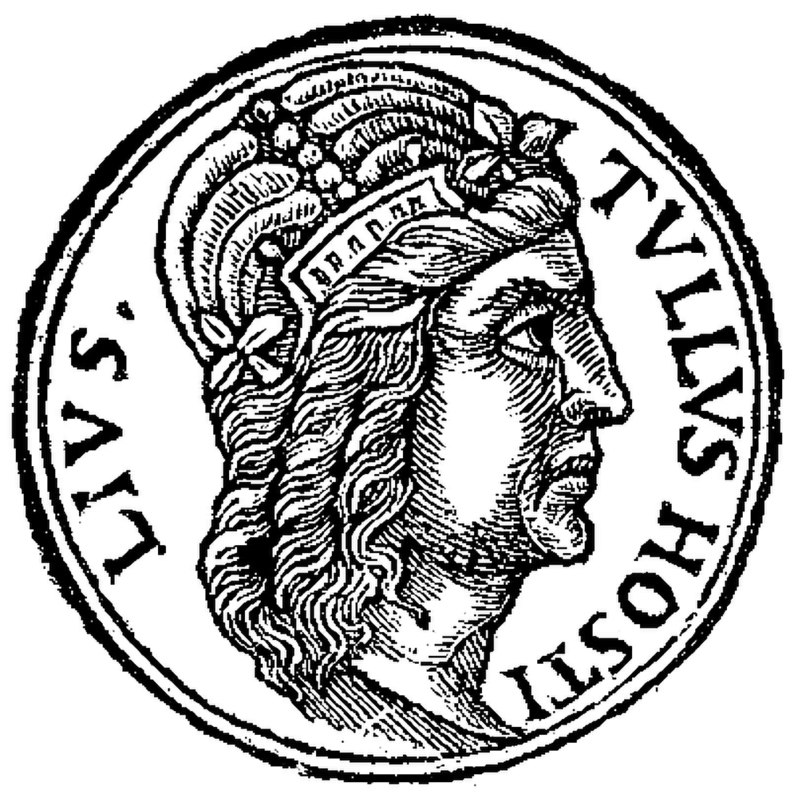
Tullus Hostilius
King of Rome from 672 to 640 BC

Dido
In Greek and Roman mythology, Dido ( ; ; ), also known as Elissa ( ; ), was the legendary founder and first queen of the Phoenician city-state of Carthage.
In most accounts, she was originally the joint ruler of Tyre who fled tyranny to found her own city in northwest Africa, now modern-day Tunisia. As she is only known from ancient Greek and Roman sources, all of which were written well after Carthage's founding, her historicity remains uncertain.

Tiberius Gracchus
ancient Rome politician

Ancus Marcius
legendary fourth king of Rome
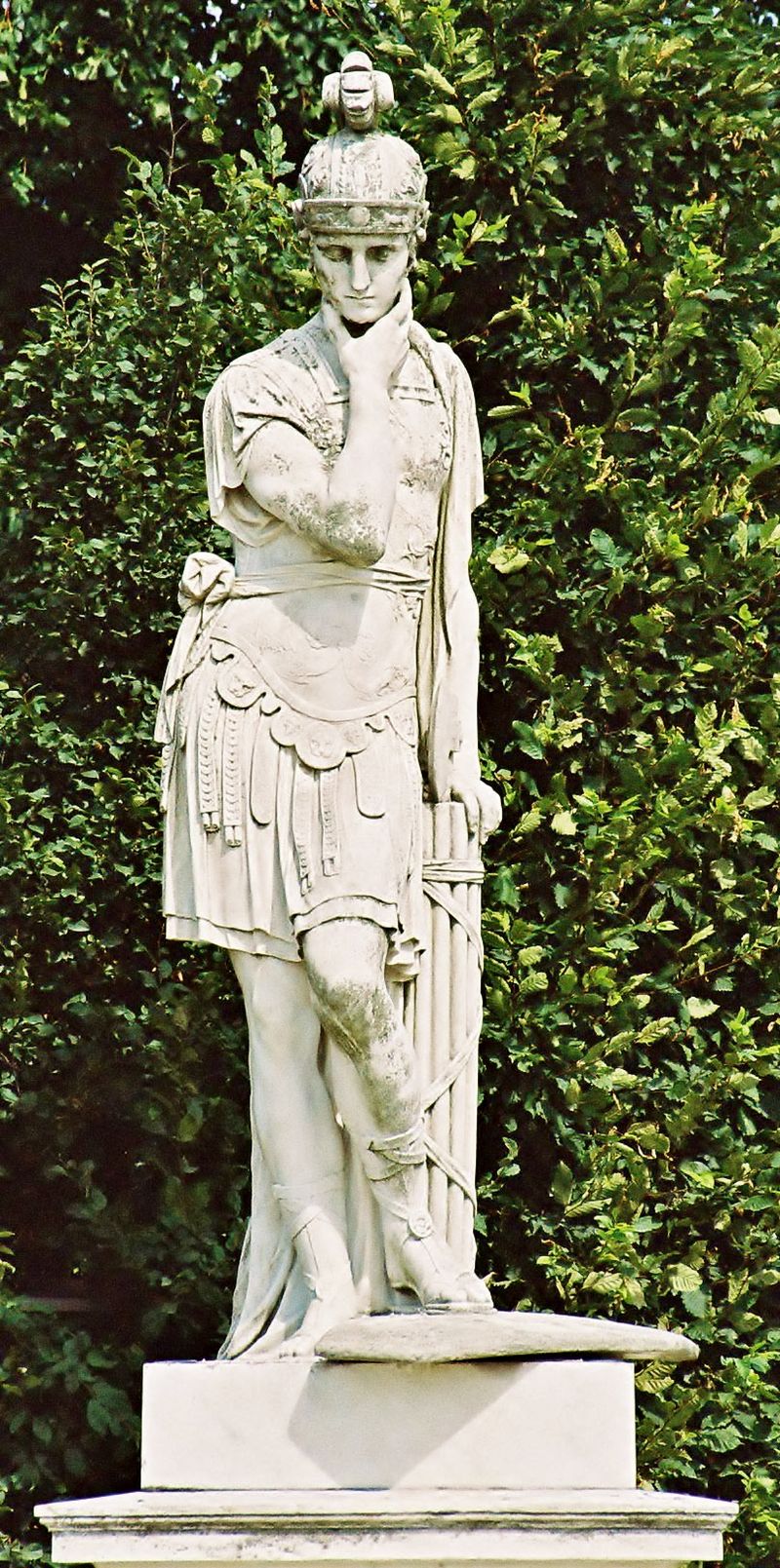
Quintus Fabius Maximus Verrucosus
Roman statesman and general (c. 280 – 203 BC)

Pasiphaë
In Greek mythology, Pasiphaë (, derived from the dative plural 'for all' and 'light'; , or , ) was the daughter of Helios, queen of Crete, and mother of the Minotaur. After her husband Minos failed to sacrifice the Cretan Bull to Poseidon as promised, the god cursed Pasiphaë to fall in love with the bull. She had Daedalus build a hollow wooden cow for her to hide in, which she then used to mate with the bull; afterwards, she gave birth to the Minotaur.

Gaius Gracchus
ancient Roman politician
Lucius Aemilius Paullus Macedonicus
Roman general and statesman (c. 229 – 160 BC)

Ixion
thumb|The Fall of Ixion by Cornelis van Haarlem

Lucius Junius Brutus
Semi-legendary 6th-century BC founder of Roman Republic

Phaedra
wife of Theseus in Greek mythology

Marcus Furius Camillus
politician and soldier (446–365 BCE)
.jpg)
Adrastus
thumb|Adrastus about to kill Hypsipyle on an ancient Roman sarcophagus from Corinth, Greece.

Pirithous
thumb|upright=1.2|Pirithous and Hippodamia (wife of Pirithous)|Hippodamia receiving the centaurs at his wedding. Antique fresco from Pompeii.
thumb|"Pirithous' Kampf um Helena" by Joseph Echteler and [[Richard Brend'amour]]
Deiphobus
In Greek mythology, Deiphobus (, "hostile, panicky flight") was a son of Priam and Hecuba. He was a prince of Troy, and the greatest of Priam's sons after Hector and Paris. Deiphobus killed four men of fame in the Trojan War.

Tydeus
Tydeus (; Ancient Greek: Τυδεύς Tūdeus) was an Aetolian hero in Greek mythology, belonging to the generation before the Trojan War. He was one of the Seven against Thebes, and the father of Diomedes, who is frequently known by the patronymic Tydides.
Dardanus
mythological Greek character, son of Zeus

Publius Cornelius Scipio
Roman general and statesman (died 211 BC)

Marcus Claudius Marcellus
general and five time consul of the Roman Republic, awareded the Spolia opima for his victories during the Gallic and Punic Wars

Tityos
thumb|Tityos attempts to rape Leto and is stopped by Apollo and Artemis on an Attic red-figure amphora from Vulci, 510–520 BCE, by the Phintias (painter)|Phintias Painter. [[Louvre, Paris.]]

Marcus Atilius Regulus
3rd-century BC Roman general and statesman

Tisiphone
thumb|Antonio Tempesta, The Fury Tisiphone at the Palace of [[Athamas]]

Marcellus
nephew and son-in-law of Roman emperor Augustus
.jpg)
Eriphyle
Eriphyle (; ) was a figure in Greek mythology who, in exchange for the Necklace of Harmonia (also called the Necklace of Eriphyle) given to her by Polynices, persuaded her husband Amphiaraus to join the doomed expedition of the Seven against Thebes. She was then slain by her son Alcmaeon.

Salmoneus
In Greek mythology, Salmoneus (; ) was 'the wicked' eponymous king and founder of Salmone in Pisatis.

Numitor
thumb|271x271px|Numitor from Nuremberg chronicles
In Roman mythology, King Numitor () of Alba Longa was the maternal grandfather of Rome's founder and first king, Romulus, and his twin brother Remus. He was the son of Procas, descendant of Aeneas the Trojan, and father of the twins' mother, Rhea Silvia, and Lausus.
%2C%20small%20bronze%20relief%2C%20AM%20Olympia%2C%20Olym14.jpg)
Caeneus
thumb|250px|Two Centaurs pound Caeneus into the ground with tree trunks; bronze relief from Olympia, Archaeological Museum of Olympia BE 11a (mid–late seventh century BC)
In Greek mythology, Caeneus () was a Lapith hero, ruler of Thessaly, and the father of the Argonaut Coronus. Caeneus was born a girl, Caenis (), the daughter of Elatus, but after Poseidon had sex with Caenis, she was transformed by him into an invulnerable man. Caeneus participated in the Centauromachy, where he met his demise at the hands of the Centaurs by being pounded into the ground while still alive.
Lucius Mummius Achaicus
Roman censor in 142 BC

Parthenopeus
thumb | right | alt=The Oath Of The Seven Chiefs | The Oath Of The Seven Chiefs
In Greek mythology, Parthenopaeus or Parthenopaios (; ) was one of the Seven against Thebes, a native of Arcadia, described as young and outstandingly good-looking, but at the same time arrogant, ruthless and over-confident, although an unproblematic ally for the Argives.
Lucius Cornelius Scipio Asiaticus
Roman consul
Assaracus
In Greek mythology, Assaracus (; Ancient Greek: Ἀσσάρακος Assarakos) was a king of Dardania.

Phlegyas
thumb|Phlegias with Dante Alighieri|Dante and [[Virgil, stained glass in Museo Poldi Pezzoli in Milan]]
Cumaean Sibyl
priestess presiding over the Apollonian oracle at Cumae
Musaeus of Athens
legendary ancient poet and musician
.jpg)
Procris
thumb|right|The Death of Procris by Joachim Wtewael (circa 1595–1600)
In Greek mythology, Procris (, gen.: Πρόκριδος) was an Athenian princess, the third daughter of Erechtheus, king of Athens and his wife, Praxithea. Homer mentions her in the Odyssey as one of the many dead spirits Odysseus saw in the Underworld. Sophocles wrote a tragedy called Procris that has been lost, as has a version contained in the Greek Cycle, but at least six different accounts of her story still exist.
Silvius
legendary king of Alba Longa in Roman mythology
Gaius Fabricius Luscinus
Roman censor 275 BC
Titus Manlius Imperiosus Torquatus
4th-century BC Roman general and statesman

Palinurus
thumb
Palinurus (Palinūrus), in Roman mythology and especially Virgil's Aeneid, is the coxswain of Aeneas' ship. Later authors used him as a general type of navigator or guide. Palinurus is an example of human sacrifice; his life is the price for the Trojans landing in Italy.

Procas
Procas Sylvius or Proca (said to have reigned 817–794 BC) was one of the Latin kings of Alba Longa in the mythic tradition of the founding of Rome. He was the father of Amulius and Numitor and the great-grandfather of Romulus and Remus, Rome's legendary founders.
Laodamia
Greek mythology character, wife of Protesilaus
Aeneas Silvius
mythological son of Silvius
Glaucus
mythical son of Hippolochus
Fabia gens
Roman gens
Aulus Cornelius Cossus
5th-century BC Roman general
Medon
list of mythical and historical people
Evadne
In Greek mythology, Evadne (; ) was a name attributed to the following individuals:
Orontes
Orontes () may refer to: