Category
page 1Fauna of the Holarctic realm
.png)
Canis lupus
The wolf (Canis lupus; : wolves), also known as the grey wolf or gray wolf, is a canine native to Eurasia and North America. More than thirty subspecies of Canis lupus have been recognized, including the dog and dingo, though grey wolves, as popularly understood, include only naturally occurring wild subspecies. The wolf is the largest wild extant member of the family Canidae, and is further distinguished from other Canis species by its less pointed ears and muzzle, as well as a shorter torso and a longer tail. The wolf is nonetheless related closely enough to smaller Canis species, such as th

Ursus maritimus
species of bear native largely within the Arctic Circle

Red Fox
species of mammal
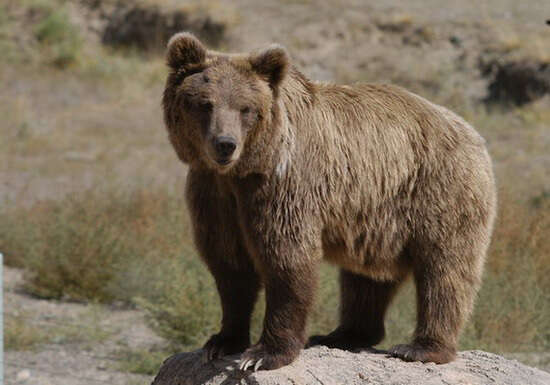
Ursus arctos
species of mammal

Alces alces
The moose (: moose; used in North America) or elk (: elk or elks; used in Eurasia) (Alces alces) is the world's tallest, largest and heaviest extant species of deer and the only extant species in the genus Alces. It is also the tallest, and the second-largest, land animal in North America, falling short only to the American bison in body mass. Most adult male moose have broad, palmate ("open-hand shaped") antlers; other members of the deer family have pointed antlers with a dendritic ("twig-like") configuration. Moose inhabit the circumpolar boreal forests or temperate broadleaf and mixed fore

Rangifer tarandus
The reindeer or caribou (Rangifer tarandus) is a species of deer with circumpolar distribution, native to Arctic, subarctic, tundra, boreal, and mountainous regions of Northern Europe, Siberia, and North America. It is the only representative of the genus Rangifer. More recent studies suggest the splitting of reindeer and caribou (North American terminology). "All caribou and reindeer throughout the world are considered to be the same species, but there are 7 subspecies."
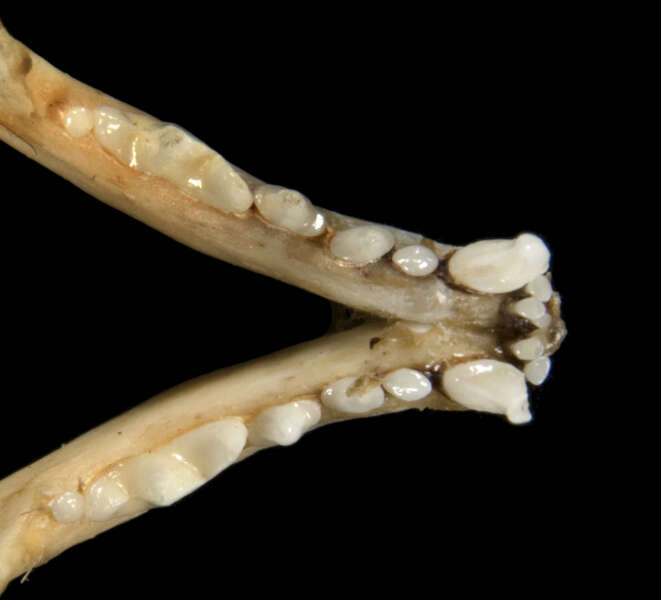
Mustela nivalis
species of mammal

walrus
The walrus (Odobenus rosmarus; plural walrus or walruses) is a large pinniped marine mammal with discontinuous distribution about the North Pole in the Arctic Ocean and subarctic seas of the Northern Hemisphere. It is the only extant species in the family Odobenidae and genus Odobenus. This species is subdivided into two subspecies: the Atlantic walrus (O. r. rosmarus), which lives in the Atlantic Ocean, and the Pacific walrus (O. r. divergens), which lives in the Pacific Ocean.
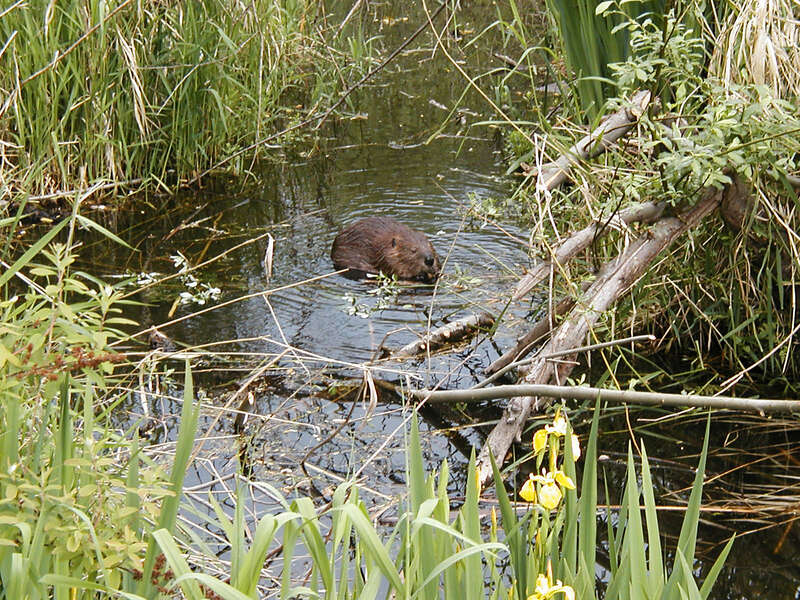
beaver
Beavers (genus Castor) are large semiaquatic rodents of the Northern Hemisphere. There are two extant species: the North American beaver (Castor canadensis) and the Eurasian beaver (C. fiber). Beavers are the second-largest living rodents, after capybaras, weighing up to . They have stout bodies with large heads, long chisel-like incisors, brown or gray fur, hand-like front feet, webbed back feet, and tails that are flat and scaly. The two species differ in skull and tail shape and fur color. Beavers can be found in a number of freshwater habitats, such as rivers, streams, lakes and ponds. The

Q677014
A lynx ( ; : lynx or lynxes) is any of the four extant species (the Canada lynx, Iberian lynx, Eurasian lynx and the bobcat) within the medium-sized wild cat genus Lynx. The name originated in Middle English via Latin from the Greek word (), derived from the Indo-European root (, ), in reference to the luminescence of its reflective eyes.
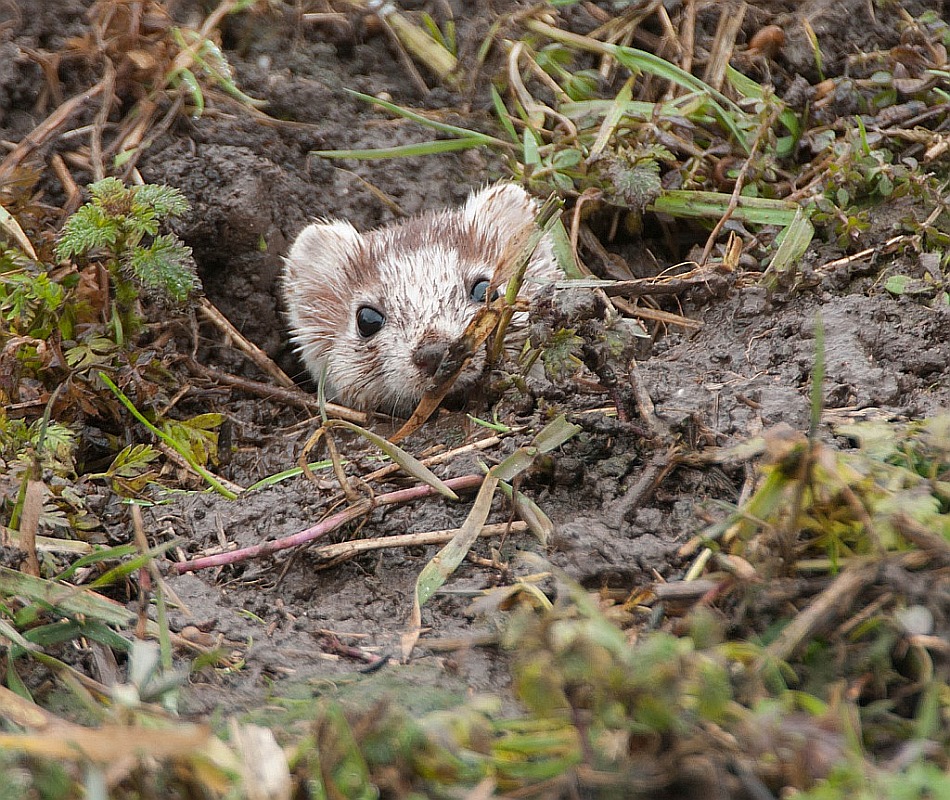
Mustela erminea
The stoat (Mustela erminea), also known as the Eurasian ermine or ermine, is a species of mustelid native to Eurasia and the northern regions of North America. Because of its wide circumpolar distribution, it is listed as Least Concern on the IUCN Red List. The name ermine () is used especially in its pure white winter coat of the stoat or its fur. Ermine fur was used in the 15th century by Catholic monarchs, who sometimes used it as the mozzetta cape. It has long been used on the ceremonial robes of members of the United Kingdom House of Lords. It was also used in capes on images such as the

wolverine
The wolverine ( , ; Gulo gulo), also called the carcajou or quickhatch (from East Cree, kwiihkwahaacheew), is the largest land-dwelling member of the family Mustelidae. It is a muscular carnivore and a solitary animal. The wolverine has a reputation for ferocity and strength out of proportion to its size, with the documented ability to kill prey many times larger than itself.

Vulpes lagopus
species of mammal

Bison
A bison (: bison) is a large bovine in the genus Bison (from Greek, meaning 'wild ox') within the tribe Bovini. Two extant and numerous extinct species are recognised.

pike
species of fish

narwhal
The narwhal (Monodon monoceros) is a species of toothed whale native to the Arctic. It is the only member of the genus Monodon and one of two living representatives of the family Monodontidae. The narwhal is a stocky cetacean with a relatively blunt snout, a large melon, and a shallow ridge in place of a dorsal fin. Males of this species have a spiralled tusk that is long, which is a protruding left canine thought to function as a weapon, a tool for feeding, in attracting mates or sensing water salinity. Specially adapted slow-twitch muscles, along with the jointed neck vertebrae and shallow d

musk ox
The muskox (Ovibos moschatus) is a hoofed mammal of the family Bovidae. Native to the Arctic, it is noted for its thick coat and for the strong odor emitted by males during the seasonal rut, from which its name derives. This musky odor has the effect of attracting females during mating season. Its Inuktitut name translates to "the bearded one".
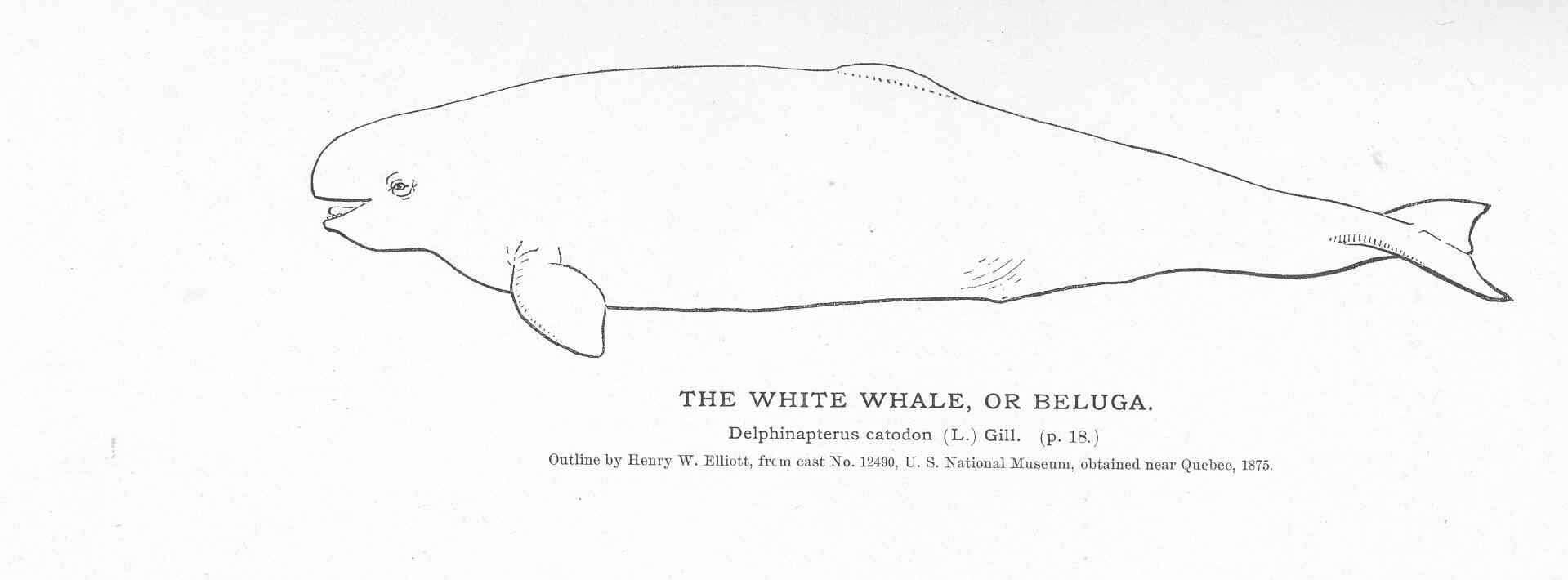
beluga whale
species of whale

Cervus canadensis
The elk (: elk or elks; Cervus canadensis) or wapiti (pronounced ) is the second largest species within the deer family, Cervidae, and one of the largest terrestrial mammals in its native range of North America and Central and East Asia. The word "elk" originally referred to the European variety of the moose, Alces alces, but was transferred to Cervus canadensis by North American colonists.

sea otter
species of marine mammal

trout
thumb|Brown trout

Burbot
The burbot (Lota lota), also known as bubbot, mariah, loche, cusk, freshwater cod, freshwater ling, freshwater cusk, the lawyer, coney-fish, lingcod, or eelpout, is a species of coldwater ray-finned fish native to the subarctic regions of the Northern Hemisphere. It is the only member of the genus Lota, and is the only freshwater species of the order Gadiformes. The species is closely related to marine fish such as the common ling and cusk, all of which belong to the family Lotidae (rocklings).

rainbow trout
fresh-water species of fish

Phoca vitulina
species of mammal
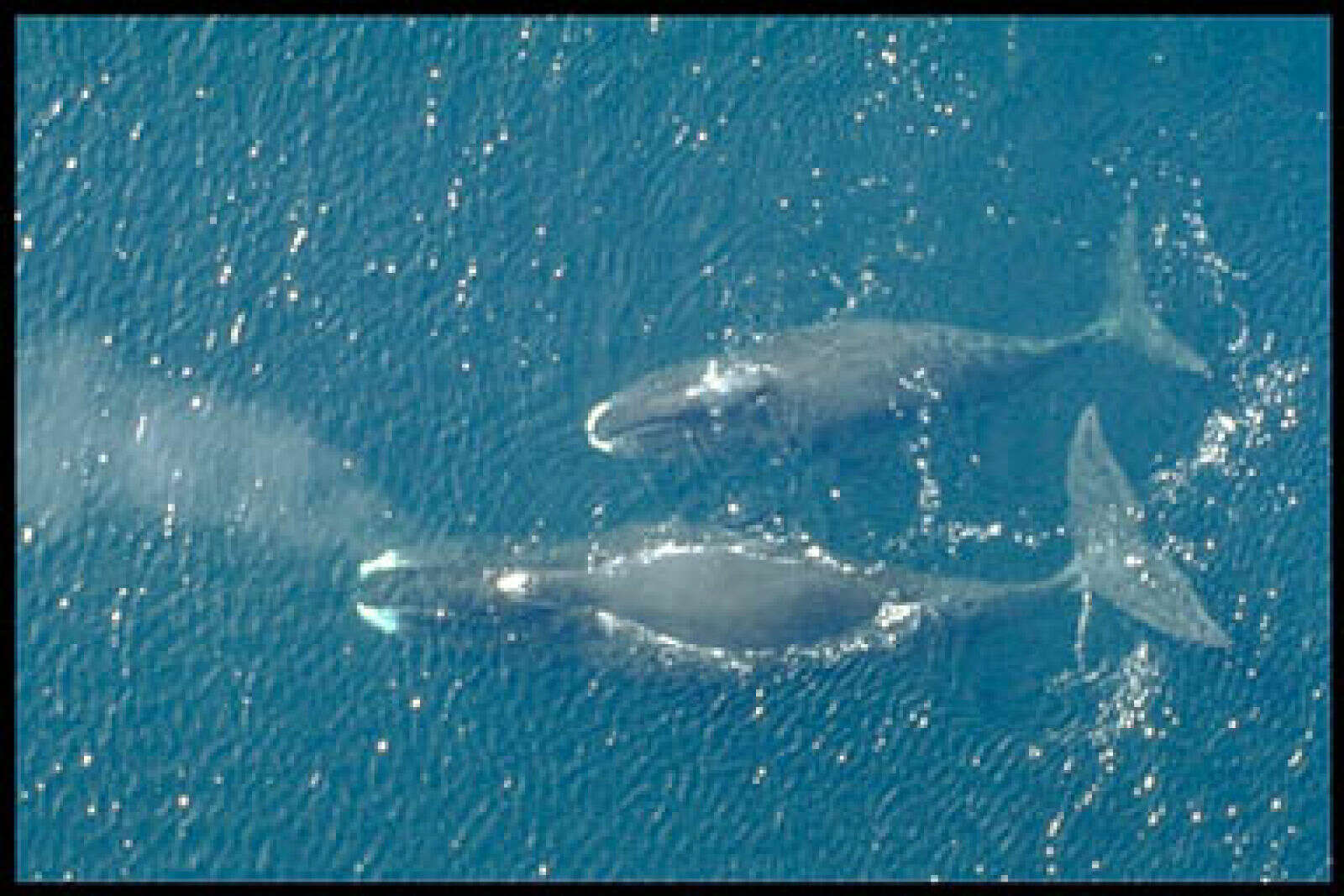
bowhead whale
species of mammal

salmon
Salmon (; : salmon) are any of several commercially important species of euryhaline ray-finned fish from the genera Salmo and Oncorhynchus of the family Salmonidae, native to tributaries of the North Atlantic (Salmo) and North Pacific (Oncorhynchus) basins. Salmon is a colloquial or common name used for fish in this group, but is not a scientific name. Other closely related fish in the same family include trout, char, grayling, whitefish, lenok and taimen, all coldwater fish of the subarctic and cooler temperate regions with some sporadic endorheic populations in Central Asia.

Grey Seal
species of seal

Woolly Mammoth
extinct species of mammoth (Mammuthus)
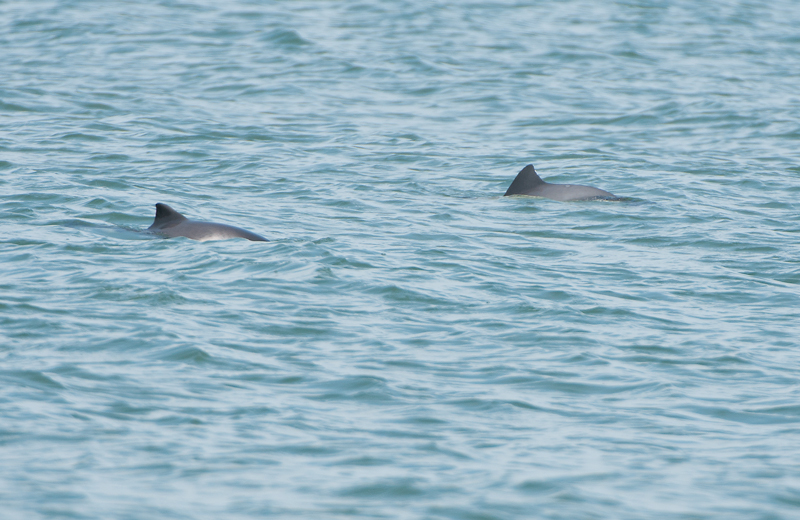
Phocoena phocoena
species of marine mammal
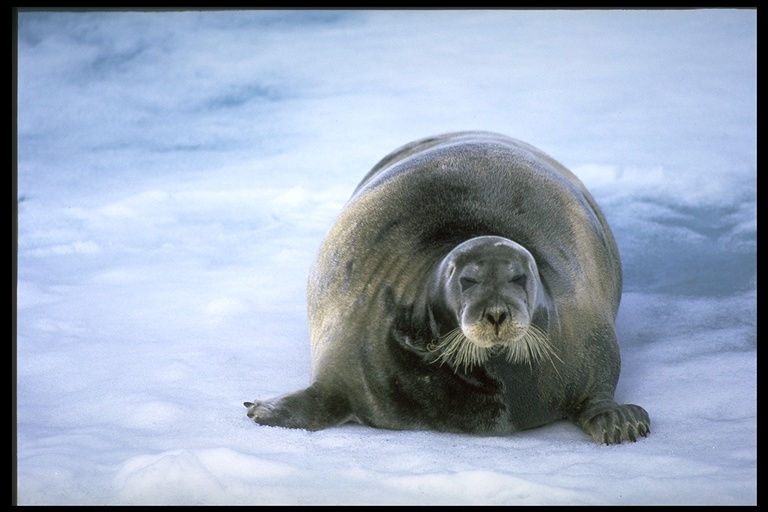
Bearded Seal
species of mammal

Ringed Seal
species of mammal

Steller's sea lion
species of mammal

northern fur seal
species of mammal

Spotted Seal
species of mammal

ribbon seal
species of mammal
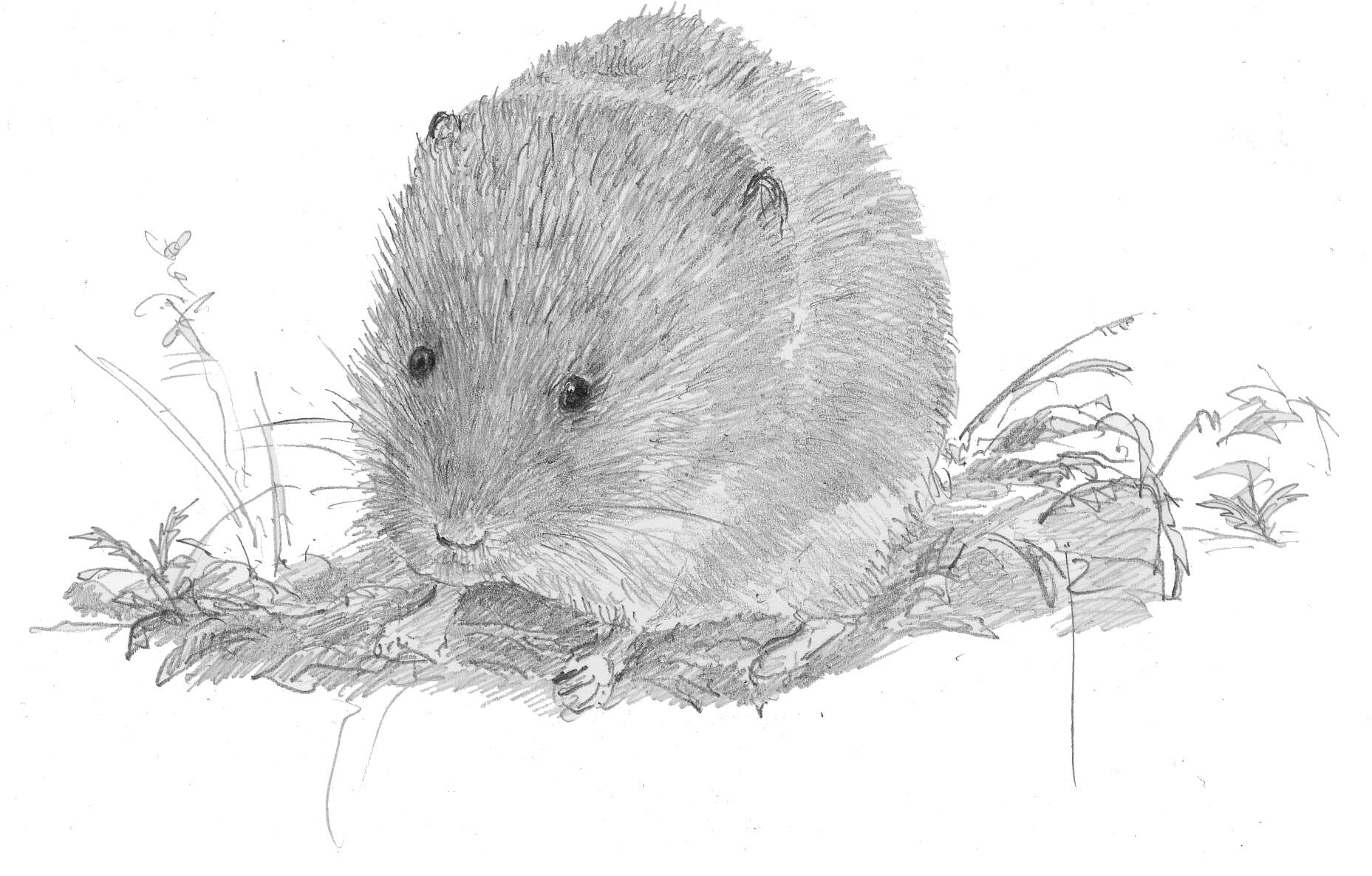
tundra vole
species of rodents

graylings
Thymallus, commonly known as graylings, is a genus of freshwater ray-finned fish and the only genus within the subfamily Thymallinae of the family Salmonidae. Although all Thymallus species can be generically called graylings, without specific qualification the term "grayling" typically refers to the type species Thymallus thymallus, the European grayling.

Arctic ground squirrel
species of mammal
ninespine stickleback
species of fish

Northern red-backed vole
species of mammal

Homotherium
Homotherium is an extinct genus of scimitar-toothed cat belonging to the extinct subfamily Machairodontinae that inhabited North America, Eurasia, and Africa, as well as possibly South America during the Pliocene and Pleistocene epochs from around 4 million to 12,000 years ago. A probable descendant of Amphimachairodus, it was one of the last surviving members of Machairodontinae alongside the more famous sabertooth Smilodon, to which it was not particularly closely related. It was a large cat, comparable in size to a lion with a body mass of up to , functioning as an apex predator in the ecos
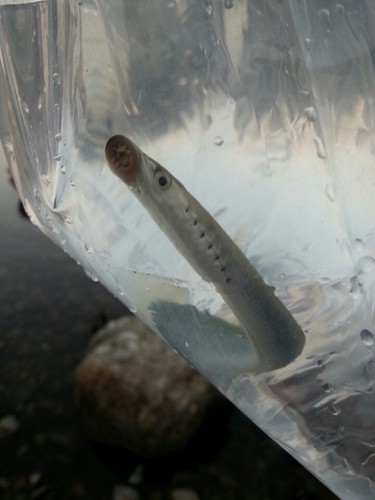
Arctic lamprey
species of chordates
Coregoninae
subfamily of fishes
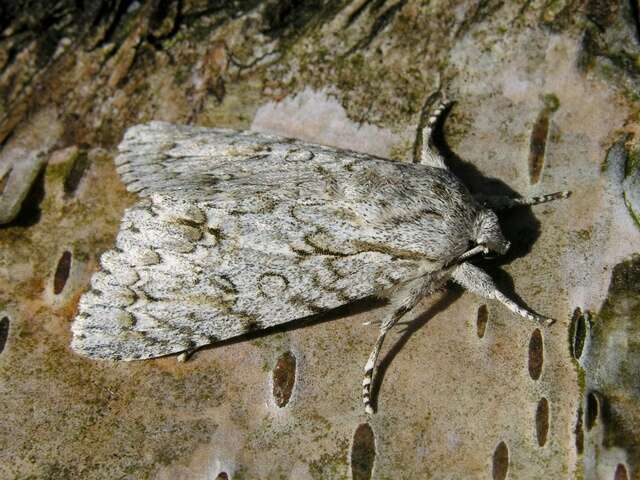
Acronicta
thumb|A. radcliffei caterpillar
thumb|A. radcliffei pupa
Acronicta is a genus of noctuid moths containing about 150 species distributed mainly in the temperate Holarctic, with some in adjacent subtropical regions. The genus was erected by Carl Linnaeus in his 1758 10th edition of Systema Naturae. Caterpillars of most Acronicta species are unmistakable, with brightly colored hairy spikes, and often feed quite visibly on common foliate trees. The hairy spikes may contain poison, which cause itchy, painful, swollen rash in humans on contact. The larva of the smeared dagger moth (A. oblinita) is u
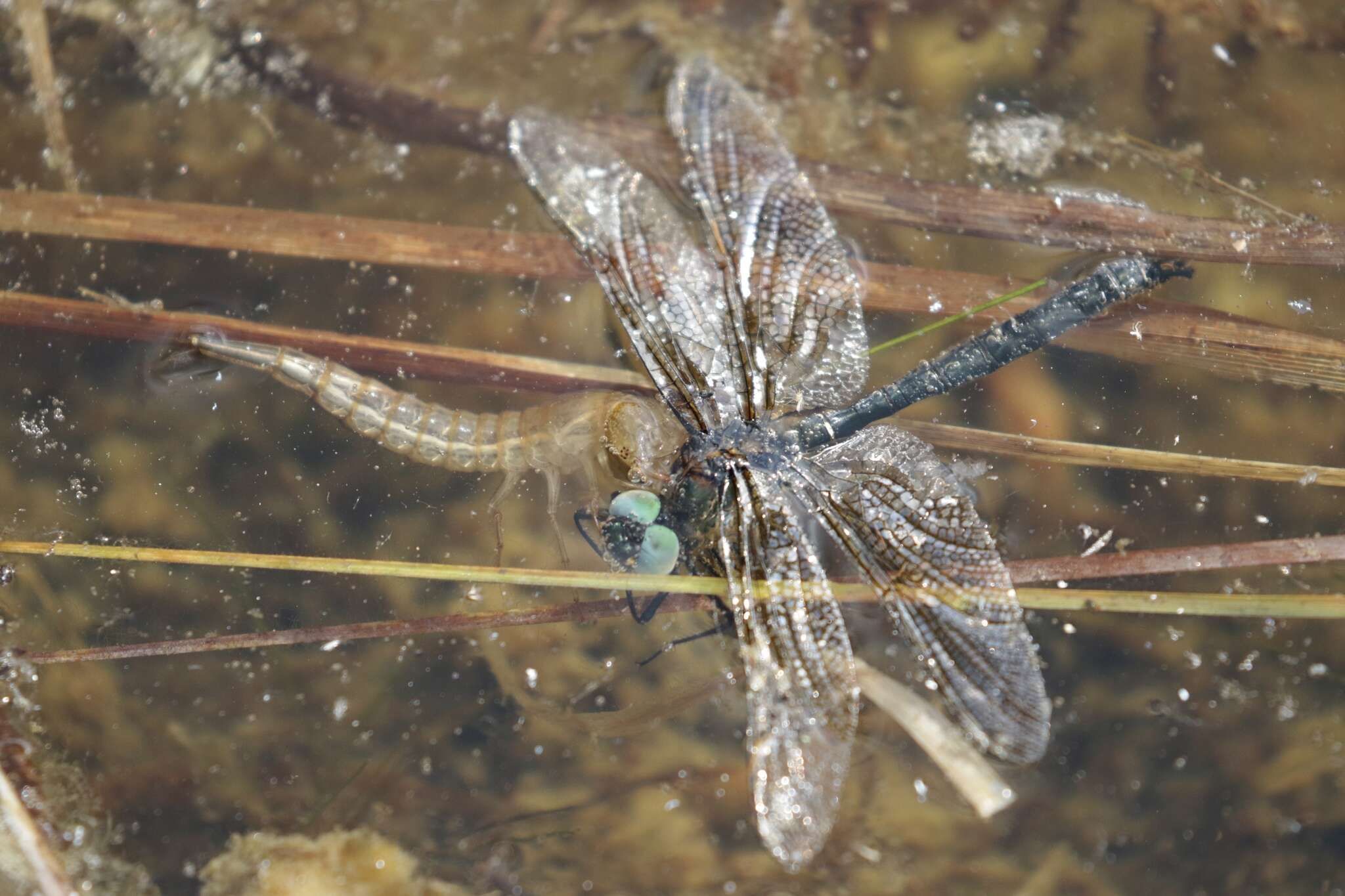
Somatochlora sahlbergi
species of insect
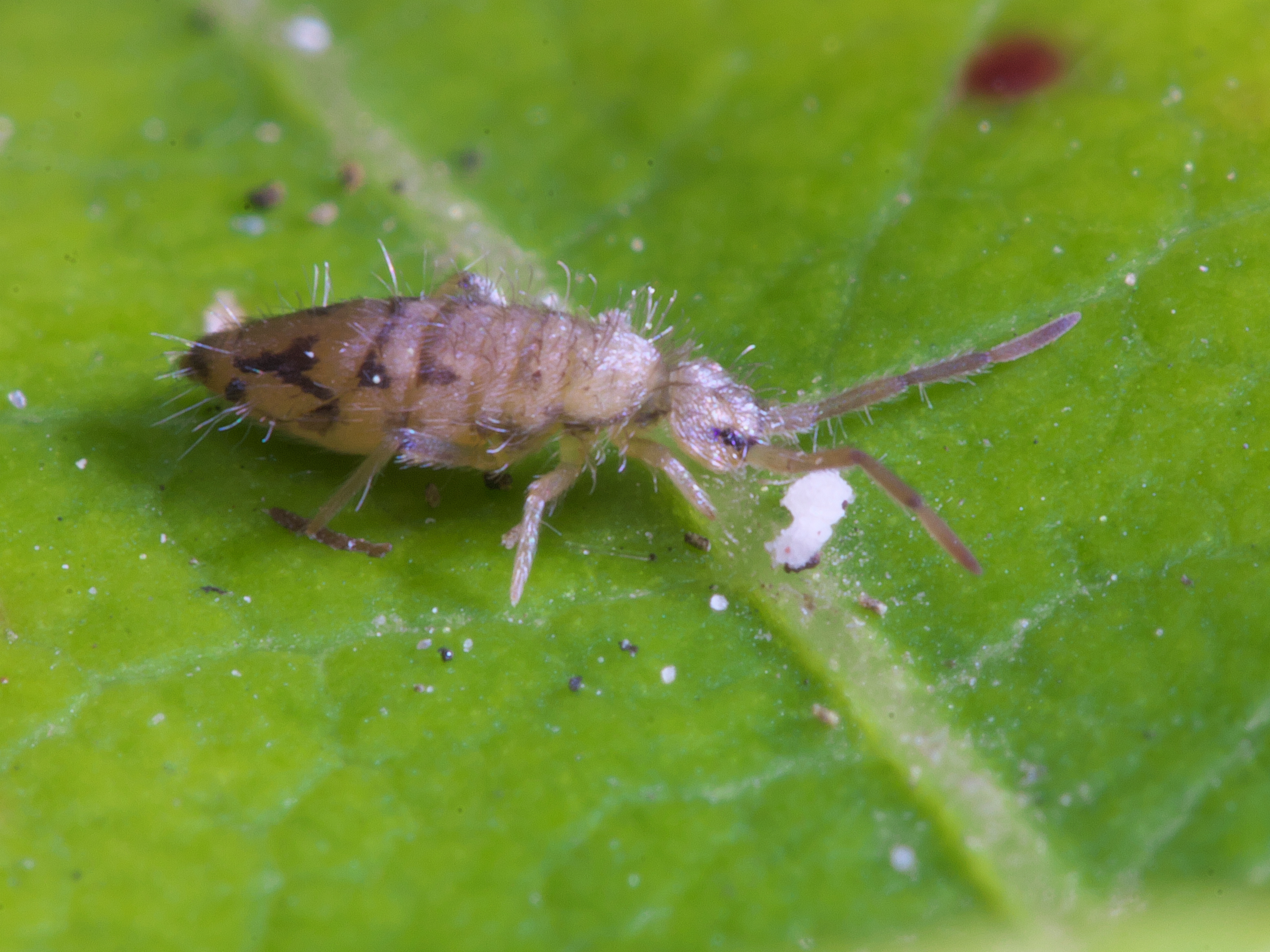
Entomobrya nivalis
species of arthropods
Opheltes glaucopterus
species of insect
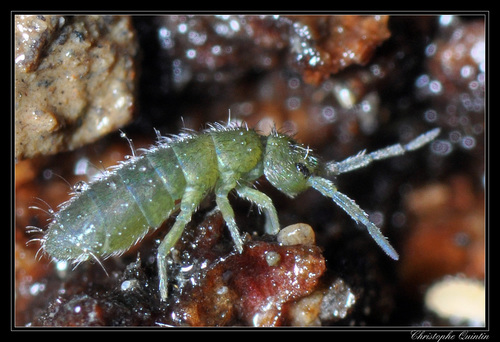
Isotoma viridis
species of insect
Yukagir mammoth
Woolly mammoth Yakutia Sakha, Arctic Siberia, Russia