Category
page 1Intangible Cultural Heritage of Humanity

yoga
thumb |upright=1.2 |Statue of Shiva performing yoga in the [[lotus position ]]

reggae
Reggae () is a music genre that originated in Jamaica in the late 1960s. The term also refers to the modern popular music of Jamaica and its diaspora. The 1968 single by Toots and the Maytals titled "Do the Reggay" was the first popular song to use the word reggae, effectively naming the genre and introducing it to a global audience.
==Origins and influences==
Reggae developed from earlier Jamaican genres including mento, ska, and rocksteady, and is rooted in traditional drumming styles such as Kumina, Pukkumina, Revival Zion, Nyabinghi, and burru. It incorporates elements of rhythm and blues,

calligraphy

Chinese New Year
Chinese New Year, also known as the Spring Festival, marks the beginning of a new year on the traditional lunisolar Chinese calendar. It is one of the most important holidays in Chinese culture. Marking the end of winter and the beginning of spring, this festival takes place from Chinese New Year's Eve to the Lantern Festival, held on the 15th day of the year. The first day of the Chinese New Year falls on the new moon that appears between 21 January and 20 February.

acupuncture
Acupuncture is a form of alternative medicine and a component of traditional Chinese medicine (TCM) in which thin needles are inserted into the body. Acupuncture is a pseudoscience; the theories and practices of TCM are not based on scientific knowledge, and it has been characterized as quackery.

couscous
Couscous () is a traditional North African dish of small steamed granules of rolled semolina that is often served with a stew spooned on top. Pearl millet, sorghum, bulgur, and other cereals are sometimes cooked in a similar way in other regions, and the resulting dishes are also sometimes called couscous.

Stille Nacht Heilige Nacht
original song written and composed by Franz Xaver Gruber (music) and Joseph Mohr (words); Christmas song of Austrian origin

tug of war
sport in which two teams pull on opposite ends of a rope

lavash
Lavash (; ) is a thin flatbread usually leavened, traditionally baked in a tandoor (tonir or tanoor) or on a sajj, and common to the cuisines of South Caucasus, West Asia, and the areas surrounding the Caspian Sea. Lavash is widespread in Armenia.

falconry
thumb|A Eurasian goshawk
thumb|Flying a saker falcon
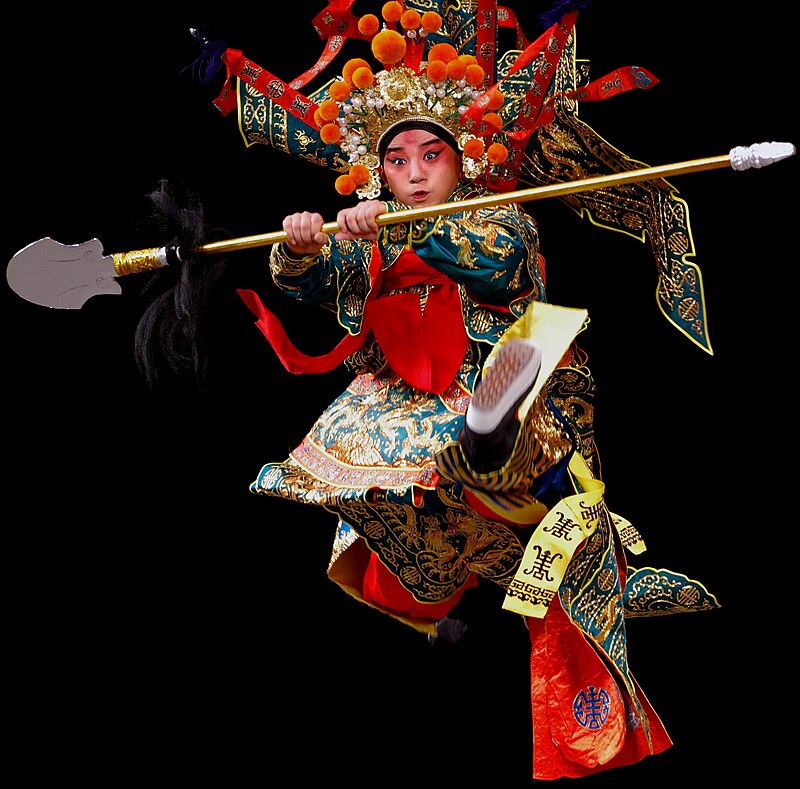
Peking opera
form of Chinese opera originating in Beijing during the Qing dynasty

Epic of Manas
heroic epic of the Kirgiz people

khachkar
thumb|upright|Khachkar at Goshavank, carved in 1291 by Poghos

Mediterranean diet
diet typical of the Mediterranean region, or cultural heritage. UNESCO intangible cultural heritage status
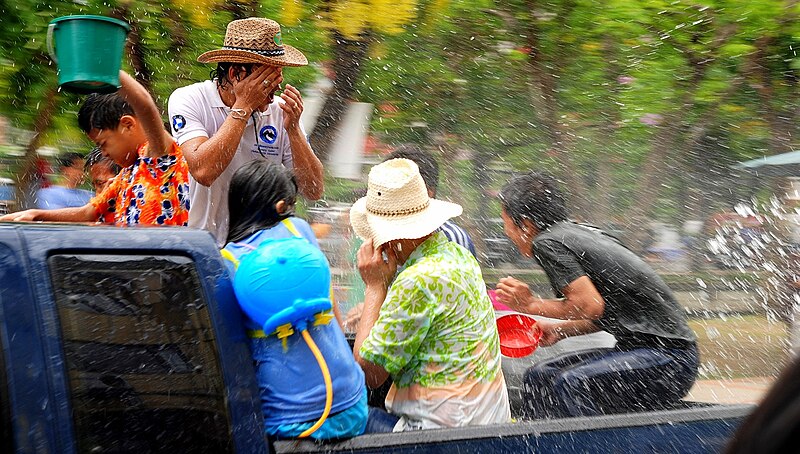
Songkran
traditional Thai New Year's holiday based on the sidereal year

Duanwu Festival
Chinese festival

Mazu
Mazu or Matsu is a sea goddess in Chinese folk religion, Chinese Buddhism, Confucianism, and Taoism. She is also known by several other names and titles. Mazu is the deified form of Lin Moniang (), a shamaness from Fujian who is said to have lived in the late 10th century. After her death, she became revered as a tutelary deity of Chinese seafarers, including fishermen and sailors.

Rebetiko
Rebetiko (, ), plural rebetika ( ), occasionally transliterated as rembetiko or rebetico, is a term used to designate previously disparate kinds of urban Greek music which in the 1930s went through a process of musical syncretism and developed into a more distinctive musical genre. Rebetiko can be described briefly as the urban popular song of the Greeks, especially the poorest, from the late 19th century to the 1950s, and served as the basis for further developments in popular Greek music. The music, which was partly forgotten, was rediscovered during the so-called rebetika revival, which sta

Naadam
thumb|270px|Naadam opening ceremony at the National Sports Stadium (Mongolia)|National Sports Stadium in [[Ulaanbaatar, 2024]]
Naadam (, , , , ) is a traditional festival celebrated in Mongolia, Inner Mongolia and Tuva, involving Mongolian wrestling, horse racing and archery. The festival is also locally termed "" (, ), and is held during midsummer.
uilleann pipes
characteristic national bagpipe of Ireland
Islamic calligraphy
artistic practice of calligraphy in the Islamic world
Forty Martyrs of Sebaste
Roman soldiers and martyrs

ashik
thumb|Ashik Ağalar Mikayılov playing the saz
thumb|Ashugh Jivani (center, playing the kamani) with instrumentalists
right|200px|thumbnail|Soviet Union|Soviet stamp from 1962 devoted to [[Sayat-Nova's 250 anniversary]]
Saint Thaddeus Monastery
former Armenian monastery in Iran

gagaku
is a type of Japanese classical music that was historically used for imperial court music and dances. was developed as court music of the Kyoto Imperial Palace, and its near-current form was established in the Heian period (794–1185) around the 10th century. Today, it is performed by the Board of Ceremonies in the Tokyo Imperial Palace. is performed using wind, percussion, and string instruments. Each piece is based on a main melody which each instrument embellishes.

Haenyeo
Haenyeo () are female divers in the South Korean province of Jeju, whose livelihood consists of harvesting a variety of mollusks, seaweed, and other sea life from the ocean. Known for their independent spirit and determination, haenyeo are representative of the semi-matriarchal family structure of Jeju.
Arirang
Arirang () is a Korean folk song. There are about 3,600 variations of 60 different versions of the song, all of which include a refrain similar to "arirang, arirang, arariyo" (""). It is estimated that the song is more than 600 years old.
angklung
The (Sundanese: ) is a musical instrument from the Sundanese in Indonesia that is made of a varying number of bamboo tubes attached to a bamboo frame. The tubes are carved to produce a resonant pitch when struck and are tuned to octaves, similar to Western handbells. The base of the frame is held in one hand, while the other hand shakes the instrument, causing a repeating note to sound. Each performer in an ensemble is typically responsible for just one pitch, sounding their individual at the appropriate times to produce complete melodies (see Kotekan).

balafon
The balafon (pronounced , or, by analogy with xylophone etc., ) is a gourd-resonated xylophone, a type of struck idiophone. It is closely associated with the neighbouring Mandé, Bwaba Bobo, Senoufo and Gur peoples of West Africa, particularly the Guinean branch of the Mandinka ethnic group, but is now found across West Africa from Guinea, Burkina Faso, Mali. Its common name, balafon, is likely a European coinage combining its Mandinka name bála () with the word fóo (nyáa) () 'to say / method of saying' or the Greek root phono.

Martenitsa
thumb|Typical Martenitsa
A Martenitsa (, ; ; ; ; ; ) is a small piece of adornment, made of white and red yarn and usually in the form of two dolls, a white male and a red female. Martenitsi are worn from Baba Marta Day (March 1) until the wearer first sees a stork, swallow, or blossoming tree (or until the end of March (April 1)). The name of the holiday means "Grandma March" in Bulgarian and Macedonian, the holiday and the wearing of Martenitsi are a Bulgarian and Macedonian tradition related to welcoming the spring, which according to Bulgarian and Macedonian folklore begins in March, and v

Chhau dance
Chhau, also spelled Chhou, is a semi classical Indian dance with martial and folk traditions. It is found in three styles named after the location where they are performed, i.e. the Purulia Chhau of West Bengal, the Seraikella Chhau of Jharkhand and the Mayurbhanj Chhau of Odisha.
Chinese calligraphy
calligraphy with Chinese script; one of the four arts (music, chess, calligraphy and painting)
Epic of Köroğlu
epic poem and legend of Turkic peoples
pysanka
egg decorating tradition in Slavic countries
Slava
Orthodox Christian celebration of a family's patron saint day in Serbia.
Viennese coffee house
type of café
morna
musical practice of Cabo Verde
Traditional Thai massage
healing system
doina
The doina () is a Romanian musical tune style, possibly with Middle Eastern roots, customary in Romanian peasant music, as well as in lăutărească music. It was also adopted into klezmer music.

Ssireum
Ssireum () or Korean wrestling is a folk wrestling style and traditional national sport of Korea that began in the fourth century.
Chinese paper cutting
art of paper cutting in China
Epic of King Gesar
work of epic literature of Tibet and greater Central Asia

tereré
'''' (of Guaraní origin) is an infusion of (botanical name Ilex paraguariensis) prepared with cold water, a lot of ice and pohã ñana'' (medicinal herbs), and in a large vessel. This infusion has its roots in Pre-Columbian America, which established itself as traditional during the time of Governorate of Paraguay. There's also a variant made with juice, called "Juice tereré" or "Russian tereré", depending on the region. On December 17, 2020, UNESCO declared the tereré of Paraguay as an intangible cultural heritage, which includes the drink (tereré) and its preparation methods with medicinal her
clinker boat building
ancient technique in the Nordic shipbuilding tradition
Kriya Yoga
style of yoga
keşkek
Keşkek, also known as kashkak, kashkek, or keške, is a ceremonial meat or chicken and wheat or barley stew found in Turkish, Iranian, Greek, Armenian, and Balkan cuisines.

Hıdırellez
Hıdırellez or Hıdrellez (; ; ; ) is a folk holiday celebrated as the day on which the prophets Al-Khidr (Hızır) and Elijah (İlyas) met on Earth. Hıdırellez starts on the night of May 5 and ends on May 6 in the Gregorian calendar, and April 23 (St. George's day for the Christians) in the Julian calendar. It is observed in Turkey, Crimea, Gagauzia, Syria, Iraq, the Caucasus, and the Balkans and celebrates the arrival of spring.
pansori
''''''' () is a Korean genre of musical storytelling performed by a singer and a drummer. The term ' is a compounds of the Korean words and , the latter of which means "sound." However, pan has multiple meanings, and scholars disagree on which was the intended meaning when the term was coined. One meaning is "a situation where many people are gathered." Another meaning is "a song composed of varying tones."
woodblock printing
early printing technique
Ganggangsullae
thumb|Ganggangsullae song
Tuvan throat singing
music genre

Taekkyeon
Taekkyon (; ), also spelled taekkyeon, is a traditional Korean martial art. It is characterized by a fluid, dynamic footwork called pumbalbgi, or "stepping-on-triangles". Taekkyon includes hand and foot techniques to unbalance, trip, or throw the opponent. In competitive taekkyon points are scored by throwing the opponent or landing kicks on their head. A taekkyon practitioner is called a "taekkyon-kkun". Practitioners, referees, and coaches wear taekkyon uniforms, which today are based on traditional garments such as the gouijeoksam, or, depending on the school, the cheollik for competitions.
solar term
any of 24 periods of traditional East Asian lunisolar calendars that matches a particular astronomical event or signifies some natural phenomenon
Busójárás
The busójárás (Hungarian, meaning "Busó-walking"; in Croatian: Pohod bušara) is an annual celebration of the Šokci living in the town of Mohács, Hungary, held at the end of the Carnival season ("farsang"), ending the day before Ash Wednesday. The celebration features Busós (people wearing traditional masks) and includes folk music, masquerading, parades and dancing. Busójárás lasts six days, usually during February. It starts on a Thursday, followed by the Kisfarsang (Little Farsang) carnival on Friday, with the biggest celebration, farsang vasárnap (Farsang Sunday) on the Sunday before Easter
Daredevils of Sassoun
Armenian folk epic
pantun
Pantun (Jawi: ) is a Malayic oral poetic form used to express intricate ideas and emotions. It generally consists of an even number of lines and is based on \mathrm{ABAB} rhyming schemes. The shortest consists of two lines, known as the in Malay, while the longest, the , can have 16 lines. is a disjunctive form of poetry that always comes in two parts: the first part is a prefatory statement called or which has no immediate logical or narrative connection with the second or closing statement called or . However, they are always connected by rhyme and other verbal associations, such as puns and
seto leelo
music genre
Örnek
Crimean Tatar ornament

frevo
Frevo is a dance and musical style originating from Recife, Pernambuco, Brazil, traditionally associated with Brazilian Carnival. The word frevo is said to come from frever, a variant of the Portuguese word ferver (to boil). It is said that the sound of the frevo will make listeners and dancers feel as if they are boiling on the ground. The word frevo is used for both the frevo music and the frevo dance.
throat singing
vocal practices found in different cultures of the world and that may involve a wide range of techniques for producing voice and song