
File:Bisphenol-A-Skeletal.svg · Wikimedia Commons · See Wikimedia Commons
bisphenol A
Sign in to saveAlso known as bisphenol-A, 4-[2-(4-hydroxyphenyl)propan-2-yl]phenol, 2,2-bis(p-hydroxyphenyl)propane, 2,2-di(4-phenylol)propane, 4,4'-isopropylidenediphenol, 4,4'-bisphenol A, 4,4'-(1-methylethylidene)bisphenol, 2,2-di(4-hydroxyphenyl)propane
chemical compound
OverviewAI-generated
Bisphenol A is a chemical compound with the formula C₁₅H₁₆O₂. Its IUPAC name is 4-[2-(4-hydroxyphenyl)propan-2-yl]phenol. The substance has a mass of 228.115 and a weight of 228.29. It features a melting point of 158 and a boiling point of 220.
The compound possesses a charge of 0, an xlogp of 3.3, and a tpsa of 40.5. It contains two hydrogen bond donors and two hydrogen bond acceptors. The canonical SMILES representation is CC(C)(C1=CC=C(C=C1)O)C2=CC=C(C=C2)O. Information regarding the agent is available from the National Institute of Environmental Health Sciences.
Synthesized by Vinony from 24 facts across 5 sources: Wikidata, Firecrawl, PubMed, PubChem, Vinony graph. Generated from structured data (not the Wikipedia text) and checked against those facts — may still contain errors.
Chemical data
- Formula
- C15H16O2
- Molecular weight
- 228.29 g/mol
- IUPAC name
- 4-[2-(4-hydroxyphenyl)propan-2-yl]phenol
- SMILES
- CC(C)(C1=CC=C(C=C1)O)C2=CC=C(C=C2)O
- InChIKey
- IISBACLAFKSPIT-UHFFFAOYSA-N
- XLogP
- 3.3
- Polar surface area
- 40.5 Ų
- H-bond donors
- 2
- H-bond acceptors
- 2
- Formal charge
- 0
via PubChem
Research
21,224 papers- Bisphenol A and its substitutes in the aquatic environment: Occurrence and toxicity assessment.Chemosphere · 2023
- Bisphenol A and human fertility: a systematic review.JBRA assisted reproduction · 2025
- Genotoxic potential of bisphenol A: A review.Environmental pollution (Barking, Essex : 1987) · 2022
- Is bisphenol A an environmental obesogen?Fundamental & clinical pharmacology · 2017
- Bisphenol A in Dentistry.The European journal of prosthodontics and restorative dentistry · 2020
via PubMed
Described at
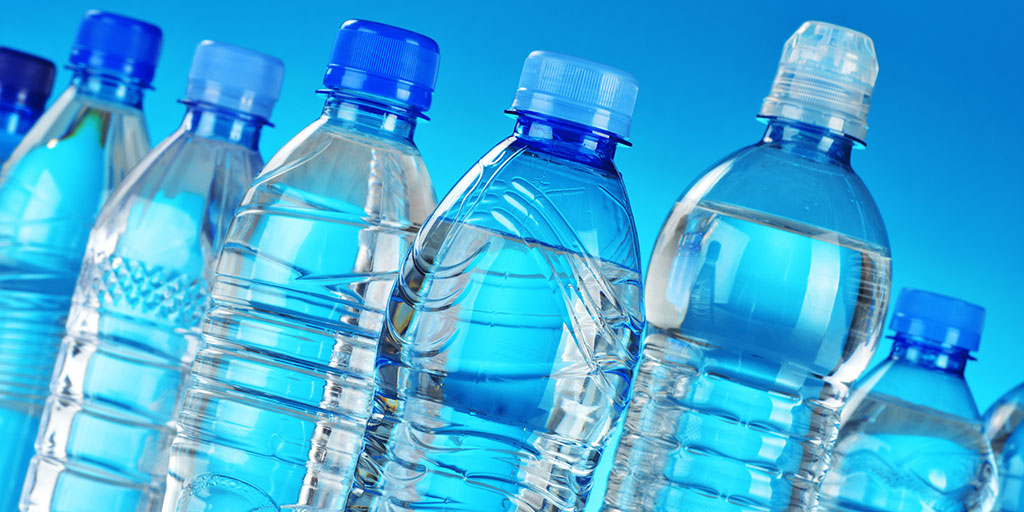
Bisphenol A (BPA) | National Institute of Environmental Health Sciences
Bisphenol A (BPA) is a chemical produced in large quantities for use primarily in the production of polycarbonate plastics and epoxy resins. NIEHS and NTP support research to better understand potential health effects of exposure to BPA.
niehs.nih.gov →Bisphenol A (BPA) is a chemical produced in large quantities for use primarily in the production of polycarbonate plastics. It is found in various products including shatterproof windows, eyewear, water bottles, and epoxy resins that coat some metal food cans, bottle tops, and water supply pipes. The primary source of exposure to BPA for most people is through the diet. While air, dust, and water are other possible sources of exposure, BPA in food and beverages accounts for the majority of daily human exposure. Bisphenol A can leach into food from the protective internal epoxy resin coatings of canned foods and from consumer products such as polycarbonate tableware, food storage containers, water bottles, and baby bottles. The degree to which BPA leaches from polycarbonate bottles into liquid may depend more on the temperature of the liquid or bottle, than the age of the container. BPA can also be found in breast milk. One reason people may be concerned about BPA is because human exposure to BPA is widespread. The 2003-2004 National Health and Nutrition Examination Survey (NHANES III) conducted by the Centers for Disease Control and Prevention (CDC) found detectable levels of BPA in 93% of 2517 urine samples from people six years and older. The CDC NHANES data are considered representative of exposures in the United States. Another reason for concern, especially for parents, may be because some animal studies report effects in fetuses and newborns exposed to BPA. Some animal studies suggest that infants and children may be the most vulnerable to the effects of BPA. Parents and caregivers can make the personal choice to reduce exposures of their infants and children to BPA: Don’t microwave polycarbonate plastic food containers. Polycarbonate is strong and durable, but over time it may break down from over use at high temperatures. Plastic containers have recycle codes on the bottom. Some, but not all, plastics that are marked with recycle codes 3 or 7 may be made with BPA. Reduce your use of canned foods. When possible, opt for glass, porcelain or stainless steel containers, particularly for hot food or liquids. Use baby bottles that are BPA free. How Can You Reduce Health Effects of Endocrine-disrupting Chemicals? (July 2024) Epigenomics and Epitranscriptomics Front and Center at Council (March 2024) Insight Into Endocrine Disruptor Bisphenol A Advanced by NIEHS (November 2021) Epigenomics Sheds Light on Environment and Disease, Experts Say (October 2021) America's Children and the Environment: Biomonitoring - Bisphenol A (BPA) Information about BPA levels measured in children and women from the Environmental Protection Agency. Bisphenol A (BPA) A summary of information and actions of the Food and Drug Administration, a regulatory agency of the U.S. Department of Health and Human Services. Bisphenol A (BPA): Use in Food Contact Application Information from the FDA’s safety reviews of BPA.
Excerpt from a page describing this subject · 6,555 chars · not written by Vinony
Wikidata facts
Show 6 more facts
- Commons category
- Bisphenol A
- chemical formula
- C₁₅H₁₆O₂
- canonical SMILES
- CC(C)(C1=CC=C(C=C1)O)C2=CC=C(C=C2)O
- described at URL
- www.niehs.nih.gov/health/topics/agents/sya-bpa
- melting point
- 156
- boiling point
- 220
via Wikidata · CC0
~19 min read
Encyclopedic overview
Bisphenol A (BPA) is a chemical compound primarily used in the manufacturing of various plastics. It is a colourless solid which is soluble in most common organic solvents, but has very poor solubility in water. BPA is produced on an industrial scale by the condensation reaction of phenol and acetone. Global production in 2022 was estimated to be in the region of 10 million tonnes.
BPA's largest single application is as a co-monomer in the production of polycarbonates, which accounts for 65–70% of all BPA production. The manufacturing of epoxy resins and vinyl ester resins account for 25–30% of BPA use. The remaining 5% is used as a major component of several high-performance plastics, and as a minor additive in polyvinyl chloride (PVC), polyurethane, thermal paper, and several other materials. It is not a plasticizer, although it is often wrongly labelled as such.
Excerpted from Wikipedia’s “bisphenol A” article, available under the CC BY-SA 4.0 licence.