Encyclopedia of Life · EOL (see source)
Cheyletidae
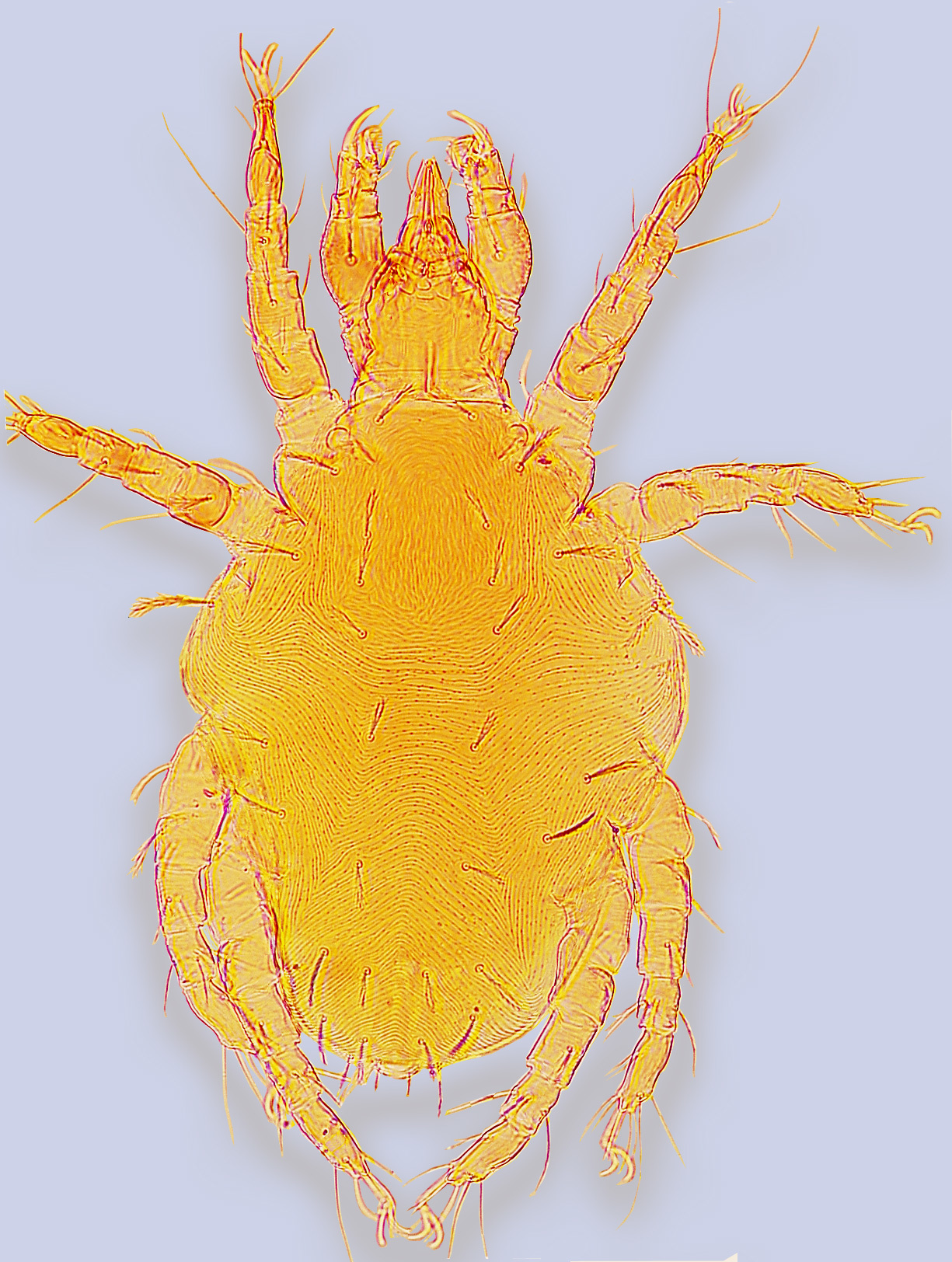
Sign in to saveCheyletidae is a family of mites in the order Trombidiformes. Some Cheyletiella spp. are parasites of mammals, causing cheyletiellosis or "walking dandruff". Others are free-ranging predators which can be found in soil, forest litter, animal nests, and house dust, under tree bark, and on foliage. Cheyletids may occur in corpses, where they feed on other mites and on nematodes.
In the Vinony graph
Within Vinony's link graph, Cheyletidae is referenced by 11 other articles, and connects out to Holothyrida, Mesostigmata and Animalia.
It is catalogued under topics including Mite families, Taxonbars with 20–24 taxon IDs and Trombidiformes.
Its subject is documented across 11 Wikipedia language editions.
Species
predatory mites
FAMILY
- KingdomAnimalia
- PhylumArthropoda
- ClassArachnida
- OrderTrombidiformes
- FamilyCheyletidae
Les Cheyletidae sont une des nombreuses familles d'acariens. Les espèces du genre Cheyletiella provoquent la cheyletiellose, une maladie parasitaire chez le lapin, le chat ou le chien.
via GBIF
Museum specimens
- Specimen records
- 357
- With media
- 126
- Family
- Cheyletidae
- Collections
- FCB-UANL, UQROO, USNM
- Recorded in
- Mexico, Congo, Burundi, Tanzania
Wikidata facts
- Instance of
- taxon
- Parent taxon
- Cheyletoidea
- Image
- Cheyletiella Raubmilbe 2.jpg
Show 4 more facts
- Commons category
- Cheyletidae
- taxon name
- Cheyletidae
- taxon rank
- family
- topic's main category
- Category:Cheyletidae
Sources (1)
via Wikidata · CC0
~1 min read
Encyclopedic overview
4 sectionsContents
- Description
- Gallery
- References
- External links
Cheyletidae is a family of mites in the order Trombidiformes. Some Cheyletiella spp. are parasites of mammals, causing cheyletiellosis or "walking dandruff". Others are free-ranging predators which can be found in soil, forest litter, animal nests, and house dust, under tree bark, and on foliage. Cheyletids may occur in corpses, where they feed on other mites and on nematodes.
== Description == Cheyletidae have short stylet-like chelicerae and large pincer-like palps. The palp tarsus is short and usually bears comb-like and sickle-like setae, and is located on the posterior part of the palp tibia. The palp tibia has a strong claw which extends beyond the palp tarsus. The body may have zero, one or multiple dorsal plates.
Excerpted from Wikipedia’s “Cheyletidae” article, available under the CC BY-SA 4.0 licence.