
File:Erich_Kästner_1961.jpg · Wikimedia Commons · See Wikimedia Commons
Erich Kästner
Sign in to saveAlso known as Emil Erich Kästner, Erick Kästner
German children's writer (1899–1974)
OverviewAI-generated
Erich Kästner was a German writer, poet, novelist, and children’s writer. Born in Dresden on 23 February 1899, he was educated at Leipzig University. His literary output included works such as *Fabian*, *Gedichte, die glücklich machen*, and *Wieso warum?*. Kästner was a member of the German Academy for Language and Literature and the Bavarian Academy of Fine Arts. He received the Georg Büchner Prize and the Hans Christian Andersen Award, and was nominated for the Nobel Prize in Literature.
Kästner’s life spanned the German Empire, Weimar Republic, Nazi Germany, and Allied-occupied Germany. He was associated with the significant event of Nazi book burnings. He died of esophageal cancer in Munich on 29 July 1974 and was buried at Bogenhausener Friedhof. His archives are held at the German Literature Archive Marbach.
Synthesized by Vinony from 44 facts across 9 sources: Wikidata, Crossref, Open Library, MusicBrainz, Last.fm, Firecrawl, TMDb, Europeana Sparql, Vinony graph. Generated from structured data (not the Wikipedia text) and checked against those facts — may still contain errors.
Person · Open Library
- Born
- 23 February 1899
- Died
- 29 July 1974
- Works
- 494
Top works
- Kennst du das Land, wo die Kanonen blühn?
- Heiterkeit in Dur und Moll
- Wieso warum?
- Fabian
- Gedichte, die glücklich machen
via Open Library + Wikidata
Film & TV
Dresden, Germany
Emil Erich Kästner (23 February 1899 – 29 July 1974) was a German author, poet, screenwriter and satirist, known primarily for his humorous, socially astute poetry and for children's books including Emil and the Detectives. He received the international Hans Christian Andersen Medal in 1960 for his autobiography Als ich ein kleiner Junge war.
Known for
- Das Jahrhundert des Kabaretts — Self (archive Footage)2001
- Bavarian Film Awards — Self1979
- Bettys Beat-Box-Haus — Self1968
- Die Drehscheibe — Self1964
- Three Men in the Snow — Narrator1955
- The Flying Classroom — Autor (uncredited)1954
- German Film Award — Self1951
- Two Times Lotte — Narrator1950
via TMDB
Music · MusicBrainz
- Type
- Person
- Gender
- Male
- Country
- Germany
- Active from
- 1899
- Active to
- 1974
Discography
via MusicBrainz · CC0
Listeners · Last.fm
- Listeners
- 1,603
- Total plays
- 27,240
<a href="https://www.last.fm/music/Erich+K%C3%A4stner">Read more on Last.fm</a>
Described at
Biografia de Erick Kästner
biografiasyvidas.com →Link to a page describing this subject · 997 chars · not written by Vinony
Wikidata facts
- Instance of
- human
- Given name
- Erich
- Family name
- Kästner
- Gender
- male
- Citizenship
- Germany
- Place of birth
- Dresden
- Place of death
- Munich
- Occupation
- musician
- Educated at
- Leipzig University
- Languages spoken
- German
- Native language
- German
- Notable work
- When I Was a Little Boy
- Academic degree
- doctorate
- Conflict
- World War I
- Image
- Erich Kästner 1961.jpg
- Work location
- Munich
- Significant event
- Nazi book burnings
Show 17 more facts
- Commons category
- Erich Kästner
- date of birth
- 1899-02-23
- date of death
- 1974-07-29
- member of
- Bavarian Academy of Fine Arts
- topic's main category
- Category:Erich Kästner
- place of burial
- Bogenhausener Friedhof
- nominated for
- Nobel Prize in Literature
- ethnic group
- Germans
- archives at
- German Literature Archive Marbach
- cause of death
- esophageal cancer
- pseudonym
- Berthold Bürger
- start of work period
- 1928-00-00
- name in native language
- Erich Kästner
- birth name
- Emil Erich Kästner
- described at URL
- www.biografiasyvidas.com/biografia/k/kastner.htm
- end of work period
- 1974-01-01
- manner of death
- natural causes
Sources (12)
via Wikidata · CC0
Works in European collections
10 objects attributed to Erich Kästner, held across European museums, libraries & archives · via Europeana


~16 min read
Encyclopedic overview
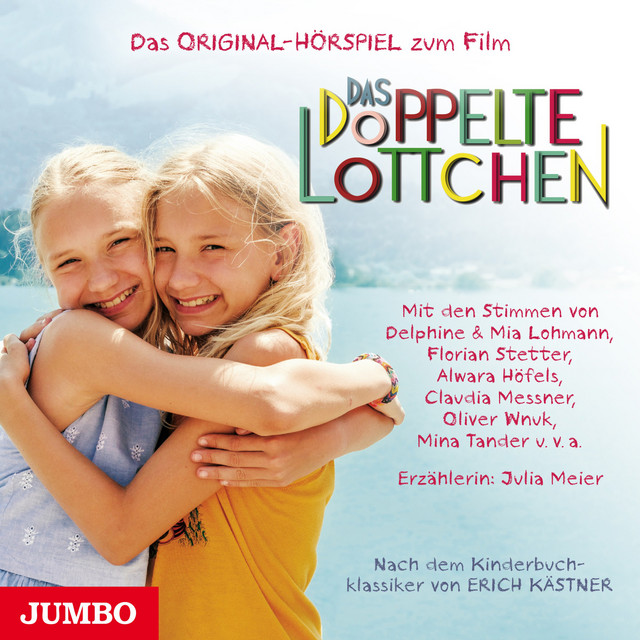
Emil Erich Kästner ( German: [ˈeːʁɪç ˈkɛstnɐ] ; 23 February 1899 – 29 July 1974) was a German writer, poet, screenwriter and satirist, known primarily for his humorous, socially astute poems and for children's books including Emil and the Detectives and Lisa and Lottie. He received the international Hans Christian Andersen Award in 1960 for his autobiography When I Was a Little Boy. He was nominated for the Nobel Prize in Literature in eight separate years.
Biography
Excerpted from Wikipedia’s “Erich Kästner” article, available under the CC BY-SA 4.0 licence.
Gallery (7)
Available in 59 languages
- Español
- Français
- Deutsch
- 中文
- 日本語
- Русский
- Português
- Italiano
- العربية
- Albanian
- Aragonese
- azb
- Azerbaijani
- Bahasa Indonesia
- Bangla
- Basque
- Belarusian
- Bosnian
Show 40 more
- Bulgarian
- Catalan
- Croatian
- Czech
- Danish
- Egyptian Arabic
- Esperanto
- Estonian
- Finnish
- Greek
- Hebrew
- Hungarian
- Ido
- Irish
- Kotava
- Kurdish
- Latin
- Latvian
- Luxembourgish
- Macedonian
- Malagasy
- Malayalam
- Mingrelian
- Nederlands
- Norwegian
- Norwegian Nynorsk
- Polski
- Romanian
- Saterland Frisian
- Serbian
- Serbian (Latin)
- Slovenian
- Svenska
- Türkçe
- Ukrainian
- Urdu
- Wu Chinese
- فارسی
- ไทย
- 한국어
via Wikidata sitelinks · CC0