File:Gimbap_3.jpg · Wikimedia Commons · See Wikimedia Commons
gimbap
Sign in to saveAlso known as seaweed roll, kimbap
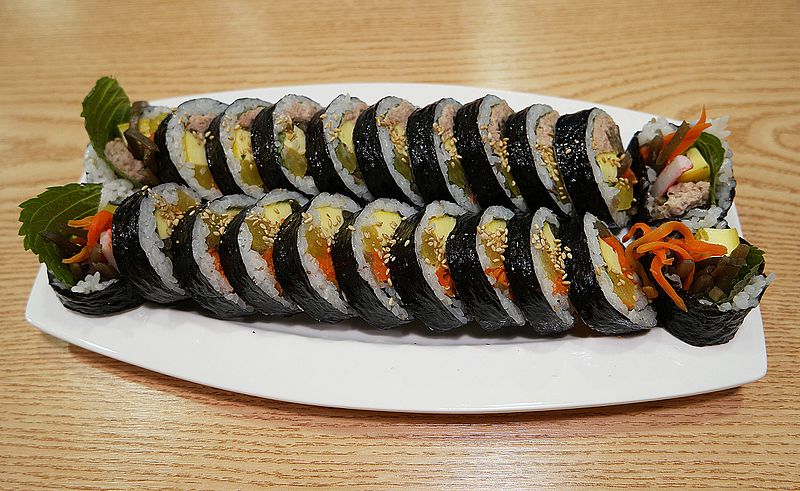
Gimbap (; ), also romanized as kimbap, is a Korean dish made from bap (cooked rice), vegetables, and optionally, cooked seafood or meat rolled in gim—dried sheets of seaweed—and served in bite-sized slices. Reference works describe gimbap as developing from Japanese norimaki, introduced to Korea during the period of Japanese colonial rule, while also noting that Korea had earlier traditions of wrapping rice and side dishes in seaweed, such as bokssam, from the Joseon era, which are sometimes cited as precursors rather than direct equivalents. However, the style of rolling seaweed into a ball o
Key facts
- Food.name
- Gimbap
- Food.image
- Gimbap (pixabay).jpg
- Food.image_size
- 250
- Food.caption
- Sliced gimbap
- Food.country
- Japan (origin); Korea (adaptation)
- Food.main_ingredient
- Gim, bap
- Food.variations
- Chungmu-gimbap, samgak-gimbap
- Food.serving_size
- 100 g
- Korean name/auto.child
- yes
- Korean name/auto.hangul
- 김밥
via Wikipedia infobox
Wikidata facts
Show 4 more facts
- Commons category
- Gimbap
- Commons gallery
- Gimbap
- native label
- 김밥
- different from
- MMMBop
Sources (2)
via Wikidata · CC0
~6 min read
Encyclopedic overview
7 sectionsContents
- Etymology
- History
- Ingredients and preparation
- Variants
- See also
- References
- External links
Gimbap (; ), also romanized as kimbap, is a Korean dish made from bap (cooked rice), vegetables, and optionally, cooked seafood or meat rolled in gim—dried sheets of seaweed—and served in bite-sized slices. Reference works describe gimbap as developing from Japanese norimaki, introduced to Korea during the period of Japanese colonial rule, while also noting that Korea had earlier traditions of wrapping rice and side dishes in seaweed, such as bokssam, from the Joseon era, which are sometimes cited as precursors rather than direct equivalents. However, the style of rolling seaweed into a ball on bamboo mat and cutting it to eat is generally agreed to have originated in Japan.
The dish is often part of a packed meal, or dosirak, to be eaten at picnics and outdoor events, and it can serve as a light lunch along with danmuji (yellow pickled radish) and kimchi. It is a popular takeout food in South Korea and in other countries.
Excerpted from Wikipedia’s “gimbap” article, available under the CC BY-SA 4.0 licence.