
File:هريسة_دياري.JPG · Wikimedia Commons · See Wikimedia Commons
Harissa
Sign in to saveHarissa (, from Tunisian Arabic) is a hot chili pepper paste, native to Tunisia. Peppers in the country were first grown in the Cape Bon Peninsula, birthplace of the condiment, with Nabeul famous for being the primary center for its production. The main ingredients are roasted red peppers, Baklouti peppers, spices and herbs such as garlic paste, caraway seeds, coriander seeds, cumin and olive oil to carry the oil-soluble flavors.
Key facts
- Food.name
- Harissa
- Food.image
- File:هريسة دياري.JPG
- Food.region
- Tunisia
- Food.creator
- <!-- or
- Food.creators
- -->
- Food.type
- Paste
- Food.main_ingredient
- Red peppers
- Food.minor_ingredient
- Baklouti pepper
- Food.serving_size
- 100 g
- Intangible heritage.Name
- Harissa, knowledge, skills and culinary and social practices
- Intangible heritage.Country
- Tunisia
- Intangible heritage.ID
- 01710
- Intangible heritage.Region
- AST
- Intangible heritage.Year
- 2022
- Intangible heritage.Session
- 17th
- Intangible heritage.List
- Representative
via Wikipedia infobox
Described at
Harissa, knowledge, skills and culinary and social practices - UNESCO Intangible Cultural Heritage
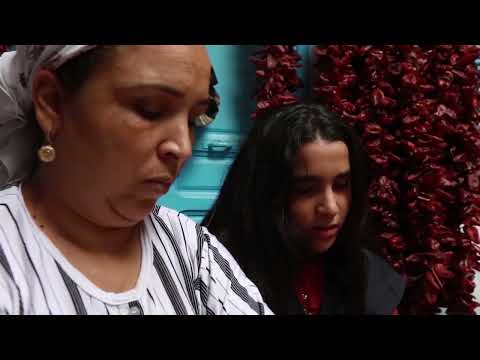
ich.unesco.org →Harissa, a seasoning made with chilli pepper paste, is an integral part of domestic provisions and the daily culinary and food traditions of Tunisian society. It is usually prepared by women in a convivial and festive family or neighbourhood setting. It is prepared by drying the chilli peppers in the sun, and splitting the peppers, removing the stalks and deseeding. The chilli peppers are then washed, ground and seasoned with salt, garlic and coriander using a pestle and mortar or a manual meat mincer. The harissa is stored in glass or pottery for subsequent use. The cultivation of chilli peppers follows an agrarian calendar that prohibits sowing during certain periods, which are considered unlucky. Chillies are hung on looms and replicas are made from coral to avoid bad luck. The knowledge and skills related to chilli pepper growing are passed on within communities of farmers or through agronomy schools and institutes. 1. Knowledge and practices concerning nature and the universe (308) 2. Oral traditions and expressions (384) 3. Social practices, rituals and festive events (584) 4. Traditional craftsmanship (460)
Excerpt from a page describing this subject · 9,174 chars · not written by Vinony
Wikidata facts
- Instance of
- tradition
- Subclass of
- hot sauce
- Has part
- Capsicum annuum
- Country of origin
- Tunisia
- Image
- هريسة دياري.JPG
Show 5 more facts
- different from
- harees
- Commons category
- Harissa
- native label
- هَرِيسَة
- described at URL
- ich.unesco.org/es/RL/la-harissa-saberes-conocimientos-y-prcticas-culinarias-y-sociales-01710
- intangible cultural heritage status
- Representative List of the Intangible Cultural Heritage of Humanity
Sources (3)
via Wikidata · CC0
~5 min read
Encyclopedic overview
9 sectionsContents
- Etymology
- Consumption and culinary traditions
- Algeria
- Israel and Libya
- Morocco
- Tunisia
- Nabeul Harissa Festival
- See also
- References
Harissa (, from Tunisian Arabic) is a hot chili pepper paste, native to Tunisia. Peppers in the country were first grown in the Cape Bon Peninsula, birthplace of the condiment, with Nabeul famous for being the primary center for its production. The main ingredients are roasted red peppers, Baklouti peppers, spices and herbs such as garlic paste, caraway seeds, coriander seeds, cumin and olive oil to carry the oil-soluble flavors.
Tunisia is the biggest exporter of prepared harissa and UNESCO lists it as part of Tunisia's Intangible Cultural Heritage. The origin of harissa goes back to the importation of chili peppers into Tunisian cuisine by the Columbian exchange, presumably during the Spanish occupation of Hafsid Tunisia between 1535 and 1574.
Excerpted from Wikipedia’s “Harissa” article, available under the CC BY-SA 4.0 licence.