File:Ishbosheth_is_slain.gif · Wikimedia Commons · See Wikimedia Commons
Ish-bosheth
Sign in to saveIsh-bosheth (, "man of shame"), also called Eshbaal (, ; alternatively spelled Ishbaal, "man of Baal") was, according to the Hebrew Bible, the son of Saul who, after his father's death, ascended to the throne and reigned for two years.
In the Vinony graph
Within Vinony's link graph, Ish-bosheth is referenced by 167 other articles, and connects out to Saul, Hebrew and Old Testament.
It sits within the topics 11th-century BC births, 11th-century BC deaths and 11th-century BC murdered monarchs.
Its subject is documented across 42 Wikipedia language editions.
Key facts
- Royalty.name
- Ish-bosheth
- Royalty.image
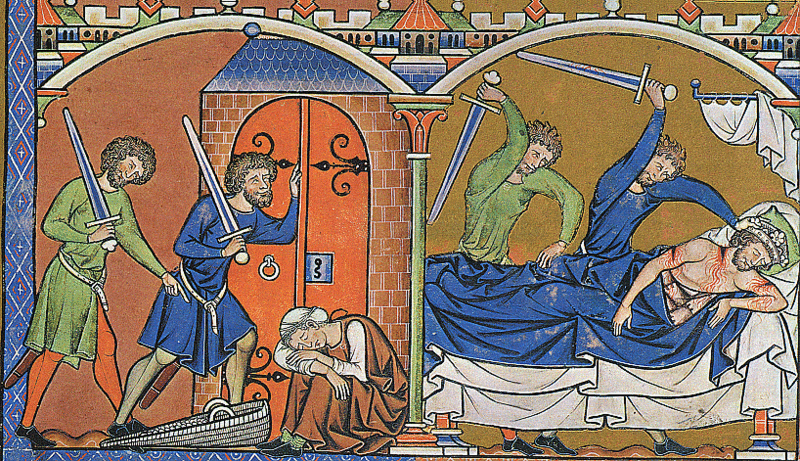
- 230px|Illustration from the Morgan Bible depicting the death of Ish-bosheth.
- Royalty.caption
- Illustration from the Morgan Bible depicting the death of Ish-bosheth
- Royalty.succession
- King of Israel
- Royalty.successor
- David
- Royalty.predecessor
- Saul
- Royalty.royal house
- House of Saul
- Royalty.father
- Saul
via Wikipedia infobox
Wikidata facts
- Gender
- male
- Citizenship
- Kingdom of Israel
- Father
- Saul
- Sibling
- Jonathan
- Occupation
- king
- Languages spoken
- Biblical Hebrew
- Image
- Ishbosheth is slain.gif
Show 9 more facts
- Commons category
- Ish-bosheth
- date of birth
- 1050-00-00
- date of death
- 1010-00-00
- present in work
- Second Book of Samuel
- described by source
- Jewish Encyclopedia of Brockhaus and Efron
- place of burial
- Hebron
- cause of death
- decapitation
- manner of death
- homicide
- ethnic group
- Israelites
via Wikidata · CC0
~4 min read
Encyclopedic overview
9 sectionsContents
- Biblical narrative
- Problem of naming
- As Ish-bosheth
- As Eshbaal
- Archaeology
- Speculations
- References
- Bibliography
- External links
Ish-bosheth (, "man of shame"), also called Eshbaal (, ; alternatively spelled Ishbaal, "man of Baal") was, according to the Hebrew Bible, the son of Saul who, after his father's death, ascended to the throne and reigned for two years.
During his reign, Ish-bosheth engaged in a protracted conflict with David, who had been anointed as Saul's successor by the prophet Samuel. This rivalry between the two leaders shaped the political landscape of the kingdom at the time. The Hebrew Bible recounts that Ish-bosheth's reign was marked by war with David's forces, as both factions vied for control and legitimacy. According to biblical accounts, he was killed by two of his own army captains, Baanah and Rechab, who believed that assassinating Ish-bosheth would earn them favour with David. This act not only brought a premature conclusion to Ish-bosheth's rule but also played a significant role in the subsequent unification of the kingdom under David's leadership.
Excerpted from Wikipedia’s “Ish-bosheth” article, available under the CC BY-SA 4.0 licence.