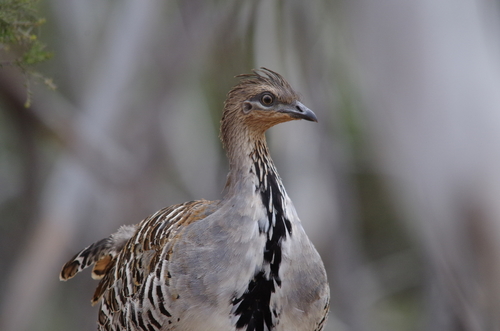
(c) ceejay93, some rights reserved (CC BY-NC), uploaded by ceejay93 · cc-by-nc
Malleefowl
Sign in to saveAlso known as Leipoa ocellata, mallee fowl
The malleefowl (Leipoa ocellata) is a stocky ground-dwelling Australian bird about the size of a domestic chicken (to which it is distantly related). It is notable for the large nesting mounds constructed by the males and lack of parental care after the chicks hatch. It is the only living representative of the genus Leipoa, though the extinct giant malleefowl was a close relative.
Species
VulnerableMalleefowl
species
via IUCN
Wikidata facts
Show 11 more facts
- taxon rank
- species
- IUCN conservation status
- Vulnerable
- Commons category
- Leipoa ocellata
- taxon name
- Leipoa ocellata
- Commons gallery
- Leipoa ocellata
- taxon common name
- frango-do-méli
- endemic to
- Australia
- litter size
- 12.8
- egg incubation period
- 63
- diel cycle
- diurnality
- short name
- L. ocellata
via Wikidata · CC0
~8 min read
Encyclopedic overview
15 sectionsContents
- Behaviour
- Breeding
- Distribution and habitat
- Important bird areas
- New South Wales
- South Australia
- Victoria
- Western Australia
- Conservation status
- International
- Australia
- Yongergnow Australian Malleefowl Centre
- References
- Further reading
- External links
The malleefowl (Leipoa ocellata) is a stocky ground-dwelling Australian bird about the size of a domestic chicken (to which it is distantly related). It is notable for the large nesting mounds constructed by the males and lack of parental care after the chicks hatch. It is the only living representative of the genus Leipoa, though the extinct giant malleefowl was a close relative.
==Behaviour== left|thumb|Malleefowl camouflaged Malleefowl are shy, wary, solitary birds that usually fly only to escape danger or reach a tree to roost in. Although very active, they are seldom seen as they freeze if disturbed, relying on their intricately patterned plumage to render them invisible, or else fade silently and rapidly into the undergrowth (flying away only if surprised or chased). They have many tactics to run away from predators.
Excerpted from Wikipedia’s “Malleefowl” article, available under the CC BY-SA 4.0 licence.