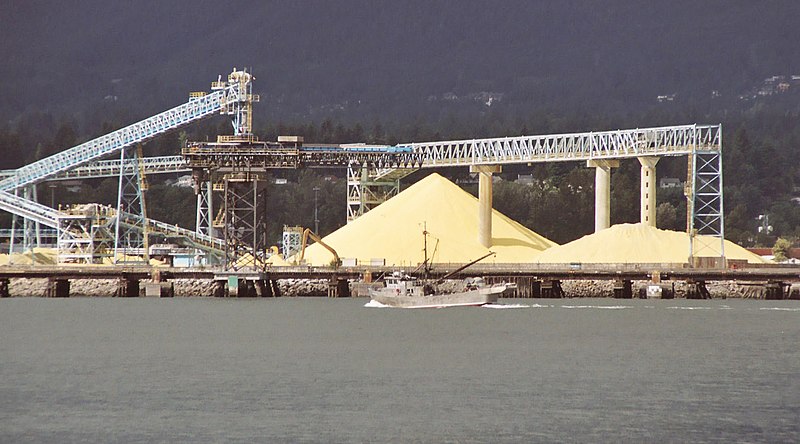
File:AlbertaSulfurAtVancouverBC.jpg · Wikimedia Commons · See Wikimedia Commons
raw material
Sign in to saveAlso known as feedstock, ingredient
material which has not been through a manufacturing process
Raw materials are basic materials that haven't been processed or manufactured yet—like crude oil, timber, or iron ore pulled straight from nature. They matter because they're the essential starting point for making finished products like plastic goods, furniture, or steel tools.
AI-generated from the Wikipedia summary — may contain errors.
Wikidata facts
- Part of
- natural environment
- Image
- Logs at woodmill.jpg
Show 3 more facts
- Commons category
- Raw materials
- topic's main category
- Category:Raw materials
- opposite of
- manufactured good
via Wikidata · CC0
~7 min read
Encyclopedic overview
Sulfur at harbor in North Vancouver, British Columbia, ready to be loaded onto a ship Latex being collected from a tapped rubber tree A raw material, also known as a feedstock, unprocessed material, or primary commodity, is a basic material that is used to produce goods, finished goods, energy, or intermediate materials/Intermediate goods that are feedstock for future finished products. As feedstock, the term connotes these materials are bottleneck assets and are required to produce other products.
The term raw material denotes materials in unprocessed or minimally processed states such as raw latex, crude oil, cotton, coal, raw biomass, iron ore, plastic, air, logs, and water. The term secondary raw material denotes waste material which has been recycled and injected back into use as productive material.
Excerpted from Wikipedia’s “raw material” article, available under the CC BY-SA 4.0 licence.
Gallery (3)
Available in 72 languages
- Español
- Français
- Deutsch
- 中文
- 日本語
- Русский
- Português
- Italiano
- العربية
- हिन्दी
- Armenian
- Asturian
- Azerbaijani
- Bahasa Indonesia
- Bashkir
- Basque
- Belarusian
- Breton
Show 53 more
- Bulgarian
- Buriat
- Catalan
- Central Kurdish
- Chuvash
- Croatian
- Czech
- Danish
- Egyptian Arabic
- Esperanto
- Estonian
- Finnish
- Galician
- Greek
- Hausa
- Icelandic
- Ido
- Ingush
- Irish
- Kazakh
- Lithuanian
- Macedonian
- Malayalam
- Mongolian
- Nederlands
- Nepali
- Norwegian
- Norwegian Nynorsk
- Occitan
- Polski
- Romanian
- Serbian
- Serbian (Latin)
- simple
- Slovak
- Slovenian
- Svenska
- Swahili
- Tajik
- Tamil
- Telugu
- Tiếng Việt
- Türkçe
- Ukrainian
- Urdu
- Uzbek
- Venetian
- Wu Chinese
- zh_yue
- Zulu
- فارسی
- ไทย
- 한국어
via Wikidata sitelinks · CC0