Treaty of Verdun
843 treaty dividing the Frankish Empire between the grandsons of Charlemagne
AI overview
The Treaty of Verdun was an 843 agreement that split up the vast Frankish Empire among the three grandsons of Charlemagne, ending their civil war over who would control the realm. It matters because this division essentially created the foundation for modern France, Germany, and Italy, reshaping the political map of Europe for centuries to come.
AI-generated from the Wikipedia summary — may contain errors.
Wikidata facts
- Image
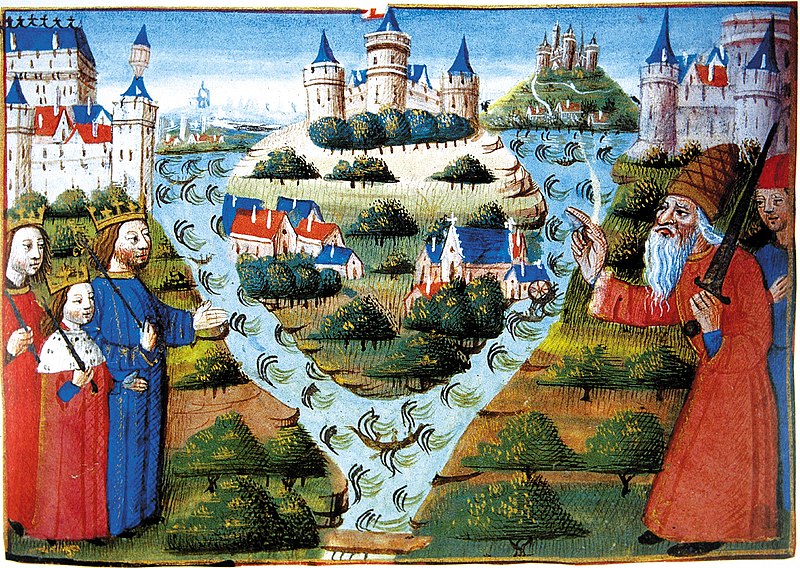
- Louis the Pious blessing the division of the Carolingian Empire in 843 into West Francia, Lotharingia, and East Francia.jpg
Show 3 more facts
- Commons category
- Treaty of Verdun
- publication date
- 0843-08-00
- point in time
- 0843-08-00
Sources (1)
via Wikidata · CC0
~6 min read
Article
The Treaty of Verdun (French: Traité de Verdun; German: Vertrag von Verdun), agreed to on 10 August 843, ended the Carolingian civil war and divided the Carolingian Empire between Lothair I, Louis II and Charles II, the surviving sons of the emperor Louis I. The treaty was the culmination of negotiations lasting more than a year. It was the first in a series of partitions contributing to the dissolution of the empire created by Charlemagne and has been seen as foreshadowing the formation of many of the modern countries of western Europe.
The treaty was the first of the four partition treaties of the Carolingian Empire, followed by the Treaties of Prüm (855), Meerssen (870), and Ribemont (880).