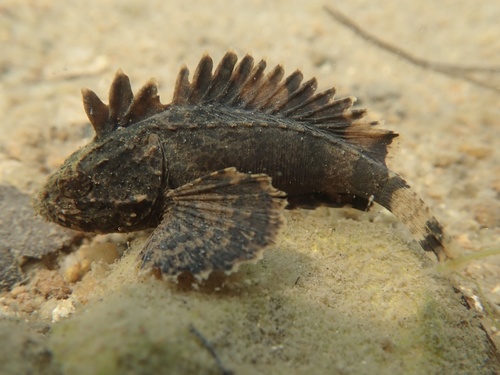
(c) Tse Chung Yi, some rights reserved (CC BY-NC), uploaded by Tse Chung Yi · cc-by-nc
Vespicula
Sign in to saveVespicula is a genus of venomous ray-finned fishes, waspfishes belonging to the subfamily Tetraroginae, which is classified as part of the family Scorpaenidae, the scorpionfishes and their relatives. These fishes are native to the Indian Ocean and the western Pacific Ocean. Although FishBase recognises this genus as valid, other authorities, such as the Catalog of Fishes regard it as a synonym of Trichosomus.
In the Vinony graph
Within Vinony's link graph, Vespicula is referenced by 5 other articles, and connects out to Actinopterygii, Tetrarogidae and Animalia.
It sits within the topics Marine fish genera, Taxa named by David Starr Jordan and Taxa named by Robert Earl Richardson.
Its subject is documented across 7 Wikipedia language editions.
Species
Vespicula Waspfish
GENUS
- KingdomAnimalia
- PhylumChordata
- ClassTeleostei
- OrderScorpaeniformes
- FamilyTetrarogidae
via GBIF
Museum specimens
- Specimen records
- 7
- With media
- 1
- Family
- Tetrarogidae
- Collections
- USNM, CAS, BPBM
- Recorded in
- Saudi Arabia, Indonesia, Thailand
Wikidata facts
- Instance of
- taxon
- Parent taxon
- Scorpaenidae
- Image
- Vespicula depressifrons (Wroclaw zoo).JPG
Show 4 more facts
- taxon name
- Vespicula
- taxon rank
- genus
- topic's main category
- Category:Vespicula
- Commons category
- Vespicula
Sources (2)
via Wikidata · CC0
~2 min read
Encyclopedic overview
3 sectionsContents
- Taxonomy and etymology
- Species
- References
Vespicula is a genus of venomous ray-finned fishes, waspfishes belonging to the subfamily Tetraroginae, which is classified as part of the family Scorpaenidae, the scorpionfishes and their relatives. These fishes are native to the Indian Ocean and the western Pacific Ocean. Although FishBase recognises this genus as valid, other authorities, such as the Catalog of Fishes regard it as a synonym of Trichosomus.
==Taxonomy and etymology== Vespicula was first described as a genus in 1910 by the American ichthyologists David Starr Jordan and Robert Earl Richardson as a monotypic genus containing only Prosopodasys gogorzae, which they also designated the type species. P. gogorzae had been described by Jordan and Alvin Seale in 1905 from the Negros in the Philippines. This genus is included in the subfamily Tetraroginae within the Scorpaenidae in the 5th edition of Fishes of the World however other authorities place that subfamily within the stonefish family Synanceiidae, while other authorities classify this subfamily as a family in its own right.
Excerpted from Wikipedia’s “Vespicula” article, available under the CC BY-SA 4.0 licence.