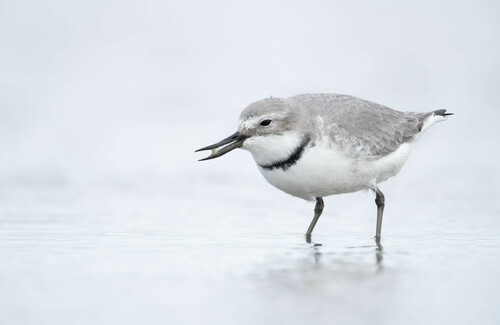
(c) Ben Ackerley, some rights reserved (CC BY-NC), uploaded by Ben Ackerley · cc-by-nc
Wrybill
Sign in to saveAlso known as Anarhynchus frontalis
The wrybill or (in Māori) ngutuparore (Anarhynchus frontalis) is a species of plover endemic to New Zealand. It is the only species of bird in the world with a beak that is bent sideways in one direction, always to the right (in the crossbills, e.g. Loxia pytyopsittacus, the tips of the upper and lower mandibles cross because they are bent sideways in opposite directions, sometimes left over right and sometimes right over left). A 2015 study found it to be within the Charadrius clade (although it is now classified in the genus Anarhynchus), with other New Zealand plovers its closest relatives;
In the Vinony graph
Wrybill appears in Vinony's Vulnerable Species collection — one of 16,386 entries.
Vinony's link graph records 121 inbound references to Wrybill, and connects out to endemism, Yellow-eyed Penguin and Apteryx owenii.
It is catalogued under topics including Anarhynchus, Birds described in 1830 and Endemic birds of New Zealand.
Vinony links it to 34 Wikipedia language editions.
Species
Vulnerablewrybill
Species
- PhylumChordata
- ClassAves
- OrderCharadriiformes
- FamilyCharadriidae
ハシマガリチドリ ハシマガリチドリ(オス繁殖羽) Anarhynchus frontalis 保全状況評価 VULNERABLE (IUCN Red List Ver.3.1 (2001)) 分類 界 : 動物界 Animalia 門 : 脊索動物門 Chordata 亜門 : 脊椎動物亜門 Vertebrata 綱 : 鳥綱 Aves 目 : チドリ目 Charadriiformes 亜目 : チドリ亜目 Charadrii 科 : チドリ科 Charadriidae 属 : ハシマガリチドリ属 Anarhynchus Quoy & Gaimard, 1830 種 : ハシマガリチドリ A. frontalis 学名 Anarhynchus frontalis Quoy & Gaimard, 1830 和名 ハシマガリチドリ 英名 Wrybill ハシマガリチドリ(嘴曲千鳥、Anarhynchus frontalis)は、チドリ目チドリ科ハシマガリチドリ属に分類される鳥類。本種のみでハシマガリチドリ属を形成する。 目次 1 分布 2 形態 3 生態 4 人間との関係 5 画像 6 関連項目 7 参考文献 8 外部リンク 分布[編集] ニュージーランド固有種 南島中央部で繁殖し、冬季になると北島や南島北部へ北上し越冬する。 形態[編集] 全長20-21cm。上面は灰色、下面は白い羽毛で覆われる。 嘴はやや上方へ反りあがり、また右側へ湾曲し鳥類では唯一左右非対称。和名、英名(wrybill=曲がった嘴)共に嘴に由来する。嘴の色彩は黒い。後肢の色彩は暗灰色。 繁殖期のオスは額と胸部に黒い斑紋が入る。非繁殖期のオスは額や胸部の斑紋が灰色になる。 生態[編集] 繁殖期には河川敷、非繁殖期には湿原、海岸、干潟、半砂漠地帯などに生息する。非繁殖期には大規模な群れを形成することもある。 食性は動物食で、昆虫、クモ、甲殻類、貝類、ゴカイなどを食べる。非繁殖期には泥をつつき獲物を捕食するが、繁殖期には嘴で石の下を探り獲物を捕食する。 繁殖形態は卵生。7-10月(営巣に失敗すると10-12月も)に1回に2個の卵を産む。雌雄交代で抱卵(主にメスが抱卵)し、抱卵期間は30-36日。 人間との関係[編集] 娯楽としての狩猟などにより生息数は激減し、また開発による生息地の破壊によって生息数の減少が懸念されている。1940年代には狩猟が禁止された。1970年代後半における生息数は5,000-7,000羽と推定され、1994年における生息数は5,111羽が確認されている。 画像[編集] 卵 幼鳥 イラスト 関連項目[編集] ウィキスピーシーズにハシマガリチドリに関する情報があります。 チドリ科 参考文献[編集] 小原秀雄・浦本昌紀・太田英利・松井正文編著 『レッド・データ・
via IUCN
Wikidata facts
- Instance of
- taxon
- Parent taxon
- Anarhynchus
- Mass
- 11.4
- Image
- Wrybill Anarhynchus frontalis, New Zealand.jpg
Show 10 more facts
- taxon rank
- species
- IUCN conservation status
- Vulnerable
- taxon name
- Anarhynchus frontalis
- Commons category
- Anarhynchus frontalis
- endemic to
- New Zealand
- egg incubation period
- 33
- longest observed lifespan
- 16
- taxon common name
- borrelho-de-bico-torto
- short name
- A. frontalis
- vocalized name
- עֲקוּמַּקּוֹר
via Wikidata · CC0
~8 min read
Encyclopedic overview
11 sectionsContents
- Taxonomy
- Description
- Distribution and habitat
- Behaviour
- Breeding
- Ecology
- Diet and foraging
- Predators and threats
- Conservation status
- References
- External links
The wrybill or (in Māori) ngutuparore (Anarhynchus frontalis) is a species of plover endemic to New Zealand. It is the only species of bird in the world with a beak that is bent sideways in one direction, always to the right (in the crossbills, e.g. Loxia pytyopsittacus, the tips of the upper and lower mandibles cross because they are bent sideways in opposite directions, sometimes left over right and sometimes right over left). A 2015 study found it to be within the Charadrius clade (although it is now classified in the genus Anarhynchus), with other New Zealand plovers its closest relatives; the nearest being the New Zealand dotterel or New Zealand plover (Anarhynchus obscurus), and then the double-banded plover or banded dotterel (Anarhynchus bicinctus).
It lays its eggs among the rocks along rivers and distracts intruders by pretending to be in distress and moving away from its clutch.
Excerpted from Wikipedia’s “Wrybill” article, available under the CC BY-SA 4.0 licence.