File:Blanching.jpg · Wikimedia Commons · See Wikimedia Commons
In the Vinony graph
Vinony's link graph records 206 inbound references to blanching, and connects out to International Standard Book Number, seed and cooking.
It is catalogued under the topic Cooking techniques.
Vinony links it to 40 Wikipedia language editions.
Wikidata facts
- Subclass of
- cooking technique
- Image
- Shock blanched vegetables in cold water (1041479893).jpg
Show 2 more facts
- name in kana
- ゆどおし
- Commons category
- Blanching (cooking)
Sources (2)
via Wikidata · CC0
~7 min read
Encyclopedic overview
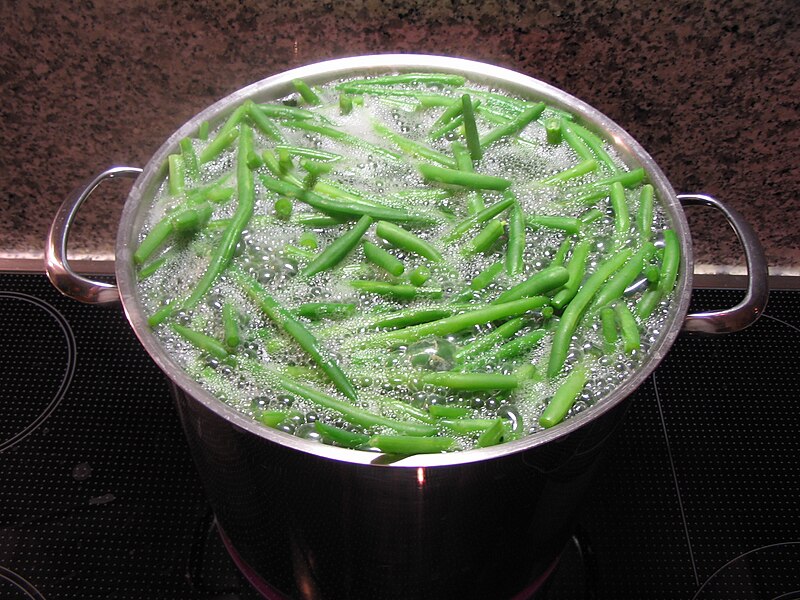
The first step: green beans in boiling water Broccoli being shocked in cold water to complete the blanching Blanching is a process in which a food, usually a vegetable or fruit, is partially cooked by first scalding in boiling water, then removing after a brief timed interval, and finally plunging into iced water or placing under cold running water (known as shocking or refreshing) to halt the cooking process. Blanching foods helps reduce quality loss over time. Blanching is often used as a treatment prior to freezing, dehydrating, or canning vegetables or fruits to deactivate enzymes, modify texture, remove the peel and wilt tissue. The inactivation of enzymes preserves colour, flavour, and nutritional value. The process has three stages: preheating, blanching, and cooling. The most common blanching methods for vegetables/fruits are hot water and steam, while cooling is either done using cold water or cool air. Other benefits of blanching include removing pesticide residues and decreasing microbial load. Drawbacks to the blanching process can include leaching of water-soluble and heat-sensitive nutrients and the production of effluent.
Application
Excerpted from Wikipedia’s “blanching” article, available under the CC BY-SA 4.0 licence.