Encyclopedia of Life · EOL (see source)
Chloranthaceae
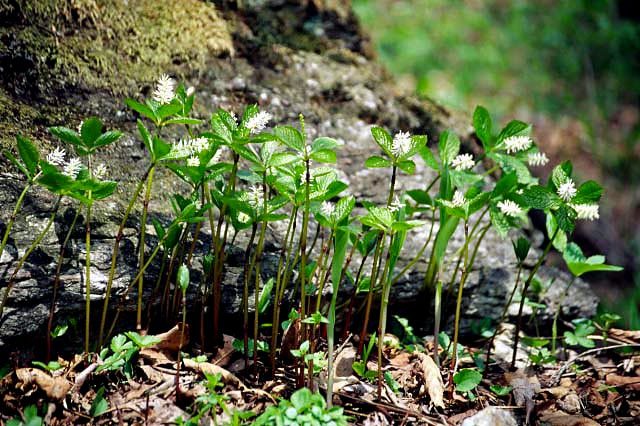
Sign in to saveChloranthaceae is a family of flowering plants (angiosperms), the only family in the order Chloranthales. It is not closely related to any other family of flowering plants, and is among the early-diverging lineages in the angiosperms. They are woody or weakly woody plants occurring in Southeast Asia, the Pacific, Madagascar, Central and South America, and the West Indies. The family consists of four extant genera, totalling about 77 known species according to Christenhusz and Byng in 2016. Some species are used in traditional medicine. The type genus is Chloranthus. The fossil record of the fa
OverviewAI-generated
Chloranthaceae is a family of plants within the kingdom Plantae. It belongs to the phylum Tracheophyta, class Magnoliopsida, and order Chloranthales. The family is described as probably sister to other groups, though specific delimitation notes are limited.
Records for this family include 61,825 occurrences in global databases. In the United States, 280 records are held by institutions such as YPM, accompanied by 83 media files. The taxon is referenced by 573 other encyclopedia articles.
Synthesized by Vinony from 21 facts across 6 sources: Wikidata, GBIF, Gbif Occ, Plants of the World, iDigBio, Vinony graph. Generated from structured data (not the Wikipedia text) and checked against those facts — may still contain errors.
Species
FAMILY
- KingdomPlantae
- PhylumTracheophyta
- ClassMagnoliopsida
- OrderChloranthales
- FamilyChloranthaceae
金粟兰科(学名:Chloranthaceae)是金粟兰目(Chloranthales)的唯一科,包括4个属共几十种,有草本植物也有木本植物,都生长在热带和亚热带地区,都是芳香植物,花不显眼,果实是核果,只具有一个种子。 目录 1 分类 1.1 沿革 1.2 种系发生学 2 参考文献 3 外部链接 分类 依2009年APG III分类法,金粟兰科独自组成金粟兰目,是被子植物的独立小分支之一,也是木兰类植物的旁系群[1]。 沿革 1981年克朗奎斯特分类法将其分入被子植物门木兰纲(即双子叶植物)木兰亚纲(大略相当于木兰类植物)胡椒目。 塔赫塔江分类法(Takhtajan system)将其分入被子植物门木兰纲(即双子叶植物)木兰亚纲(大略相当于木兰类植物)樟总目樟目。 达尔格林分类法(Dahlgren system)将其分入木兰纲(即被子植物)木兰亚纲(即双子叶植物)木兰总目(大略相当于木兰类植物),独自成立金粟兰目。 1992年索恩分类法(Thorne system)将其分入木兰纲(即被子植物)木兰亚纲(即双子叶植物)木兰总目(大略相当于木兰类植物)木兰目。 但根据基因分析证明金粟兰科和被子植物门中其他各科都没有密切的联系,根据化石证据判断,它是最早分化出的分支之一。 1998年根据基因亲缘关系分类的APG分类法将其直接放到被子植物分支之下,但因其演化地位不明而没有分入任何一个目。 自2001年起,史蒂文斯(Stevens)将其单独列为金粟兰目。但2003年APG II分类法继续对其地位保留。 2007年,摩尔(Moore)等人的研究发现木兰类植物很可能是金粟兰科最亲近的姐妹群,但金粟兰科远在木兰类植物分化之前就已经和它们分离[1],而且形态上也有一定的差异。于是,2009年的APG III分类法将金粟兰科列为木兰类的旁系群,单独成立金粟兰目。 种系发生学 金粟兰目和其它被子植物的演化关系如下[1]: 被子植物 Angiosperm 核心被子植物 Mesangiospermae 真双子叶植物 eudicots 金鱼藻目 Ceratophyllales 单子叶植物 monocots 木兰类植物 magnoliids 金粟兰目 Chloranthales 木兰藤目 Austrobaileyales 睡莲目 Nymphaeales 无油樟目 Amborellales 参考文献 ^ 1.0 1.1 1.2 (英文)Angiosperm Phylogeny Group (2009). An update of the Angiosperm Phylogeny Group classification for the orders and families of flowering plants: APG III. Botanical Journal of the Lin
via GBIF · Kew POWO
Museum specimens
- Specimen records
- 280
- With media
- 83
- Family
- Chloranthaceae
- Collections
- YPM
- Recorded in
- United States
Wikidata facts
- Instance of
- taxon
- Image
- Sarcandra glabra2.jpg
Show 8 more facts
- taxonomic type
- Chloranthus
- Commons category
- Chloranthaceae
- taxon rank
- family
- taxon name
- Chloranthaceae
- topic's main category
- Category:Chloranthaceae
- taxon common name
- 金粟兰科
- has fruit type
- drupe
Sources (1)
via Wikidata · CC0
~6 min read
Encyclopedic overview
6 sectionsContents
- Description
- Differences between the genera
- Taxonomy
- Historical classifications
- References
- External links
Chloranthaceae is a family of flowering plants (angiosperms), the only family in the order Chloranthales. It is not closely related to any other family of flowering plants, and is among the early-diverging lineages in the angiosperms. They are woody or weakly woody plants occurring in Southeast Asia, the Pacific, Madagascar, Central and South America, and the West Indies. The family consists of four extant genera, totalling about 77 known species according to Christenhusz and Byng in 2016. Some species are used in traditional medicine. The type genus is Chloranthus. The fossil record of the family, mostly represented by pollen such as Clavatipollenites, extends back to the dawn of the history of flowering plants in the Early Cretaceous, and has been found on all continents.
==Description== Chloranthaceae are fragrant shrubs or herbaceous plants, that only produce new side branches on the new growth. The stems are mostly cylindrical, with solid internodes, thickened nodes in many species, that carry evergreen leaves arranged in pairs on opposite sides of the stem, with stipules that have merged with that of the opposing leaf. The small flowers are seated directly on the axis of the inflorescence. Petals are absent in this family, and sometimes so are sepals. The flowers can be either hermaphrodite or of separate sexes. The fruit is a drupe or berry, consisting of one carpel.
Excerpted from Wikipedia’s “Chloranthaceae” article, available under the CC BY-SA 4.0 licence.