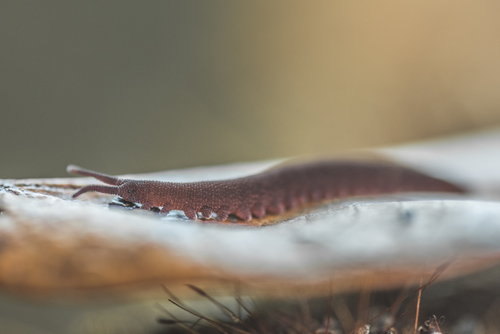
(c) Dmitry Ivanov, some rights reserved (CC BY-NC), uploaded by Dmitry Ivanov · cc-by-nc
Eoperipatus
Sign in to saveEoperipatus is a genus of velvet worms in the family Peripatidae. These velvet worms have been reported from locations throughout Southeast Asia, including Malaysia, Singapore, Thailand, and Vietnam. This genus exhibits lecithotrophic ovoviviparity; that is, mothers in this genus retain yolky eggs in their uteri.
In the Vinony graph
Vinony's link graph records 248 inbound references to Eoperipatus, and connects out to Peripatidae, Peripatoides and Vietnam.
Vinony files it under Onychophora genera and Onychophora of Southeast Asia.
Vinony links it to 8 Wikipedia language editions.
Museum specimens
- Specimen records
- 2
- Family
- Peripatidae
- Collections
- MNHN, NHMUK
- Recorded in
- Malaisie
Wikidata facts
- Instance of
- taxon
- Parent taxon
- Peripatidae
- Image
- Eoperipatus totoro.jpg
Show 4 more facts
- taxon rank
- genus
- taxon name
- Eoperipatus
- taxonomic type
- Eoperipatus horsti
- Commons category
- Eoperipatus
Sources (1)
via Wikidata · CC0
~2 min read
Encyclopedic overview
5 sectionsContents
- Taxonomy and etymology
- Description
- Species
- References
- External links
Eoperipatus is a genus of velvet worms in the family Peripatidae. These velvet worms have been reported from locations throughout Southeast Asia, including Malaysia, Singapore, Thailand, and Vietnam. This genus exhibits lecithotrophic ovoviviparity; that is, mothers in this genus retain yolky eggs in their uteri.
== Taxonomy and etymology == This genus was first described in 1901 by Richard Evans of Jesus College at the University of Oxford. He proposed this genus to contain the newly discovered species E. horsti and E. weldoni as well as the species originally described as Peripatus sumatranus. The generic name Eoperipatus is derived from an Ancient Greek combining form of (), meaning "dawn," and peripatos, meaning "walking about." This name refers to the distribution of these velvet worms in the Far East.
Excerpted from Wikipedia’s “Eoperipatus” article, available under the CC BY-SA 4.0 licence.