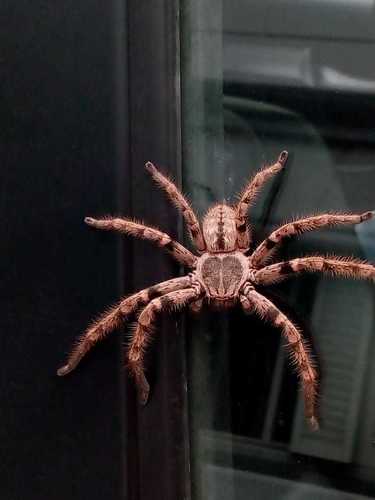
(c) María Serra, all rights reserved, uploaded by María Serra
Polybetes
Sign in to savePolybetes is a genus of South American huntsman spiders that was first described by Eugène Louis Simon in 1897. It is a senior synonym of Leptosparassus and Streptaedoea.
In the Vinony graph
Within Vinony's link graph, Polybetes is referenced by 4 other articles, and connects out to Sparassidae, Brazil and Chile.
It is catalogued under topics including Sparassidae genera, Spiders of South America and Taxa named by Eugène Simon.
Its subject is documented across 11 Wikipedia language editions.
Species
GENUS
- KingdomAnimalia
- PhylumArthropoda
- ClassArachnida
- OrderAraneae
- FamilySparassidae
via GBIF
Museum specimens
- Specimen records
- 6
- Family
- Sparassidae
- Collections
- MNRJ, MPEG, USNM
- Recorded in
- Brasil
Wikidata facts
- Instance of
- taxon
- Parent taxon
- Sparassidae
- Image
- Polybetes rapidus - 2021.jpg
Show 4 more facts
- taxon name
- Polybetes
- taxon rank
- genus
- Commons category
- Polybetes
- topic's main category
- Category:Polybetes
Sources (1)
via Wikidata · CC0
~1 min read
Encyclopedic overview
2 sectionsContents
- Species
- References
Polybetes is a genus of South American huntsman spiders that was first described by Eugène Louis Simon in 1897. It is a senior synonym of Leptosparassus and Streptaedoea.
They are commonly found in tall grass and on the bark or branches of trees. At least two species have adapted to urban environments and have been found indoors. They are large and somewhat aggressive spiders, but their venom is not toxic enough to be dangerous to humans.
Excerpted from Wikipedia’s “Polybetes” article, available under the CC BY-SA 4.0 licence.
Available in 11 languages
via Wikidata sitelinks · CC0