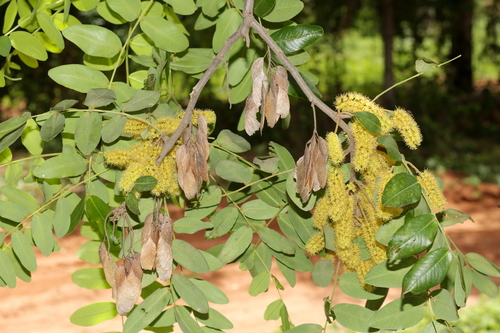
(c) Germaine Alexander Parada, some rights reserved (CC BY-NC), uploaded by Germaine Alexander Parada · cc-by-nc
Pterogyne
Sign in to saveAlso known as cocal
Pterogyne is a monotypic genus in the legume family, Fabaceae, subfamily Caesalpinioideae. The sole species is Pterogyne nitens. Spanish common names include guiraró, palo coca, or tipa colorado. In Portuguese, it is commonly known as amendoim bravo, cocal or madeira nova. It is found in Brazil, Paraguay, Bolivia and Argentina. It is threatened by habitat loss and harvesting for timber.
In the Vinony graph
Within Vinony's link graph, Pterogyne is referenced by 14 other articles, and connects out to Brazil, Argentina and Spanish.
It is catalogued under topics including Caesalpinioideae, Flora of Argentina and Flora of Bolivia.
Its subject is documented across 4 Wikipedia language editions.
Species
Genus
- PhylumTracheophyta
- ClassMagnoliopsida
- OrderPoales
- FamilyCyperaceae
via
Museum specimens
- Specimen records
- 23
- With media
- 6
- Family
- Fabaceae
- Collections
- MO, UNESP-RC, UFRB, RB, UFV, UNICAMP
- Recorded in
- Bolivia, Paraguay, Costa Rica, Brasil, Brazil, Argentina, Indeterminado
Wikidata facts
- Instance of
- taxon
- Image
- Pterogyne nitens.jpg
Show 5 more facts
- topic's main category
- Category:Pterogyne
- Commons category
- Pterogyne
- taxon name
- Pterogyne
- taxon rank
- genus
Sources (1)
via Wikidata · CC0
~1 min read
Encyclopedic overview
1 sectionsContents
- References
Pterogyne is a monotypic genus in the legume family, Fabaceae, subfamily Caesalpinioideae. The sole species is Pterogyne nitens. Spanish common names include guiraró, palo coca, or tipa colorado. In Portuguese, it is commonly known as amendoim bravo, cocal or madeira nova. It is found in Brazil, Paraguay, Bolivia and Argentina. It is threatened by habitat loss and harvesting for timber.
Five guanidine alkaloid natural products were isolated from the leaves of Pterogyne nitens: nitensidine D, nitensidine E, pterogynine, pterogynidine, and galegine.
Excerpted from Wikipedia’s “Pterogyne” article, available under the CC BY-SA 4.0 licence.