Encyclopedia of Life · EOL (see source)
Dypsis
Sign in to saveAlso known as Sohoa palm
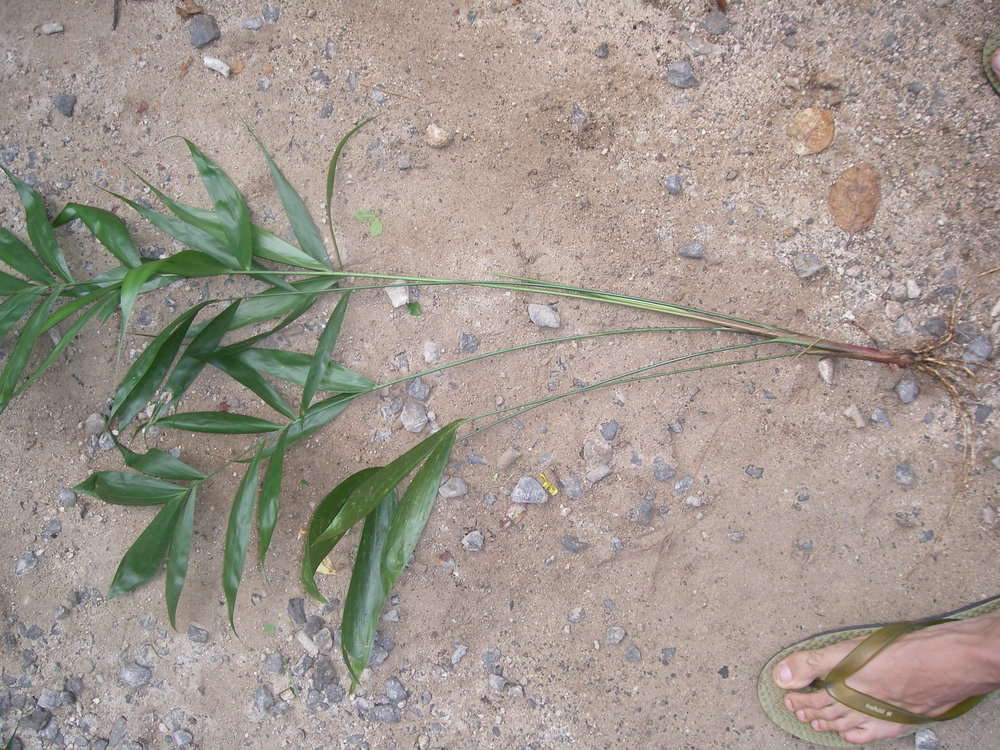
Dypsis is a genus of flowering plants in the family Arecaceae. They are slender, evergreen palms with yellow flowers carried in panicles amongst the pinnate leaves. Many Dypsis species have aerial branching (above the main trunk), a rare growth habit among palms. Some have marcescent leaves that remain attached after death and trap litter for nutrients. Several species previously placed here have been returned to the restored genera Chrysalidocarpus (including the type species Chrysalidocarpus lutescens) and Vonitra.
Species
GENUS
- KingdomPlantae
- PhylumTracheophyta
- ClassLiliopsida
- OrderArecales
- FamilyArecaceae
Dypsis es un género con 152 especies de plantas con flores perteneciente a la familia de las palmeras (Arecaceae). Es originaria de Tanzania, Comoras y Madagascar. Índice 1 Taxonomía 2 Especies 3 Referencias 4 Enlaces externos Taxonomía El género fue descrito por Noronha ex Mart. y publicado en Historia Naturalis Palmarum 3: 180. 1838.[2] Etimología Dypsis: nombre genérico que es oscuro, pero puede estar relacionado con el griego dypto 'me sumerjo' o dyptes 'buzo'.[3] Especies Dypsis ambanjae Dypsis ambositrae Dypsis ampasindavae Dypsis andrianatonga Dypsis antanambensis Dypsis arenarum Dypsis baronii Dypsis basilonga Dypsis bejofo Dypsis boiviniana Dypsis canaliculata Dypsis canescens Dypsis ceracea Dypsis commersoniana Dypsis confusa Dypsis coursii Dypsis crinita Dypsis decaryi Dypsis decipiens Dypsis dransfieldii Dypsis faneva Dypsis fasciculata Dypsis florencei Dypsis heteromorpha Dypsis hovomantsina Dypsis ifanadianae Dypsis intermedia Dypsis interrupta Dypsis lanceolata Dypsis ligulata Dypsis lutescens Dypsis madagascariensis Dypsis malcomberi Dypsis mananjarensis Dypsis mangorensis Dypsis mcdonaldiana Dypsis nauseosa Dypsis nossibensis Dypsis onilahensis Dypsis oreophila D
via GBIF · Kew POWO
Museum specimens
- Specimen records
- 658
- With media
- 372
- Family
- Arecaceae
- Collections
- US, UEL, MO
- Recorded in
- Madagascar, Dominican Republic, Brasil
Wikidata facts
Show 7 more facts
- taxon name
- Dypsis
- taxon rank
- genus
- topic's main category
- Category:Dypsis
- Commons category
- Dypsis
- taxon common name
- 荻棕属
- taxon author citation
- Noronha ex Mart.
Sources (1)
via Wikidata · CC0
~5 min read
Encyclopedic overview
9 sectionsContents
- Etymology
- Species
- Moved to restored genus ''[[Chrysalidocarpus]]''
- Moved to genus ''[[Vonitra]]''
- Gallery
- Accepted species
- Moved to Chrysalidocarpus
- Moved to Vonitra
- References
Dypsis is a genus of flowering plants in the family Arecaceae. They are slender, evergreen palms with yellow flowers carried in panicles amongst the pinnate leaves. Many Dypsis species have aerial branching (above the main trunk), a rare growth habit among palms. Some have marcescent leaves that remain attached after death and trap litter for nutrients. Several species previously placed here have been returned to the restored genera Chrysalidocarpus (including the type species Chrysalidocarpus lutescens) and Vonitra.
== Etymology == The etymology is obscure but may be related to the Greek '''' 'I dive' or '''' 'diver'. The species are native to Tanzania, Madagascar, and various islands in the Indian Ocean (Mauritius and Comoros). A few are naturalized in other regions, especially in the Caribbean.
Excerpted from Wikipedia’s “Dypsis” article, available under the CC BY-SA 4.0 licence.
Gallery (3)
Available in 19 languages
- Español
- Français
- 中文
- Русский
- Português
- Italiano
- العربية
- Bahasa Indonesia
- Cebuano
- Egyptian Arabic
- Lithuanian
- Malagasy
- Nederlands
- Polski
- Svenska
- Türkçe
- Waray
- فارسی
via Wikidata sitelinks · CC0