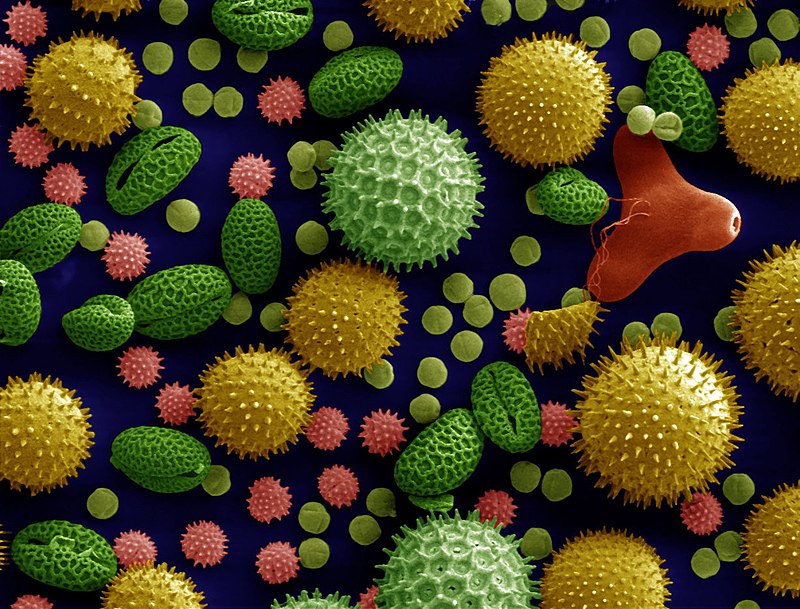
File:Misc_pollen_colorized.jpg · Wikimedia Commons · See Wikimedia Commons
allergic rhinitis
Sign in to saveAlso known as allergic rhinitis due to animal (cat) (dog) hair and dander, allergic rhinitis due to food, atopic rhinitis, pollenosis, Allergic rhinitis due to pollen, Allergic rhinitis due to pollen (disorder), Allergy to pollen (disorder), Hay fever - pollens
inflammation in nose occurs when immune system overreacts to allergens in air
Allergic rhinitis is a condition where your immune system overreacts to allergens in the air, causing inflammation in your nose. It matters because this inflammation can lead to uncomfortable symptoms like sneezing, congestion, and itching that affect your daily comfort and quality of life.
AI-generated from the Wikipedia summary — may contain errors.
In the Vinony graph
Vinony's link graph records 624 inbound references to allergic rhinitis, and connects out to histamine antagonist, food allergy and immunoglobulin E.
Vinony files it under Allergology, Steroid-responsive inflammatory conditions and Type I hypersensitivity.
Vinony links it to 56 Wikipedia language editions.
Research
39,793 papers- Allergic rhinitis: diagnosis and management.ReviewBritish journal of hospital medicine (London, England : 2005) · 2022Siddiqui ZA, Walker A, Pirwani MM et al.DOI: 10.12968/hmed.2021.0570
- Allergic rhinitis.ReviewLancet (London, England) · 2011Greiner AN, Hellings PW, Rotiroti G et al.DOI: 10.1016/S0140-6736(11)60130-X
- Allergic Rhinitis and Its Effect on Sleep.ReviewOtolaryngologic clinics of North America · 2024Pagel JML, Mattos JLDOI: 10.1016/j.otc.2023.09.003
- Allergic Rhinitis and its Impact on Asthma (ARIA) 2008 update (in collaboration with the World Health Organization, GA(2)LEN and AllerGen).ReviewAllergy · 2008Bousquet J, Khaltaev N, Cruz AA et al.DOI: 10.1111/j.1398-9995.2007.01620.x
- Allergic rhinitis.ReviewClinical pediatrics · 2007Seth D, Secord E, Kamat DDOI: 10.1177/0009922806298703
- Allergic rhinitis.ReviewPaediatric respiratory reviews · 2009Kemp ASDOI: 10.1016/j.prrv.2009.02.002
- Allergic rhinitis.ReviewFacial plastic surgery clinics of North America · 2012Mims JWDOI: 10.1016/j.fsc.2011.10.002
- Allergic rhinitis.ReviewPrimary care · 2008Weber RWDOI: 10.1016/j.pop.2007.09.001
via PubMed
Wikidata facts
- Instance of
- symptom or sign
- Subclass of
- rhinitis
- Image
- Misc pollen colorized.jpg
Show 9 more facts
- NCI Thesaurus ID
- C34987
- on focus list of Wikimedia project
- WikiProject Medicine
- discoverer or inventor
- John Bostock
- ICPC 2 ID
- R97
- genetic association
- TSLP
- Commons category
- Allergic rhinitis
- exact match
- purl.obolibrary.org/obo/HP_0003193
- health specialty
- immunology
- drug or therapy used for treatment
- fexofenadine
Sources (10)
via Wikidata · CC0
~28 min read
Encyclopedic overview
Allergic rhinitis, of which the seasonal type is called hay fever, is a type of inflammation in the nose that occurs when the immune system overreacts to allergens in the air. It is classified as a type I hypersensitivity reaction. Signs and symptoms include a runny or stuffy nose, sneezing, red, itchy, and watery eyes, and swelling around the eyes. The fluid from the nose is usually clear. Symptom onset is often within minutes following allergen exposure, and can affect sleep and the ability to work or study. Some people may develop symptoms only during specific times of the year, often as a result of pollen exposure. Many people with allergic rhinitis also have asthma, allergic conjunctivitis, or atopic dermatitis.
Allergic rhinitis is typically triggered by environmental allergens such as pollen, pet hair, dust mites, or mold. Inherited genetics and environmental exposures contribute to the development of allergies. Growing up on a farm and having multiple older siblings are associated with a reduction of this risk. The underlying mechanism involves IgE antibodies that attach to an allergen, and subsequently result in the release of inflammatory chemicals such as histamine from mast cells. It causes mucous membranes in the nose, eyes and throat to become inflamed and itchy as they work to eject the allergen. Diagnosis is typically based on a combination of symptoms and a skin prick test or blood tests for allergen-specific IgE antibodies. These tests, however, can give false positives. The symptoms of allergies resemble those of the common cold; however, they often last for more than two weeks and, despite the common name, typically do not include a fever.
Excerpted from Wikipedia’s “allergic rhinitis” article, available under the CC BY-SA 4.0 licence.