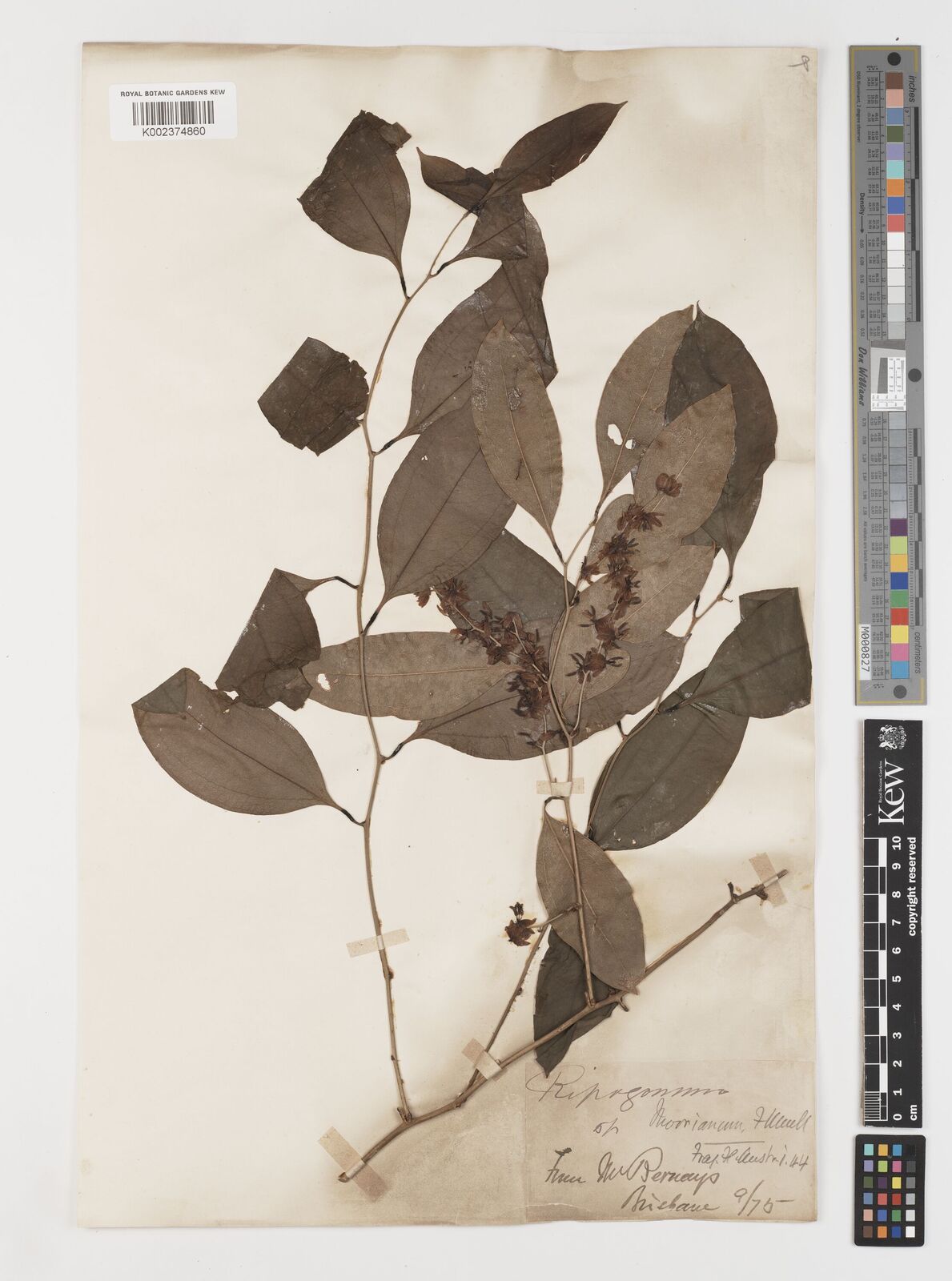
Ripogonum · Kew POWO · Kew Plants of the World Online
Ripogonum
Sign in to saveAlso known as Rhipogonum
Ripogonum (sometimes Rhipogonum) is a genus of flowering plants confined to eastern Australia, New Zealand, and New Guinea. Until recently this genus was included in the family Smilacaceae, and earlier in the family Liliaceae, but it has now been separated as its own family Ripogonaceae (sometimes Rhipogonaceae).
In the Vinony graph
Vinony's link graph records 443 inbound references to Ripogonum, and connects out to Asterids, Monocots and Vitaceae.
Vinony files it under Flora of Australia, Flora of New Guinea and Flora of New Zealand.
Vinony links it to 14 Wikipedia language editions.
Species
GENUS
- KingdomPlantae
- PhylumTracheophyta
- ClassLiliopsida
- OrderLiliales
- FamilyRipogonaceae
via GBIF · Kew POWO
Museum specimens
- Specimen records
- 23
- With media
- 21
- Family
- Ripogonaceae
- Collections
- A, UNICAMP, BPBM, YPM, MNHN
- Recorded in
- Papua New Guinea, Madagascar, Australia, Indonesia, Brazil, New Zealand
Wikidata facts
- Instance of
- taxon
- Subclass of
- vine
- Parent taxon
- Ripogonaceae
- Image
- Rhipogonum scandens - Supplejack 2.jpg
Show 6 more facts
- taxon rank
- genus
- taxon name
- Ripogonum
- Commons category
- Ripogonum
- topic's main category
- Category:Ripogonum
Sources (1)
via Wikidata · CC0
~6 min read
Encyclopedic overview
7 sectionsContents
- Description
- Taxonomy
- Phylogeny and classification
- Species
- Uses
- References
- External links
Ripogonum (sometimes Rhipogonum) is a genus of flowering plants confined to eastern Australia, New Zealand, and New Guinea. Until recently this genus was included in the family Smilacaceae, and earlier in the family Liliaceae, but it has now been separated as its own family Ripogonaceae (sometimes Rhipogonaceae).
Like most species of the closely related Smilacaceae, most species of Ripogonum are woody vines. Differences from Smilacaceae include that Ripogonum lacks stipules, it has a wet rather than dry stigma, its seeds and leaves contain starch, and its guard cells contain oil.
Excerpted from Wikipedia’s “Ripogonum” article, available under the CC BY-SA 4.0 licence.