Category
page 1Ashkenazi Jewish cuisine

borscht
Borscht () is a sour soup, made with meat stock, vegetables and seasonings, common in Eastern Europe, Central Europe and Northern Asia. In English, the word borscht, borrowed via Yiddish, is most often associated with the variant of the soup originating in Ukraine, made with red beetroots as one of the main ingredients, which give the dish its distinctive red color. The same name, however, is also used for a wide selection of sour-tasting soups without beetroots, such as sorrel-based green borscht, rye-based white borscht, and cabbage borscht.

sauerkraut
Sauerkraut (; , ) is finely cut raw white cabbage that has been fermented by various lactic acid bacteria. It has a long shelf life and a distinctive sour flavor, both of which result from the lactic acid formed when the bacteria ferment the sugars in the cabbage leaves.
cheesecake
Cheesecake is a dessert made with a soft fresh cheese (typically cottage cheese, cream cheese, quark or ricotta), eggs, and sugar. It may have a crust or base made from crushed cookies (or digestive biscuits), graham crackers, pastry, or sometimes sponge cake. Cheesecake is known for its rich, creamy flavor and smooth texture. It may be baked or unbaked and is usually served chilled.

strudel
Strudel ( , ) is a type of layered pastry with a filling that is usually sweet, but savoury fillings are also common. It became popular in the 18th century throughout the Austrian Empire. Strudel is part of Austrian cuisine and German cuisine but is also common in other Central European cuisines. In Italy it is recognized as a (PAT) of South Tyrol.
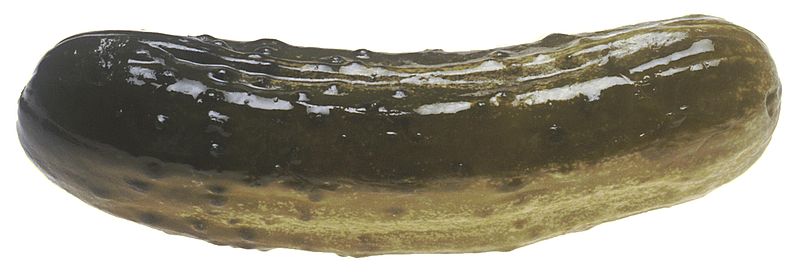
pickled cucumber
cucumber preserved in vinegar

smetana
dairy product produced by souring heavy cream, popular in Eastern and Central Europe

potato pancake
fried pancakes of grated or ground potato

cabbage roll
dish of cabbage leaves with a filling

pierogi
Pierogi ( ; , ) are filled dumplings made by wrapping unleavened dough around a filling and cooking in boiling water. They are occasionally flavored with a savory or sweet garnish. Typical fillings include potato and twaróg cheese, sauerkraut, ground meat, mushrooms, fruits, or berries. Savory pierogi are often served with a topping of sour cream, fried onions, or both.

chicken soup
soup made from chicken

apple strudel
apple-filled pastry
cream cheese
soft, mild-tasting cheese with a high fat content

schnitzel
Schnitzel () is a thin slice of meat. The meat is usually thinned by pounding with a meat tenderizer. Most commonly, the meat is breaded before frying. Breaded schnitzel is popular in many countries and is made using veal, pork, chicken, mutton, beef, or turkey. Schnitzel originated as Wiener schnitzel and is very similar to other breaded meat dishes.

mămăligă
Mămăligă (;) is a polenta-like dish made out of yellow maize flour, traditional in Romania, Moldova, south-western Ukraine and among Poles in Ukraine (mamałyga), Hungary (puliszka), Bulgaria (kačamak), the Black Sea regions of Georgia and Turkey, and Thessaly and Phthiotis in Greece.
corned beef
salt-cured beef product
.jpg)
pirozhki
Pirozhki (, ; ; see also other names) is the Russian name for baked or fried yeast-leavened boat-shaped buns with a variety of fillings in Russian and Eastern European cuisine in general. Pirozhki are a popular street food and comfort food. They are especially popular in countries with large ethnic Russian communities, and may also be found in other parts of the world.

torshi
thumb|Turşu in Turkey
Torshi, tursu or turshi () are the pickled vegetables of many Middle Eastern, Caucasian, Slavic and Balkan cuisines.

pastrami
thumb|right|Ben's Best Deli, Rego Park, New York
Pastrami or pastromi is a type of cured meat originating from Jewish community of Romania and surrounding region, usually made from beef brisket. The raw meat is brined, partially dried, seasoned with herbs and spices, then smoked and steamed. Like corned beef, pastrami was created as a way to preserve meat before the invention of refrigeration. One of the iconic meats of Eastern European cuisine as well as American Jewish cuisine and New York City cuisine, hot pastrami is typically served at delicatessen restaurants on sandwiches such as the pa

palatschinke
Palačinka (plural Palačinke) is a thin crêpe-like variety of pancake of Greco-Roman origin. The dessert is common in the Balkans, Central-, and Eastern-Europe.
sorrel soup
Eastern European dish
.jpg)
cholent
Cholent or Schalet () is a traditional slow-simmering Sabbath stew in Jewish cuisine that was developed by Ashkenazi Jews first in France and later Germany, and is first mentioned in the 12th century. It is closely related to the French cassoulet and is believed to have been derived from hamin, a similar Sabbath stew that emerged in Spain among Sephardic Jews and made its way to France by way of Provence.

kasha
In English, kasha () is a porridge usually made from buckwheat, a pseudocereal. In the Slavic languages, kasha means porridge. In some varieties of Central and Eastern European cuisine, kasha can apply to any kind of cooked grain. It can be baked but most often is boiled, either in water or milk, but the word can also refer to the grain before preparation, which corresponds to the definition of 'groats'.

lecsó
Lecsó ( , ; Czech and ; ; ; ; , ), also anglicized as lecho, is a Hungarian thick vegetable ragout or stew which traditionally contains yellow pointed peppers, tomato, onion, salt, and ground sweet and/or hot paprika as a base recipe. The onions and peppers are usually sauteed in lard, bacon fat, or sunflower oil. Garlic can also be a traditional ingredient. It is also considered to be traditional food in Czech, Slovak and former Yugoslavian cuisine and is also very common in Poland and Austria.
gefilte fish
dish made from a poached mixture of ground deboned fish

hamantash
A hamantash (: hamantashen; also spelled hamantasch, hamantaschen; homentash, : homentashn, 'Haman pockets') is an Ashkenazi Jewish triangular filled-pocket pastry associated with the Jewish holiday of Purim. The name refers to Haman, the villain in the Purim story. In Hebrew, hamantashen are also known as (oznei Haman), meaning "Haman's ears". "Haman's ears" also refers to a Sephardic Purim pastry, "Orejas de Haman", thought to originate in Spain and Italy, that is made by frying twisted or rolled strips of dough.

Kugel
Kugel ( , pronounced or ) is a baked casserole, most commonly made from egg noodles (lokshen) or shredded potato. It is a traditional Ashkenazi Jewish dish, often served on Sabbath and Jewish holidays. American Jews also serve it for Thanksgiving dinner. In Hungary it is known as "vargabéles" and served as a sweet dish.

Dampfnudel
thumb|' bakery in Regensburg
thumb|right|Christmas Dampfnudel
A '''' (; ; plural ', Alsatian: '''''') is a dumpling eaten as a meal or as a dessert in Southern Germany, Austria, Switzerland, and in France (Alsace-Moselle). It is a typical dish in southern Germany.
kogel mogel
egg-based homemade dessert

sufganiyah
' ( or , ; : ', Hebrew: , , or in Yiddish ) is a round, jelly doughnut–like pastry, eaten around the world during the Jewish festival of Hanukkah. The doughnut is deep-fried, injected with jam or custard, and then topped with powdered sugar. The doughnut recipe originated in Europe in the 16th century, and by the 19th century was known as a Berliner in Germany and a Religieuse in France. Polish Jews, who called them ponchki, fried the doughnuts in schmaltz rather than lard due to kashrut laws. The ponchik was brought to Israel by Polish Jewish immigrants, where it was renamed the based on the

latke
A latke (; sometimes romanized latka) is a type of potato pancake or fritter in Ashkenazi Jewish cuisine that is traditionally prepared to celebrate Hanukkah.
Chicken paprikash
dish
Germknödel
() is a sweet, fluffy, yeast dough dumpling (), filled with spiced plum jam, topped with a mix of poppy seeds and sugar, and served with melted butter. It is occasionally, even though less traditional, served with vanilla cream sauce instead. It is a culinary specialty of Austria and Bavaria. The dish is served both as a dessert and as a main course.
smoked salmon
smoked food
pickled herring
traditional way of preserving herring

forshmak
thumb|Traditional forshmak based on chopped herring
Forshmak (Yiddish: פֿאָרשמאַק, Russian: форшмак), or vorschmack, from German Vorgeschmack ("foretaste") or Vorspeise ("appetizer"), also known as chopped herring, is a traditional dish of Ashkenazi Jewish cuisine, particularly associated with the Jewish communities of Eastern Europe, including Poland, Lithuania, Ukraine, and Russia. It is a savory appetizer made primarily from chopped salted herring, hard-boiled eggs, onions, apples or potatoes, and bread or soaked matzah, often seasoned with vinegar or oil. The dish is typically served cold,
Reuben sandwich
hot sandwich of corned beef, Swiss cheese, with Russian or Thousand Island dressing, and sauerkraut
rugelach
Rugelach ( ; , , or and rōgalaḵ) is a filled baked confection originating in the Jewish communities of Poland. It has become a popular treat among Jews in the diaspora and in Israel.
streusel
In baking and pastry making, streusel () is a crumbly topping of flour, butter, and sugar that is baked on top of muffins, breads, pies, and cakes. Some modern recipes add spices and chopped nuts. The mixture can also be layered or ribboned in the middle of a cake.

knish
A knish or knysh ( or , ) is a traditional food of Eastern European origin, characteristic of Ukrainian and Ashkenazi Jewish cuisine. It typically consists of a filling covered with dough that is baked or sometimes deep-fried.

babka
Babka is a sweet braided cake or viennoiserie that originated in the Jewish communities of Poland and Western Ukraine. It is prepared with a yeast-leavened dough that is rolled out and spread with a filling, then rolled up and braided before baking. Traditionally fillings included jam or nuts, though now include chocolate, cinnamon, fruit, or cheese. It can be made with butter, or to remain pareve it can be made with olive oil.

lox
thumb|A "lox and a schmear" refers to a bagel and cream cheese with lox. This dish is a part of [[American Jewish cuisine.]]
thumb|A lox platter for one

kreplach
Kreplach (from ) are small dumplings in Ashkenazi Jewish cuisine filled with ground meat, mashed potatoes or another filling, usually boiled and served in chicken soup, though they may also be served fried. They are similar to other types of dumpling, such as Polish pierogi, Polish and Ukrainian uszka, Russian pelmeni, Italian ravioli or tortellini, German Maultaschen, and Chinese jiaozi and wonton. The dough is traditionally made of flour, water and eggs, kneaded and rolled out into thin sheets. Some modern-day cooks use frozen dough sheets or wonton wrappers. Ready-made kreplach are also sol
.jpeg)
tzimmes
thumb|250x250px|Tzimmes
Tzimmes, or tsimmes (, ), is a traditional Ashkenazi Jewish stew typically made from carrots and dried fruits such as prunes or raisins, often combined with other root vegetables (including yam).
Kishka
East European sausage regionally known as krupnik or krupniok

schmaltz
Schmaltz (also spelled schmalz or shmalz) is rendered (clarified) chicken or goose fat. It is an integral part of traditional Ashkenazi Jewish cuisine, where it has been used for centuries in a wide array of dishes, such as chicken soup, latkes, matzah brei, chopped liver, matzah balls, fried chicken, and many others, as a cooking fat, spread, or flavor enhancer.
matzah ball
flour-based ball in Jewish cuisine
Aranygaluska
traditional Hungarian dessert

chrain
thumb|White
thumb|Red
'''''' (; ; or ; ; ; ; ; ; ; meaning 'horseradish' in all these languages) is a spicy paste made of grated horseradish. It is a common condiment for meat and fish dishes in Eastern and Central European cuisines (Slovene, northern Croatian, Belarusian, Czech, Slovak, German (especially Bavarian), Polish, Romanian, Latvian, Lithuanian, Russian, Ukrainian and Ashkenazi Jewish cuisine). comes from Yiddish , which is in turn a loanword from Slavic languages.
matzah brei
sauteed matzo omelette
egg cream
beverage
bialy
yeasted bread roll
gołąbki
'''''' () is the Polish name of a dish popular in cuisines of Central and Eastern Europe, made from boiled cabbage leaves wrapped around a filling of minced pork or beef, chopped onions, and rice or other carbohydrates such as kasha groats or potatoes.
black and white cookie
round cookie iced or frosted on one half with vanilla and on the other with chocolate

Lekach
Lekach is a honey-sweetened cake made by Jews, especially for the Jewish holiday of Rosh Hashanah. Known in Hebrew as (, ), it is mainly eaten in Israel by Israeli Jews and Jewish people all over the world who know it by its Yiddish name, (), phono-semantically matched in Hebrew as [ugat] lekakh (, ) influenced by the Biblical association of teaching with honey. It is traditionally eaten at Rosh Hashanah in hopes of ensuring a sweet New Year. It is also customary to ask for and receive a honey cake on Erev Yom Kippur.

Farfel
alt=A tray of matzah and mushroom farfel served on Passover|thumb|266x266px|A tray of matzah and [[mushroom farfel served on Passover]]
Farfel (Yiddish: פֿאַרפֿל, farfl; from Middle High German varveln) is small pellet- or flake-shaped pasta used in Ashkenazi Jewish cuisine. It is made from a Jewish egg noodle dough and is frequently toasted before being cooked. It can be served in soups or as a side dish. In the United States, it can also be found pre-packaged as egg barley.
Kichel
Kichel (, plural kichlach , the diminutive of kukhn "cake") is a slightly sweet cracker or cookie in Jewish cuisine. Made from eggs, flour, and sugar, the dough is rolled out flat and cut into bow-tie shapes.

Teiglach
Teiglach , also spelled taiglach or teglach (, singular teigel, literally "little dough") are small, knotted pastries boiled in a honeyed syrup. They are a traditional Ashkenazi Jewish treat for Rosh Hashanah, Sukkot, Simchat Torah, and Purim.
cebularz
Cebularz is a wheat dough pancake in Polish and Ashkenazi Jewish cuisine, with a diameter of 15-20 cm, topped with diced onion and poppy seeds, characteristic for Lublin cuisine.
chopped liver
Jewish dish
pot roast
American roasted beef dish